7
M
etal-To-Metal Seal, Cleaning
And Maintenance
The metal-to-metal seal must be
lubricated periodically to prevent the
c
over from sticking to the bottom as
a result of dryness. Lubricate the
metal-to-metal seal on the bottom
with petroleum jelly or Vaseline to
prevent scratching and sticking of
the seal. (See diagram page 4.) It is
recommended that a thin film be
applied every third or fourth use. The
metal-to-metal seal must not be
permitted to become dry, as this
could result in severe damage to the
metal-to-metal seal and make it very
difficult to remove the cover. Lack of
lubrication also makes it very difficult
to maintain a steam-tight seal.
It is also important to periodically
wipe off the metal-to-metal seal with
a clean towel to remove any build-up
of foreign material trapped in the
lubricant. You may use 0000 grade
steel wool and carefully go around
the seal to remove any build-up of
hardened lubricant. However, avoid
hard scrubbing of the metal-to-metal
seal to prevent damage.
Accuracy Of Steam
Pressure Gauge
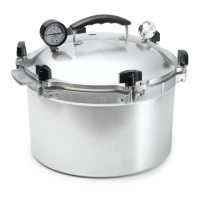
ALL-AMERICAN pressure cooker
canners are weighted-gauge canners.
The pressure gauge is supplied as a
reference only for when the unit is
pressurized and timing for canning
may roughly begin, or when the
pressure has dropped to zero and the
lid may be safely removed. The
accuracy of your steam pressure
gauge is at + 2 pounds. Please refer to
information provided on page 8 under
“Using Cooker” - Item #2 - the bold
print. If you would like to have your
gauge tested you may contact your
county extension agent. If they are
unable to provide this service, you
will have to purchase a new gauge.
Discoloration And Pitting
Discoloration of aluminum inside is
harmless. It can be removed by
boiling a solution of one tablespoon-
ful of vinegar or two level table-
spoons cream of tartar in a quart of
water, or by scrubbing with an
aluminum cleaner or soap impregnat-
ed steel wool cleaning pad.
Pitting is caused by the interaction
of aluminum with other metals in the
presence of moisture. This can be
prevented by washing, rinsing and
d
rying the unit thoroughly after
every use. Always store the pressure
cooker in a dry area when not in use.
While pitting is not injurious to
health, if pitting becomes present and
you detect it in the metal, then we
recommend that the unit be returned
to the factory for examination. DO
NOT USE THE UNIT IF PITTING
IS PRESENT until it is determined
the extent of damage caused by
p
itting.
S
torage
The cover should be stored separate-
ly from the bottom or upside down
on the bottom to allow air circula-
tion. Always be sure the cover and
bottom are thoroughly dried to
protect against pitting and corrosion.
Protect the metal-to-metal seal from
being struck or dented.
OVERPRESSURE PLUG, NO. 2040
IMPORTANT INFORMATION
T
he overpressure plug releases if the vent pipe becomes blocked
and cooker/canner develops too much pressure. This is a protec-
tion that permits excess pressure to be released safely. If you
follow directions for using the unit properly, the plug will probably
never release.
A small amount of steam or moisture may be visible around the
overpressure plug as the pressure is starting to build inside the unit. It
is normal for the overpressure plug to leak steam until approximately 5
pounds is shown on the pressure gauge. If leakage continues beyond
that point, the cause may be:
1. The overpressure plug needs replacing if it is worn, cracked or
hard. We recommend that you replace the overpressure plug every 12
months, or before if it becomes hard or deformed. Never reuse a blown
overpressure plug.
2. Built-up food or grease may be in the opening. We recommend
that the opening in the cover where the overpressure plug fits be
cleaned with hot soapy water and a small brush at least once every
month during periods of use to maintain a clean opening. This clean-
ing/inspection is in addition, of course, to normal cleaning performed
after using the unit.
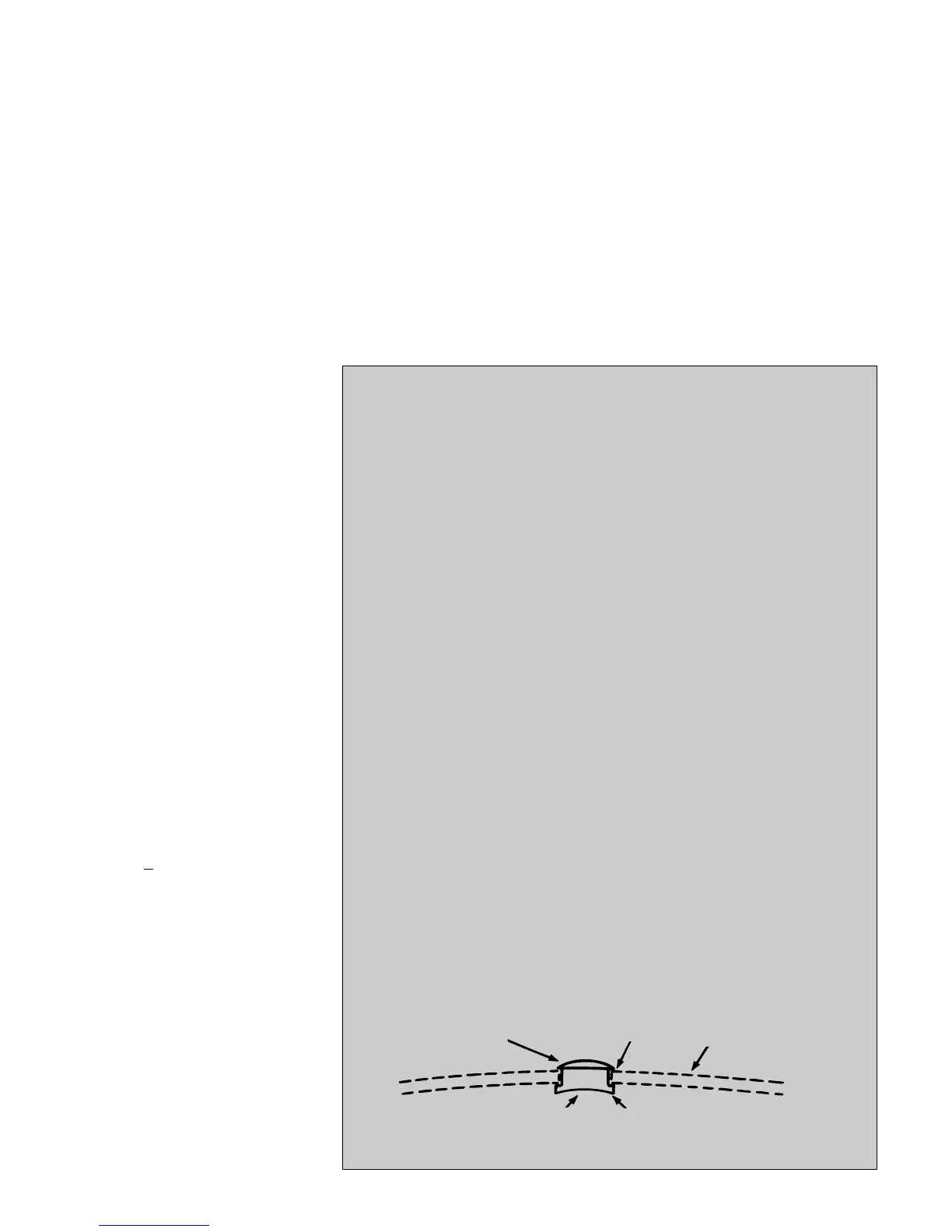
TO REMOVE THE OVERPRESSURE PLUG: From the underside of the
cover, pull the plug out of its opening using your fingers. After cleaning,
reinsert the overpressure plug by pushing the round top side of the
overpressure plug into the opening from the underside of the cover. When
the overpressure plug is correctly in position, the indented portion will be
visible when the underside is viewed. Be certain to check, after inserting
plug, that the round top of plug and top lip are fully through the opening
so that the top lip is not folded under.
COVER TOP SIDE
TOP LIP
ROUND TOP OF PLUG
MARKED “AA”
BOTTOM OF PLUG
IS INDENTED
OVERPRESSURE PLUG
CARING FOR YOUR COOKER



 To Next Page