33
TOMATO TIMETABLES AND CANNING INSTRUCTIONS
Quality: Select only disease-free, preferably vine-ripened, firm fruit for canning.
C
aution: Do not can tomatoes from dead or frost-killed vines. Green tomatoes are more
acidic than ripened fruit and can be canned safely with any of the following
recommendations.
Acidification: Since so many factors affect the acidity of canned tomatoes and juices, and because it
is impractical if not impossible for the home canner to measure the pH of each container canned, the
USDA recommends that acid be added to home-canned tomato products. To ensure safe
acidity in whole, crushed, or juiced tomatoes, add two tablespoons of bottled lemon juice or 1/2
teaspoon of citric acid per quart of tomatoes. For pints, use one tablespoon bottled lemon juice or 1/4
teaspoon citric acid. Acid can be added directly to the jars before filling with product. Add sugar to
offset acid taste, if desired. Four tablespoons of a 5 percent acidity vinegar per quart may be used
instead of lemon juice or citric acid in catsup, chili sauce and salsa only.
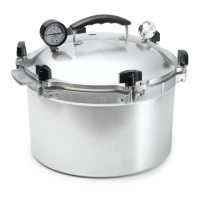
Recommendation: Use of a pressure canner will result in higher quality and more nutritious canned
tomato products. If your pressure canner cannot be operated above 15 PSI, select a process time at a
lower pressure.
Tomatoes
Wash, remove stems, and trim off bruised or discolored portions. To prevent juice from separating,
quickly cut about 1 pound of fruit into quarters and put directly into saucepan. Heat immediately to
boiling while crushing. Continue to slowly add and crush freshly cut tomato quarters to the boiling
mixture. Make sure the mixture boils constantly and vigorously while you add the remaining
tomatoes. Simmer 5 minutes after you add all pieces. If you are not concerned about juice separation,
simply slice or quarter tomatoes into a large saucepan. Crush, heat, and simmer for 5 minutes before
juicing. Press both types of heated juice through a sieve or food mill to remove skins and seeds. Add
bottled lemon juice or citric acid to jars (see acidification instructions). Heat juice again to boiling.
Add 1 teaspoon of salt per quart to the jars, if desired. Fill jars with hot tomato juice, leaving 1/2-inch
headspace.
Pints Quarts
Hot Water Bath up to 1000 feet 35 min 40 min
10 Pounds Pressure Canner up to 1000 feet 15 min 15 min
Wash tomatoes. Dip in boiling water for 30 to 60 seconds or until skins split; then dip in cold water.
Slip off skins and remove cores. Leave whole or halve. Add bottled lemon juice or citric acid to jars
(see acidification instructions). Add 1 teaspoon of salt per quart to the jars, if desired. For hot pack
products, add enough water to cover the tomatoes and boil them gently for 5 minutes. Fill jars with
hot tomatoes or with raw peeled tomatoes. Add the hot cooking liquid to the hot pack, or hot water
for raw pack to cover, leaving 1/2-inch headspace.
Pints Quarts
Hot Water Bath up to 1000 feet 40 min 45 min
10 Pounds Pressure Canner up to 1000 feet 10 min 10 min
Tomato
Juice
Raw
tomatoes
filled with
water
U.S. DEPT. OF AGRICULTURE DOES NOT PROVIDE PRESSURE CANNING TIMETABLES FOR HALF-GALLON JARS.
From the Complete Guide to Home Canning, Agriculture Information Bulletin No. 539, USDA. Revised 1994.



 To Next Page