20
in good working condition and
that the steam pressure gauge is
r
eading accurately.
• Pack and close food containers
correctly.
• Process food at the recommended
time and pressure.
• Test seals after cooling
containers.
• Store canned foods in a cool,
dry place.
Check Product
Before Eating
All canned foods should be carefully
inspected before use. As an added
safety precaution, boil low-acid foods
in an open pan before eating. (Boil
meats, poultry, seafood, corn and
spinach for 20 minutes; other
vegetables, 10 minutes.) This will
destroy the botulism toxin, should
any be present.
To ensure the safety of home-
canned fish, insert a meat thermome-
ter in the can or jar with the tip at the
center of the fish. Cover loosely with
foil and heat in a 350°F (180°C) oven
until the thermometer registers 185°F
(85°C). Let container stand at room
temperature for 30 minutes until
temperature is uniform throughout.
Don’t ever taste food which you
suspect to be spoiled. Never take a
chance on slightly off food. Discard it.
Detecting Spoilage
Immediately destroy any canned
product you suspect has spoiled.
Dispose of it where it won’t be eaten
by humans or animals. Discard the
product if:
• the ends of the can are bulged or
the seal on the jar is broken (test
each can or jar by pressing the
ends or lid; they should not bulge
or snap back);
• the product contains gas bubbles
or foam, or liquid squirts out when
can or jar is opened;
• product looks soft, mushy, slimy,
moldy or, in the case of meat,
off-color;
• product smells spoiled when boiled
(
heat brings out the characteristic
odor of spoiled food).
Canning Jars
Mason-type jars specifically designed
for home canning are best.
Commercial mayonnaise jars may
not seal and may break, especially in
a pressure canner.
Canning jars come in a variety of
sizes from half-pint jars to half-
gallon jars. Pints and quarts are the
most commonly used sizes.
Processing times have not been
developed for many foods in half-
pint, 12-ounce or one and one-half
pint jars. If the recipe does not
s
pecify processing in one of these
jars, process half-pint and 12-ounce
jars for the same time as pints. Half-
gallon canning jars are recommended
only for very acid juices. The U.S.
Department of Agriculture does not
provide pressure canning timetables
for half-gallon jars.
CANNING INSTRUCTIONS
HOME CANNING IS EASIER WITH
THE ALL-AMERICAN
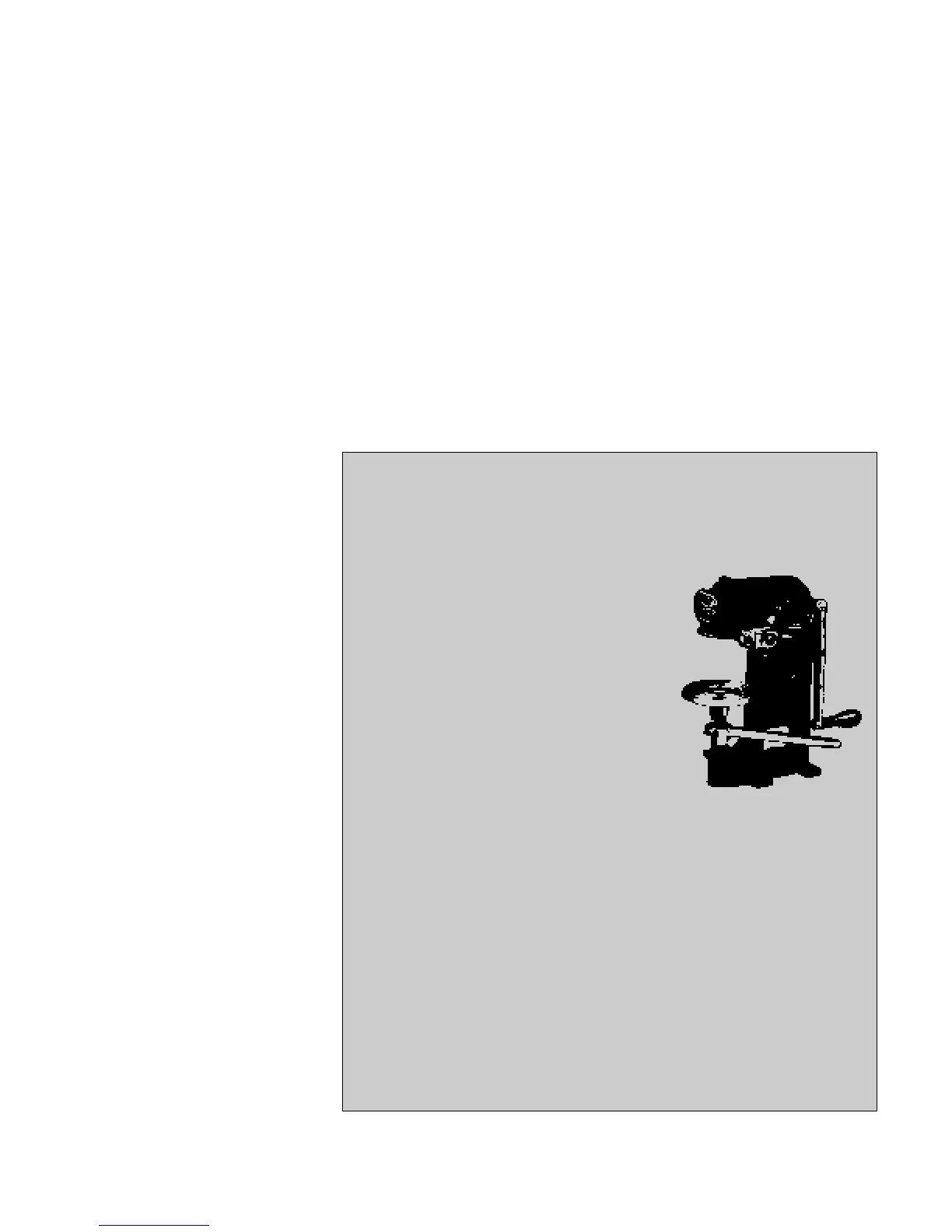
AUTOMATIC MASTER CAN SEALER
For canning in tin cans, use an ALL-AMERI-
CAN Automatic Master Can Sealer. The original
Automatic Master Can Sealer is the best and
most practical can sealer made for home use.
The Master Can Sealer frame is made of die cast
aluminum. Perfectly cast and accurately
machined, it’s built tough for a lifetime of
service.
The Master Can Sealer is simple and easy to
operate. It’s easily adjusted for different sizes of
cans, making it economical to own and operate.
Before you buy any can sealer, be sure to see
the ALL-AMERICAN can sealing equipment—a variety of sizes and
styles are available to fit all home canning and community canning
needs.
THE AUTOMATIC MASTER CAN SEALER
No. 225—Equipped to seal No. 2 Cans.
THE AUTOMATIC MASTER CAN SEALER, with Flywheel
No. 225-F—Equipped to seal No. 2 Cans.
Prices on additional SPECIAL EQUIPMENT to fit all sealer models, for
sealing the Nos. 1, 2
1
⁄
2
, 3, 202, 208, 300, 301 and 303 diameter cans are
available upon request. Be sure to state both the can diameter and height.
A SENIOR Can Sealer to seal cans up to the No. 12 size, and an
Electric Model, to seal cans up to the No. 3 size, are also available.
WRITE FOR PRICES AND DELIVERY INFORMATION.



 To Next Page