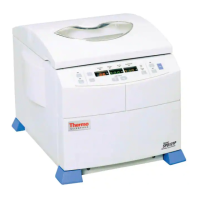
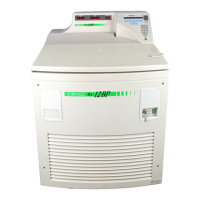
RC12
BP™
Table of Contents
iii
Important Safety Information
Certain potentially dangerous conditions are inherent to the use of all centrifuges. To ensure safe operation
of this centrifuge, anyone using it should be aware of all safe practices and take all precautions described below
and throughout this manual.
WARNING
When using radioactive, toxic, or pathogenic materials, be aware of all characteristics of the materials and the hazards
associated with them in the event leakage occurs during centrifugation. If leakage does occur, neither the centrifuge nor
the rotor can protect you from particles dispersed in the air. To protect yourself, we recommend additional precautions be
taken to prevent exposure to these materials, e.g., use of controlled ventilation or isolation areas.
Always be aware of the possibility of contamination when using radioactive, toxic, or pathogenic materials. Take all
necessary precautions and use appropriate decontamination procedures if exposure occurs.
In the future, if biocontainment products are added, the use of sealed rotors, buckets, and/or sample containers will
offer increased protection from contamination during routine operation. However, these items will not guarantee
protection from accidents resulting from damage to the rotor or buckets. Do run hazardous materials in the centrifuge
unless placed in a biohazard enclosed and operated using all appropriate safety precautions.
Never use any materials capable of producing flammable or explosive vapors, or creating extreme exothermic reactions.
Use SORVALL
®
rotors only. Use of another manufacturer's rotor can cause rotor failure which could result in personal
injury or centrifuge damage.
Never exceed the maximum rated speed of the installed rotor; to do so can cause rotor failure.
Always reduce (derate) rotor speed as instructed in this manual whenever:
• the rotor speed/temperature combination exceeds the solubility of the gradient material and causes it to precipitate.
• the compartment load exceeds the maximum allowable compartment load specified. See Chapter 4, page 4-14.
Failure to reduce rotor speed under these conditions can cause rotor failure.
Centrifuges routinely deal with high energy levels and could move suddenly in the unlikely event of rotor failure.
During centrifuge operation, never lean on or move the centrifuge, keep the surrounding area clear of objects (including
all hazardous materials), and do not work on top of or next to the centrifuge.
Do not attempt to open the chamber door when the rotor is spinning; never override or otherwise disable any of the
safety systems of the centrifuge.
CAUTION
Do not run or precool/preheat a rotor at the critical speed, as this will have a detrimental effect on centrifuge component
life. See Chapter 4, Rotor Temperature Equilibration, page 4-13.
Do not operate the centrifuge with a rotor out of balance. To do so can cause damage to the centrifuge drive assembly.
Do not operate centrifuge without a rotor properly installed and locked to the drive, and the rotor cover (if any) must
be properly installed. See rotor instruction manual.
Locate the centrifuge on a level floor to avoid rotor imbalance during operation.
The centrifuge can be damaged if connected to the wrong voltage. Check the voltage before plugging the centrifuge
into a power source. Thermo is not responsible for incorrect installation.
Always maintain the centrifuge in the recommended manner. See Chapter 5, Maintenance.
!
!





 To Next Page