Toyopuc PC3/PC2 Ethernet Driver
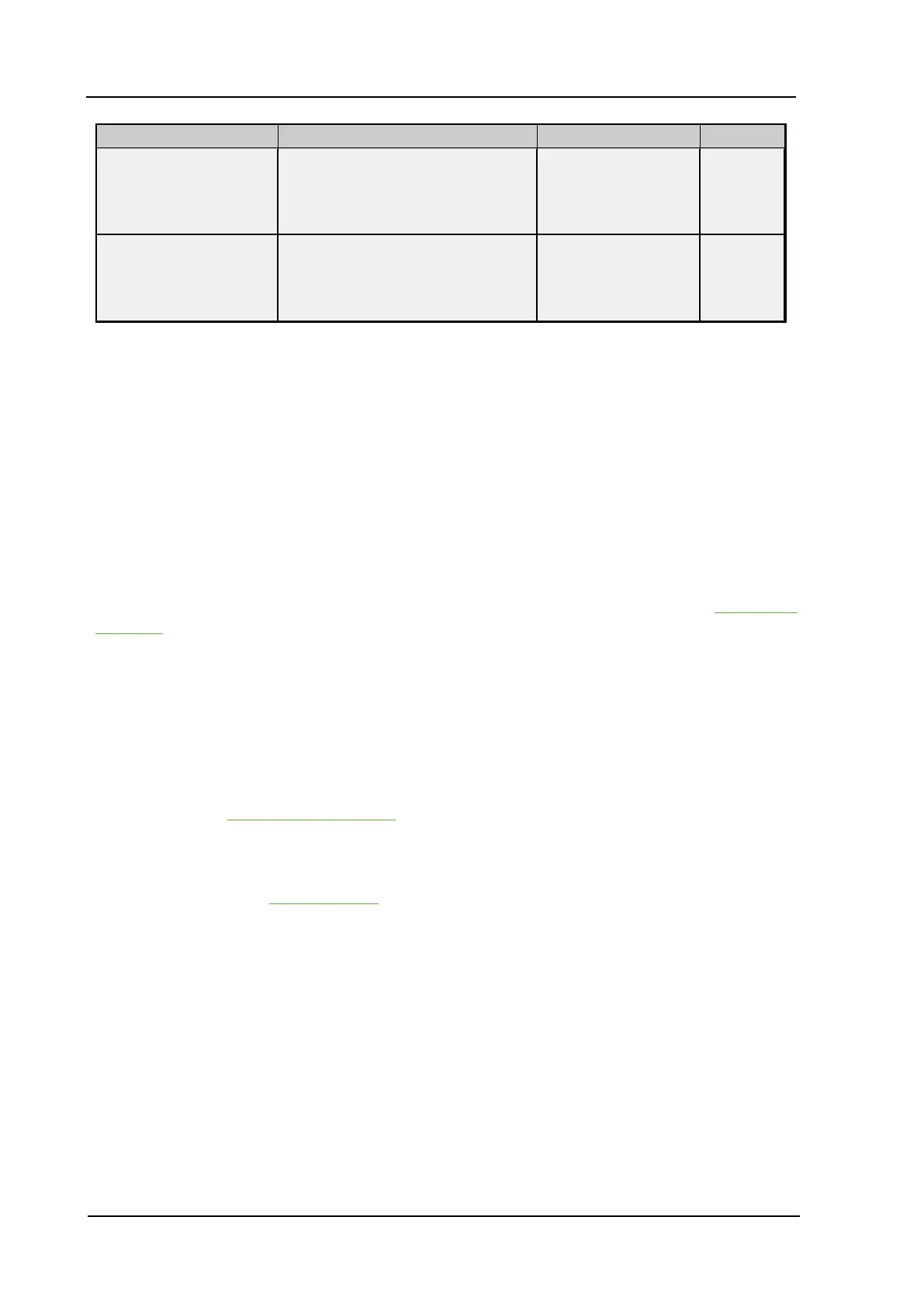
Memory Type Syntax* Data Type Access
Extended Output Relay
(GY)
GY0000-GYFFFF
GY000-GY0FFF
GY000-GY0FFE
Boolean
Byte**, Word, Short,
BCD
DWord, Long, LBCD
Read/Write
Extended Internal Relay
(GM)
GM0000-GMFFFF
GM000-GM0FFF
GM000-GM0FFE
Boolean
Byte**, Word, Short,
BCD
DWord, Long, LBCD
Read/Write
*Syntax
Addresses should be prefixed with "P1-", "P2-" or "P3-" to denote which PLC program in the PC3 contains the
desired address. For example, to read data register D10 from program 2 in the PC3, use the following
address syntax: P2-D10. If the device is in PC2 Interchange mode, use "P1-" to reference data.
Note: The extended addresses do not use the "P1-", "P2-", or "P3-" program indicator. If that is done, an
error message will be generated in the OPC server message window. Extended addresses must be entered
without any program number. For example, to request Extended I/O Relay (EX) 6FF, use the following syntax:
EX6FF.
**Low/High Byte Modifier
An optional Low (L) or High (H) byte modifier can be appended to any address. This modifier instructs the
driver that the low or high byte of the address word is requested. For more information, refer to Addressing
Examples.
Note: When adding a static tag with a low/high byte modifier, the data type must be set to Byte. For more
information on static vs. dynamic tags, consult the OPC Server online help.
Multi-Point Read Support
Multi-point read support allows the Toyopuc Ethernet driver to read data from multiple memory types
(based on program number) in a single request. The multi-point read function is available for both the PC3
and PC2 models and can be used across HPC Link or FL-net modules using relay routing. For more
information, refer to Multi-Point Read Support.
Diagnostics Tags
The Diagnostics Tags provide information on how the Toyopuc PC3/PC2 Ethernet Driver is performing. For
more information, refer to Diagnostic Tags.
Array Support
All memory types support arrays, which can be of any data type. Only the following exceptions apply:
l Byte arrays are not supported (this also means that low/high byte modifiers cannot be used with
array syntax).
l Boolean arrays are not supported for bit within word type addresses. For example, addresses like
'S0000.0' cannot be used with array notation. Discrete types support Boolean arrays.
l Multi-point read is not supported for arrays.
The array size cannot exceed the internal block size of 512 bytes. Array syntax is specified by adding '[r]'
(rows) or '[r][c]' at the end of the address string. [r]: rows, [c]: columns.
Addressing Examples
www. kepware.com
25



 To Next Page