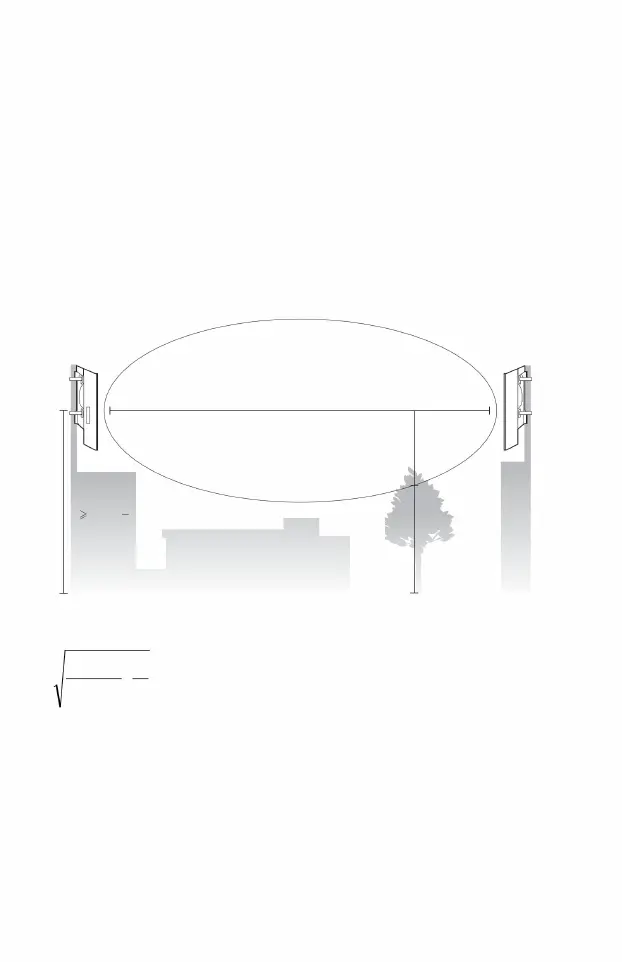
,
causing multipath propagation of signals
,
,
Then the signal can be considered to propagate in free space
,
This causes signal fading.
,
Large buildings or trees between the sender and receiver
an ellipsoid
During the transmission of wireless signals,
obstacles such as obstacles will reflect the signal.
Internal decline. This pipe area is called the Fresnel zone (Fresnel Z one). Fresnel zone is
,
We first need to introduce the concept of "Fresnel zone".
If there are no obstacles blocking it, there will be no
In a pipe-like area with the connection line of the transmitting and receiving antennas as the axis and r as the radius
As shown below:
,
,
The distance (measured in meters) between the sending device and the receiving device.
r is the Fresnel radius (measured in meters);
in:
f is the frequency of the wireless signal (measured in Hz);
d 1 and d 2 are respectively the distance from a measurement point to the transmitter on the connection between the transmitting and receiving antennas.
c is the speed of light, which is 3x10⁸ m/s;
twenty two
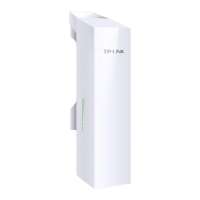
d1 and d2 are 2km and 8km respectively, and the operating frequency f of CPE is 2.4GHz, then
In practical applications,
in order to ensure normal communication of the system,
the height of the transceiver antenna must be as high as possible.
According to the above formula, the Fresnel radius r is 1 4 . 1 4 2 m. Considering a tolerance of 40%,
It is possible to make the obstacles between them no more than 40% of their Fresnel zones. For example suppose
,
,
,
d2
h is the height of the obstacle at this point
r
d1
H h+r
* (1 40%)
(H is the installation height of CPE)
ÿ
c
f
r
ÿ
d2d _
Question 2. How to calculate the minimum installation height of the equipment?
1
d2 d1
Machine Translated by Google





 To Next Page