18. Appendices
18.1 pH Electrode Fundamentals
A combination pH Electrode is two electrodes in one. The sensing
membrane is the round or spear shaped bulb at the tip of the electrode.
This produces a voltage that changes with the pH of the Solution. This
voltage is measured with respect to the second part of the electrode, the
reference section. The reference section makes contact with the sample
solution using a salt bridge, which is referred to as the reference junction.
A saturated solution of KCl is used to make contact with the sample. It is
vital that the KCl solution has an adequate flow rate in order to obtain
stable, accurate pH measurements.
18.1.1 Asymmetry of a pH Electrode
An “ideal” pH electrode produces 0 mV output at 7.00 pH. In practice, pH
electrodes, generally produce 0 mV output at slightly above or below 7.00
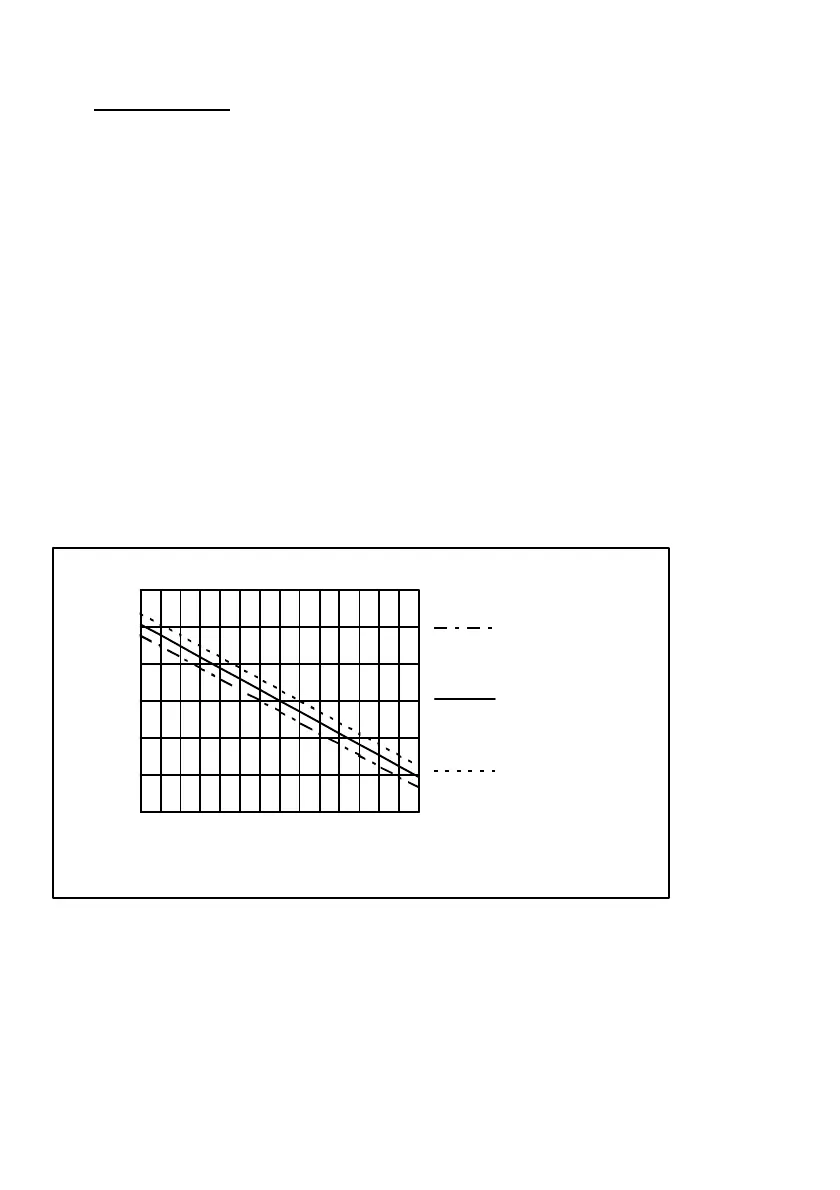
pH. The amount of variance from 7.00 pH is called the asymmetry. Figure
18-1 illustrates how asymmetry is expressed.
-600
-400
-200
0
200
400
600
0 7 14
+1.00 pH Asymmetry
0.00 pH Asymmetry
-1.00 pH Asymmetry
Response of pH Electrode, as a Function of Asymmetry
pH
Figure 18-1


 To Next Page