18.1.3 Temperature Compensation
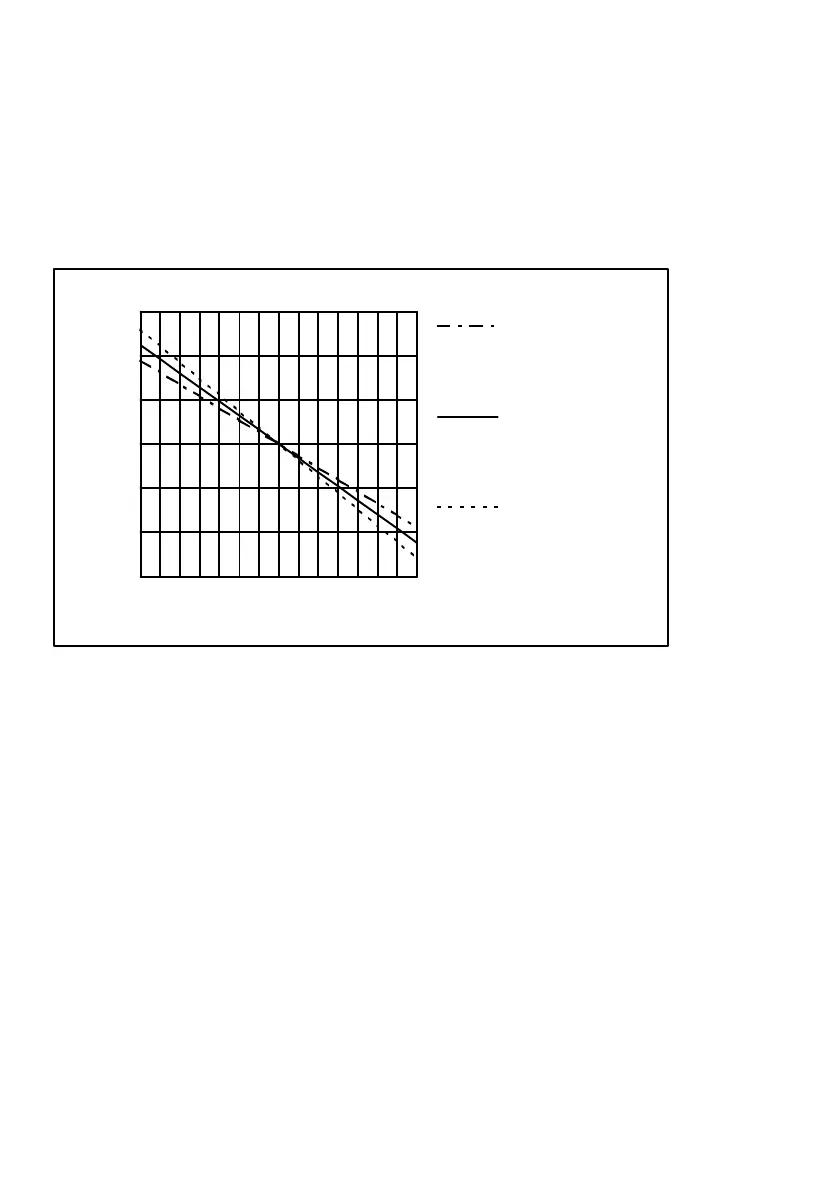
The slope of a pH electrode (section 18.1.2) is affected by temperature.
This effect is compensated for either by using an Automatic Temperature
Compensation (ATC) probe or by entering the sample temperature
manually. Figure 18-3 shows the slope of a pH electrode at various
temperatures.
-600
-400
-200
0
200
400
600
0 7 14
Electrode
Potential (mV) at
0 oC (54mV/pH)
Electrode
Potential (mV) at
50 oC (64mV/pH)
Electrode
Potential (mV) at
100 oC
(74mV/pH)
pH Electrode Response, as a Function of Temperature
pH
Figure 18-3
18.2 Checking the reference junction of a pH electrode.
If pH readings are inaccurate or unstable, the reference junction of the
electrode may be blocked. The following test can be performed to
determine if the reference junction of a pH electrode is making adequate
contact with the sample solution.
1. Calibrate the WP-80, as per section 4.1.
2. Dilute 1 part of pH6.88 buffer with 9 parts of distilled water.
3. Measure the pH of the diluted buffer. The result should be 7.06 +/-0.02
pH.
4. If the value obtained is outside of these limits, then clean the reference
junction, as per the instructions supplied with the pH electrode.
5. Re-calibrate the WP-80 and repeat the test.
6. If the value obtained is still outside 7.06 +/-0.02 pH, then the electrode
should be replaced.


 To Next Page