6
WSHP-SVX022A-EN
General Information
Jobsite Inspection
Each unit has been inspected, tested and operated at the
factory by production and quality associates prior to being
crated for safe transit. However, rough handling or
accidents can occur resulting in damaged equipment being
delivered.
Always perform the following checks before accepting a
unit:
• Do not sign the bill of lading accepting the unit(s) until
inspection has been completed. Check for damage
promptly after the unit(s) are unloaded. Once the bill of
lading is signed at the jobsite, the unit(s) are now the
property of the SOLD TO party and future freight claims
MAY NOT be accepted by the freight company.
• Check the unit model numbers on the bill of lading
against those ordered and received to assure
equipment is AS ORDERED.
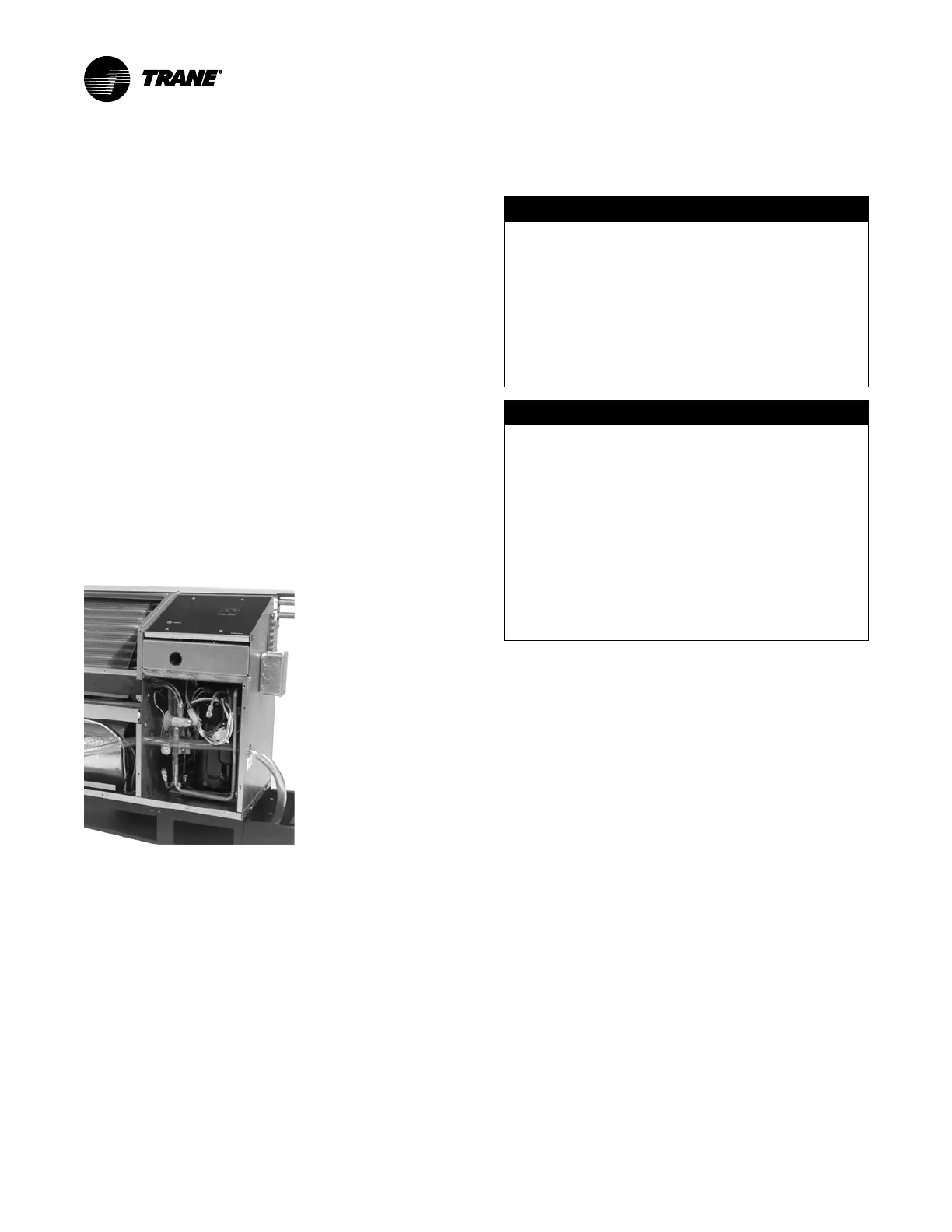
• Check that the refrigerant charge has been retained
during shipment by use of gauges. Schrader taps are
located and labeled internal to the cabinet.
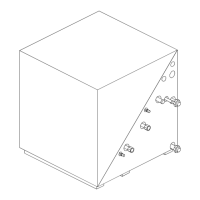
Figure 1. Schrader location
Important: Verify the charge has been retained. Then,
reinstall schrader caps to confirm refrigerant
leakage does not occur.
Re-install the unit panel using all factory provided screws.
Job Storage
NOTICE
Microbial Growth!
Failure to follow instructions below could result in
odors and damage to the equipment and building
materials.
Wet interior unit insulation can become an
amplification site for microbial growth (mold). If there
is evidence of microbial growth on the interior
insulation, it should be removed and replaced prior to
operating the system.
NOTICE
Microbial Growth!
Failure to follow instructions below could result in
odors and damage to the equipment and building
materials.
The floor or foundation must be level and the
condensate drain at the proper height for proper
drainage and condensate flow. Standing water and
wet surfaces inside the equipment can become an
amplification site for microbial growth (mold). If there
is evidence of microbial growth on the interior
insulation, it should be removed and replaced prior to
operating the system.
This unit is intended for indoor use only. To protect the unit
from damage due to the elements, and to prevent possible
IAQ contaminant sources from growing, the unit should be
stored indoors. If indoor storage is not possible, the
following provisions for outdoor storage must be met.
• Place the unit(s) on a dry surface or raise above the
ground to assure adequate air circulation beneath the
unit. This is to assure that no portion of the unit
contacts standing water at any time.
• Cover the unit(s) with a water proof tarp to protect
them from the elements.
• Make provisions for continuous venting of the covered
units to prevent moisture from standing on the unit(s)
surfaces. Wet interior unit insulation can become an
amplification site for microbial growth which has been
determined to be a cause of odors and serious health
related indoor air quality problems.
• Store units in the normal UP orientation. Storing units in
this manner maintains oil in the compressor.
• Units may be stacked two high.
Important: Equipment is shipped FOB (Free on Board) at
the manufacturer. Therefore, freight claims for
damages against the carrier must be initiated
by the receiver.


 To Next Page