11
Installing the cross actuation device
Please ensure that the drive rollers are not resting against the
tyres (at both sides)!
Slide the connecting tubes (1) into the middle tube (2) with
the holes facing the outside.
Slide the connecting tubes (1) onto the deflexion bolts (a).
Insert screws (5) through the deflexion bolts and tighten.
Centre the central pipe (2), measuring again if necessary. In
this position, screw in the 2 threaded bolts (3 + 4) (15 Nm).
Finally, check all the bolted connections again.
5
1
4
2
3
1
a
5
Fig. 28
Engage the rollers using the provided lever. The drive rollers
must now be applied at both sides. Also check the opposite
side. Disengage drive rollers again.
Repeat this procedure at the opposite side.
Installation of motor cables and control unit
The Mover® is only suitable for connection to 12 V batteries
(DC voltage)!
Remove battery cable terminals and disconnect any ex-
ternal electrical power before starting work. If you are
unsure about the electrical installation, have it checked out by
a qualified automotive electrician.
The electrical installation must comply with the technical and
administrative provisions of the respective country in which it
is used (e.g. EN 1648-1). National regulations and guidelines
must be observed.
Each motor has two preinstalled heavy-duty cables (6 mm²).
Mark the respective motor connecting cables (motor A or B –
see also wiring diagram) and temporarily route to the intend-
ed control unit installation position on the underbody of the
caravan. An example of a suitable location for the control unit
is in a bed stowage box in close proximity to the manoeuvring
system, at least 40 cm away from the battery.
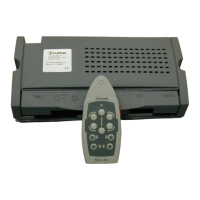
Insert control unit into stowage box and secure with the
supplied chipboard screws (5 x 16).
Drill a 25 Ø hole in the floor of the caravan for leading the cables
through, approx. 150 mm from the control unit terminal strip.
Take care to avoid any chassis members, gas pipes and
electrical wires!
Drill hole and lead cables through floor of caravan to control
unit in such a way that they cannot chafe (particularly when
leading through metal panels). This can be done using protec-
tive tubes, which will prevent the cables from being damaged.
The drive motors move during operation. To com-
pensate for this, the cables should be secured loosely
with a little play in this area in order to prevent cable stretch-
ing. No cables must be routed over the control unit!
Secure cables to chassis and / or underbody using the sup-
plied clips and screws.
Seal hole in vehicle underbody using plastic body sealant.
Connecting diagram
+ – + –
– +
1234
Drive
motor
A
B
A
B
Battery
Installation in
front of axle
Top-down
view
Drive
motor
+
-
Isolating
switch
Fig. 29
– + – +
– +
1234
Drive
motor
Drive
motor
Top-down
view
B
A
Battery
Installation
behind axle
A
B
+
-
Isolating
switch
Fig. 30
Installing the isolating switch
Install isolating switch in a suitable location (near the battery)
in the positive lead between the battery and the controller.
– A hole with a diameter of 25 mm is required for installation.
– Turn key anticlockwise until it reaches the end position and
remove.
– Slide isolating switch through hole and secure with either
the provided chipboard screws (5 x 16 mm) or the M6 x 30
bolts and M6 self-locking nuts.
– Cut the positive lead of the battery and crimp the provided
pipe-type cable shoes to both ends of the cut cable.
– Insert key again and move to “OFF”. Screw cable with
pipe-type cable shoes to isolating switch. Connecting order:
Pipe-type cable shoe, spring washer, nut.


 To Next Page