33
9. TROUBLESHOOTING
Although Tuthill Vacuum & Blower Systems blowers are well designed and manufactured, problems may
occur due to normal wear and the need for readjustment. The chart below lists symptoms that may occur
along with probable causes and remedies.
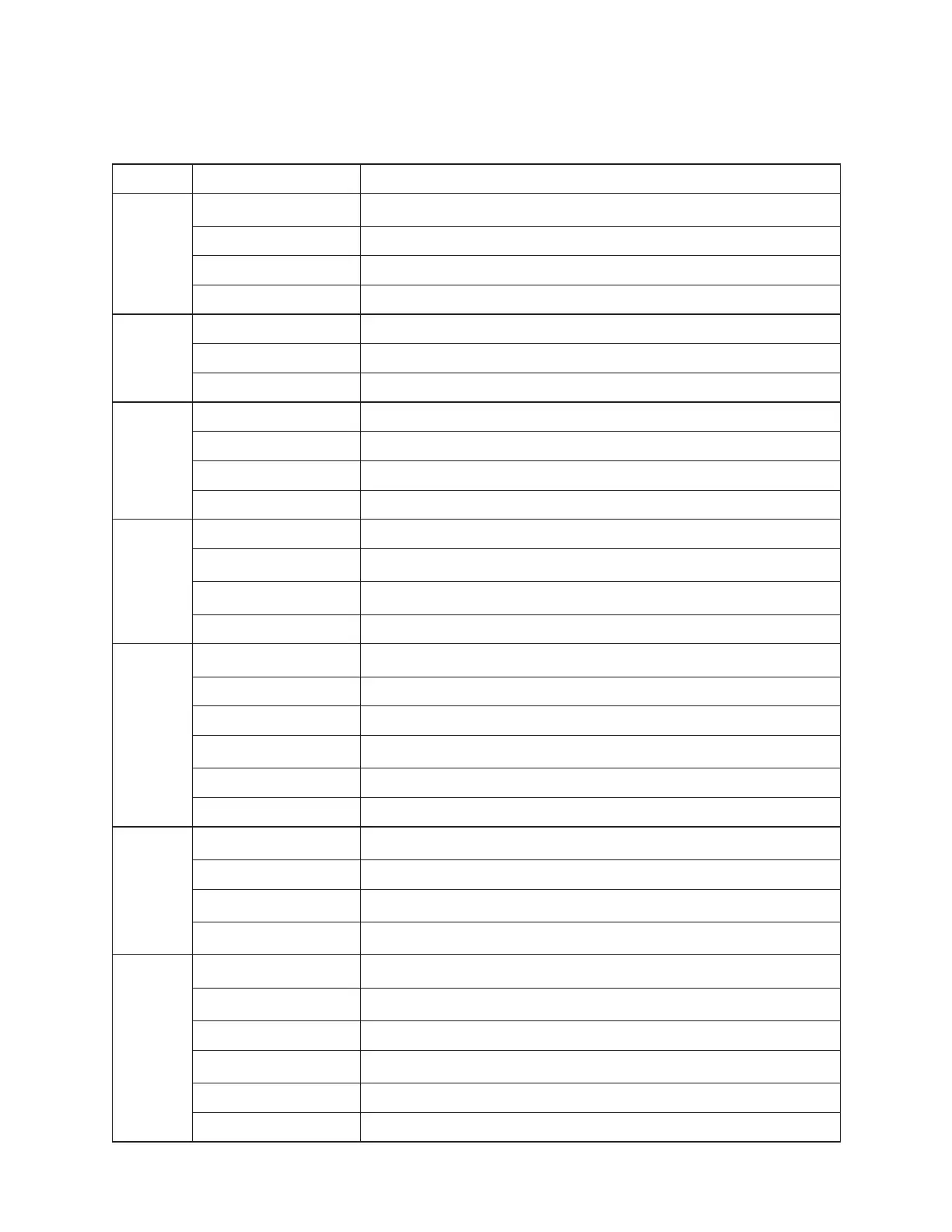
SYMPTOM PROBABLE CAUSE REMEDIES
Loss of oil
Gear housing not tightened
properly.
Tighten gear housing bolts.
Lip seal failure. Disassemble and replace lip seal.
Insufficient sealant. Remove gear housing and replace sealant. See the Disassembly section.
Loose drain plug. Tighten drain plug.
Excessive
bearing or
gear wear
Improper lubrication. Correct oil level. Replace dirty oil. See the Lubrication section.
Excessive belt tension. Check belt manufacturer’s specifications for tension and adjust accordingly.
Coupling misalignment. Check carefully, realign if necessary.
Lack of
volume
Slipping belts. Check belt manufacturer’s specifications for tension and adjust accordingly.
Worn lobe clearances. Check for proper clearances. See the Assembly Clearances section.
Speed too low. Increase blower speed within limits.
Obstruction in piping. Check system to assure an open flow path.
Knocking
Unit out of time. Re-time.
Distortion due to improper
mounting or pipe strains.
Check mounting alignment and relieve pipe strains.
Excessive pressure
differential.
Reduce to manufacturer’s recommended pressure. Examine relief valve and reset if
necessary.
Worn gears. Replace timing gears. See the Disassembly section.
Excessive
blower
temperature
Too much or too little oil in
gear reservoir.
Check oil level. See the Lubrication section.
Too low operating speed. Increase blower speed within limits.
Clogged filter or silencer. Remove cause of obstruction.
Excessive pressure
differential.
Reduce pressure differential across the blower.
Elevated inlet temperature. Reduce inlet temperature.
Worn lobe clearances. Check for proper clearances. See the Assembly Clearances section.
Rotor end or
tip drag
Insufficient assembled
clearances.
Correct clearances. See the Assembly Clearances section.
Case or frame distortion. Check mounting and pipe strain.
Excessive operating
pressure.
Reduce pressure differential.
Excessive operating
temperature.
Reduce pressure differential or reduce inlet temperature.
Vibration
Belt or coupling
misalignment.
Check carefully, realign if necessary.
Lobes rubbing.
Check cylinder for hot spots, then check for lobe contact at these points. Correct
clearances. See the Assembly Clearances section.
Worn bearings or gears. Check condition of gears and bearings; replace if necessary.
Unbalanced or rubbing
lobes.
Possible buildup on casing or lobes, or inside lobes. Remove buildup and restore
clearances.
Driver or blower loose. Check mounting and tighten if necessary.
Piping resonance. Check pipe supports, check resonance of nearby equipment, check foundation.



 To Next Page