24
3. For extended shutdown, inject a small amount of a light lubricating oil such as 3-in-One
®
or a spray
lubricant such as WD-40
®
into the inlet of the blower just prior to shutdown. (3-in-One and WD-40 are
registered trademarks of WD-40 Company.) The lubricant will provide an excellent protective coating
on the internal surfaces. If using a spray lubricant, exercise care to prevent the applicator tube from
getting sucked into the blower. The applicator tube will damage the blower, most likely to the point that
repair would be required.
4. If the blower is being taken out of commission for an extended period of time, please also refer to the
“Long Term Storage” section of this manual.
7. MAINTENANCE
7.1 GENERAL
Regular inspection of your blower and its installation, along with complete checks on operating conditions
will pay dividends in added life and usefulness. Also, service the drive per manufacturer’s instructions and
lubricate the coupling or check belt drive tension. By use of thermometers and gauges, make sure that
blower operating temperature and pressure remain within allowed limits.
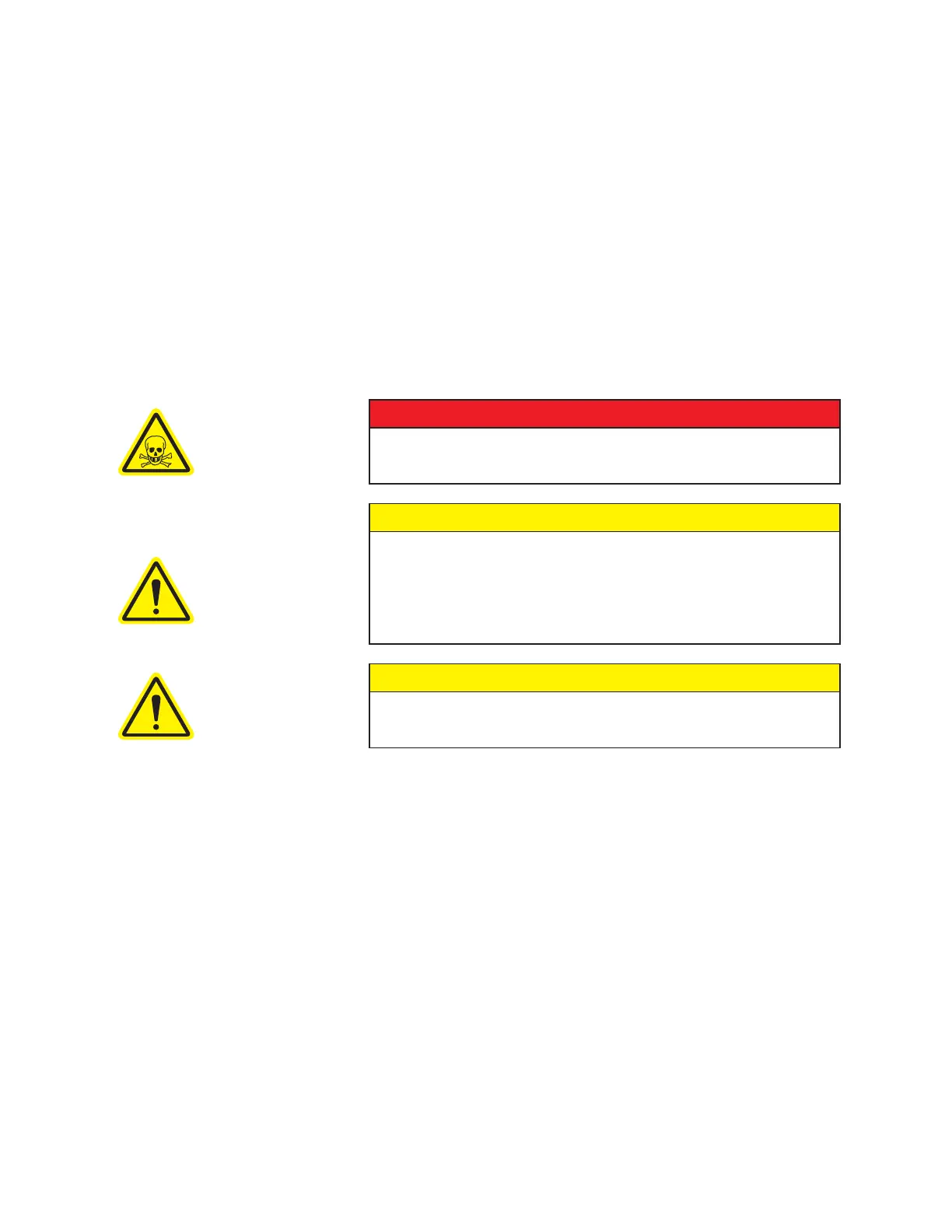
DANGER
The blower and parts may contain hazardous media. Assure that pump and
parts are evacuated of hazardous media prior to servicing.
CAUTION
The electrical service must be isolated and de-energized prior to
maintenance. Apply appropriate procedures to assure electrical supply is
de-energized and cannot be inadvertently energized during maintenance.
Assure piping and product is isolated prior to maintenance of blower. Apply
appropriate procedures to assure piping and product is isolated and that
inadvertent opening of valves cannot occur during maintenance.
CAUTION
During routine maintenance, inspect and assure that guards are in place
and secure.
Particular attention should be paid to lubrication of timing gears and bearings in accordance with comments
under the Lubrication section.
When a blower is taken out of service, it may require internal protection against rusting or corrosion. The
need for such protection must be a matter of judgment based on existing conditions as well as length
of down time. Under atmospheric conditions producing rapid corrosion, the blower should be protected
immediately. Refer to the Long Term Storage section for more details.



 To Next Page