LOAD HANDLINGLOAD HANDLING
1-241-24
WARNINGWARNING
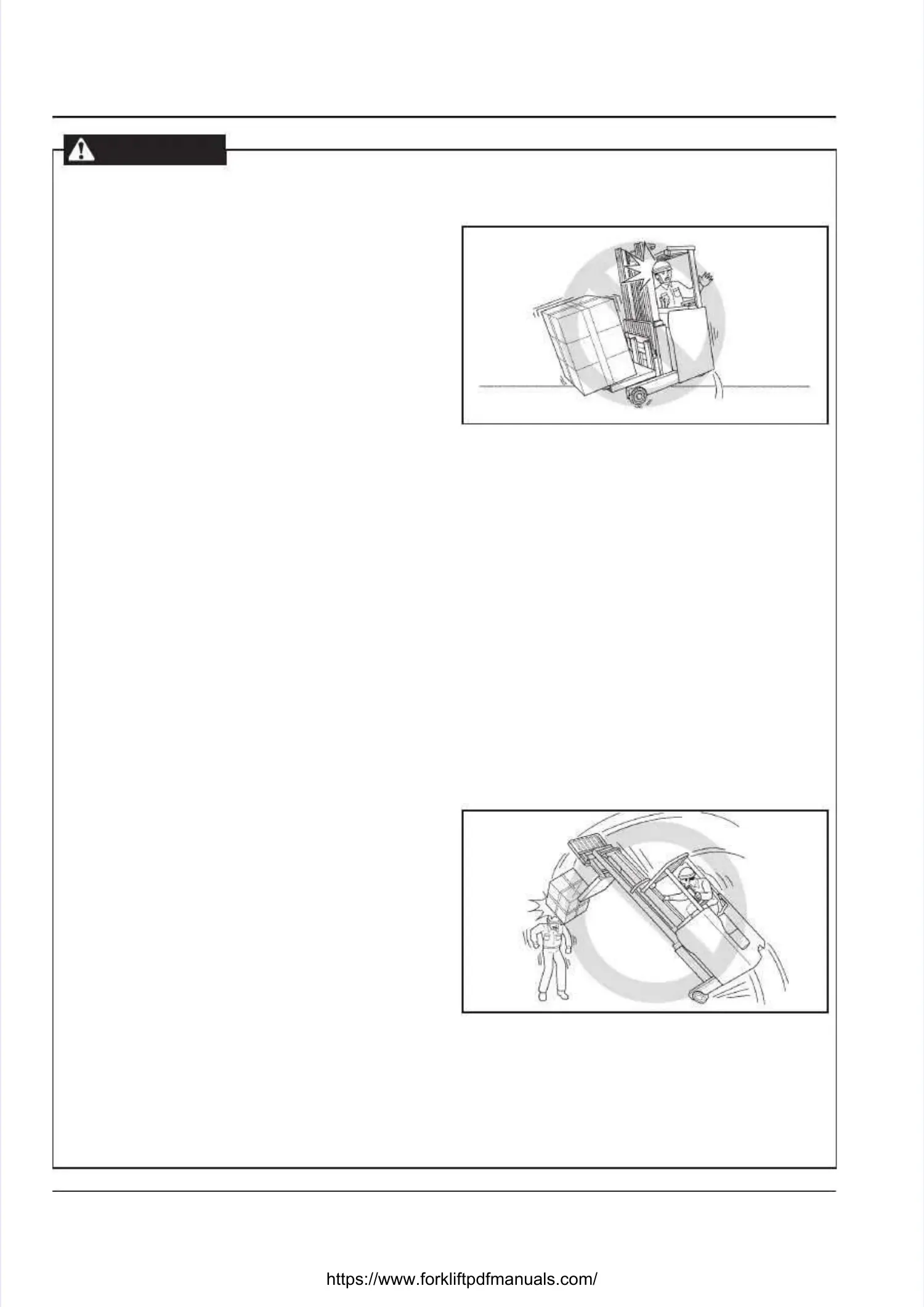
■■ Do not stack loads too high on theDo not stack loads too high on the
forksforks
Do not stack loads on the forks in such a wayDo not stack loads on the forks in such a way
that the top of the load exceeds the load backrestthat the top of the load exceeds the load backrest
height; otherwise, the load might fall on theheight; otherwise, the load might fall on the
operator, and in the worst case this could lead tooperator, and in the worst case this could lead to
serious injury or death.serious injury or death.
■■ Do not lift unstable loadsDo not lift unstable loads
Do not handle unstable loads. Ensure that loadsDo not handle unstable loads. Ensure that loads
on pallets are stable, neat, cross-tied if possible,on pallets are stable, neat, cross-tied if possible,
and evenly distributed.and evenly distributed.
■■ Use special caution when stacking orUse special caution when stacking or
unstacking loadsunstacking loads
When stacking or unstacking loads, stabilize themWhen stacking or unstacking loads, stabilize them
with ropes or other means, to prevent from fallingwith ropes or other means, to prevent from falling
off.off.
■■ Use strong enough pallets and skidsUse strong enough pallets and skids
Pallets and skids must be strong enough toPallets and skids must be strong enough to
withstand the load weights. If you use a damagedwithstand the load weights. If you use a damaged
pallet or skid, the load might fall off the forks.pallet or skid, the load might fall off the forks.
■■ Use extreme caution when handlingUse extreme caution when handling
long or bulky loadslong or bulky loads
Lift and lower the load carefully so as not to hit itLift and lower the load carefully so as not to hit it
against something near the truck. Keep the load asagainst something near the truck. Keep the load as
low as possible. Be careful when turning the truck,low as possible. Be careful when turning the truck,
to prevent the load from moving out of position orto prevent the load from moving out of position or
falling off.falling off.
■■ Be alert for overhead hazardsBe alert for overhead hazards
Be careful not to let the mast or overhead guardBe careful not to let the mast or overhead guard
contact any overhead power cables, piping,contact any overhead power cables, piping,
sprinklers or overhead cross beams. If part ofsprinklers or overhead cross beams. If part of
the truck comes in contact with them, the loadthe truck comes in contact with them, the load
might fall off the forks or the truck could tip over.might fall off the forks or the truck could tip over.
Remember that the mast becomes taller whenRemember that the mast becomes taller when
the forks are raised. Extreme caution should bethe forks are raised. Extreme caution should be
exercised when traveling forward.exercised when traveling forward.
■■ Do not jerk the Do not jerk the load handling leversload handling levers
while there are loads on the while there are loads on the forksforks
Avoid sudden operations with the forkAvoid sudden operations with the forks or the masts or the mast
while there are loads on the forks; otherwise thewhile there are loads on the forks; otherwise the
truck might tip over.truck might tip over.
■■ Never operate the reach mechanismNever operate the reach mechanism
when the load is in contact with thewhen the load is in contact with the
groundground
Never operate the reach mechanism with the loadNever operate the reach mechanism with the load
in contact with the ground (with the forks down).in contact with the ground (with the forks down).
■■Do not push or pull loads by using theDo not push or pull loads by using the
reach mechanismreach mechanism
Do not push or pull the load by using the force ofDo not push or pull the load by using the force of
the reach the reach cylinder.cylinder.
■■ Do not tilt the mast forward with highDo not tilt the mast forward with high
loadsloads
Use minimum forward and reverse tilt whenUse minimum forward and reverse tilt when
stacking and unstacking loads. Never tilt forwardstacking and unstacking loads. Never tilt forward
unless the load is over the stack; otherwise theunless the load is over the stack; otherwise the
load might fall off the forks or the truck might tipload might fall off the forks or the truck might tip
over.over.



 To Next Page