1.1 Principles of log combustion for generating heat
Units of measurement for wood fuel
The units of measurement commonly used in forestry and the timber
industry for wood fuel are solid measures of timber (smt) and stacked
cubic metres (stcm). The solid measure of timber (smt) describes
1 m
3
of solid timber mass in the form of assorted round timbers.
The stacked cubic metre (stcm) is a measure for stacked or tipped
wood, measuring a total volume of 1 m
3
, including air gaps. On aver-
age, one solid measure of timber equals 1.4 stacked cubic metres.
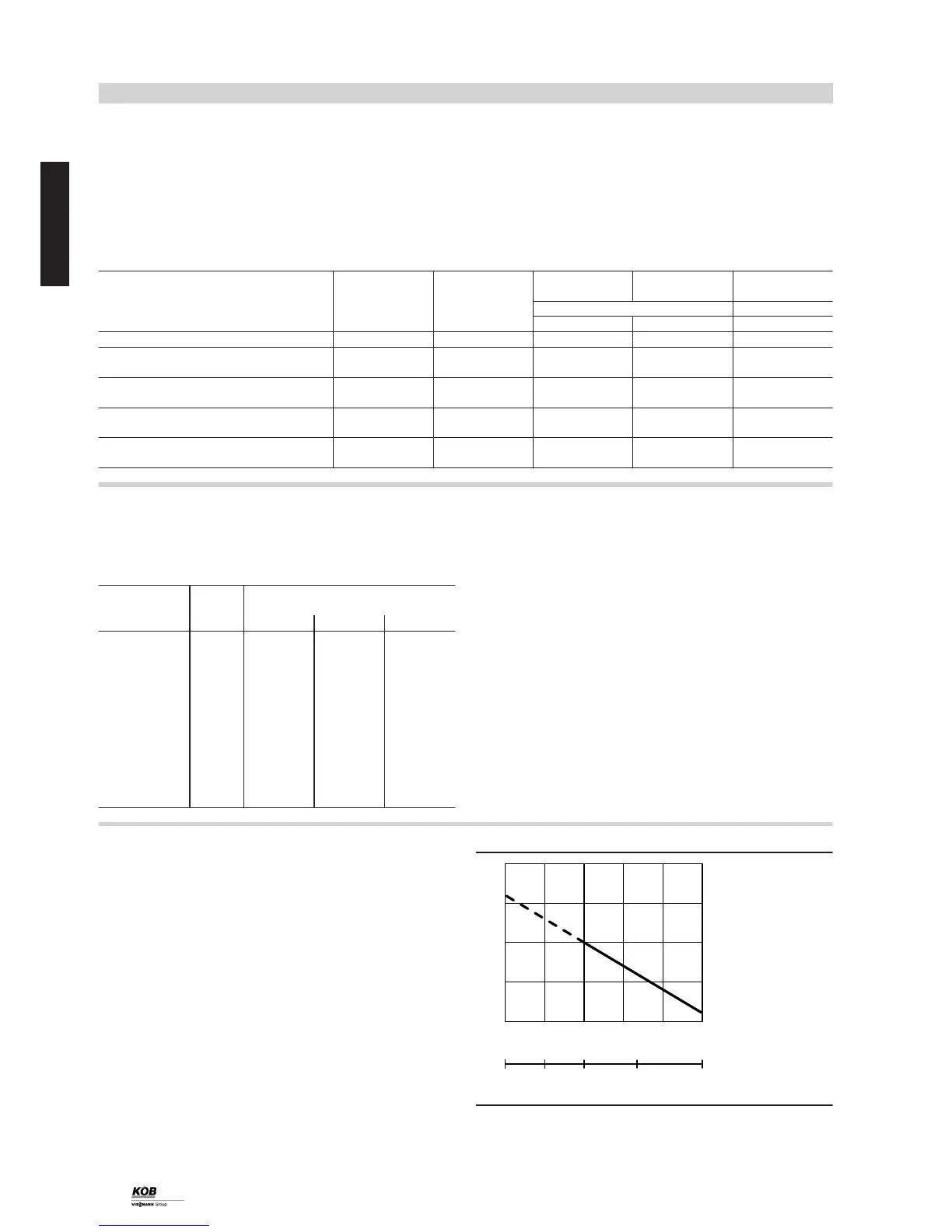
Conversion table for assorted common wood fuel
Unit of measurement Solid measure
of timber (smt)
Stacked cubic
metre (stcm)
Stacked cubic
metre (stcm)
Tipped cubic
metre (tcm)
Tipped cubic me-
tre (tcm)
Assorted Round timbers Split logs
Logs Woodchips
Stacked Tipped G 50 "medium"
1 smt round timber 1 1.40 1.20 2.00 3.00
1 stcm split logs
1 m long, stacked
0.70 1.00 080 1.40 (2.10)
1 stcm logs
split, stacked
0.85 1.20 1.00 1.70
1 tcm logs
split, tipped
0.50 0.70 0.60 1.00
1 tcm (forest) - woodchips
G 50 "medium"
0.33 (0.50) 1.00
Calorific and emission values
Timber is a renewable fuel. During combustion, on average approx.
4.0 kWh/kg units of energy are released.
The table shows the net calorific value of various types of timber with
a water content of 20 %.
Type of timber Density Net calorific value (approx. at 20 %
water content)
kg/m
3
kWh/smt kWh/stcm kWh/kg
Conifers
Spruce 430 2100 1500 4.0
Fir 420 2200 1550 4.2
Pine 510 2600 1800 4.1
Larch 545 2700 1900 4.0
Deciduous
Birch 580 2900 2000 4.1
Elm 620 3000 2100 3.9
Beech 650 3100 2200 3.8
Ash 650 3100 2200 3.8
Oak 630 3100 2200 4.0
Hornbeam 720 3300 2300 3.7
1 litre of fuel oil can be replaced by 3 kg of timber, considering the usual
efficiencies. A stacked cubic metre (stcm) of beech corresponds to the
energy of approx. 200 litres of fuel oil or 200 m
3
of natural gas. There-
fore burning wood contributes to the preservation of the finite reserves
of oil and gas.
Timber has a generally neutral CO
2
balance, as the CO
2
created during
combustion is immediately reabsorbed into the photosynthesis cycle
and therefore contributes to the formation of new biomass. Another
environmental aspect is the fact that timber contains hardly any sul-
phur, therefore almost no sulphur dioxide is created during combus-
tion.
Influence of moisture on the net calorific value
The water content of timber substantially influences its net calorific
value. The more water timber contains, the lower its net calorific value,
since the water evaporates during combustion and consumes energy
in the process.
Two measures are used to specify the water content.
■ Water content
The water content of timber is its water mass as a percentage of the
total timber mass.
■ Timber moisture level
The timber moisture level (hereafter referred to as moisture or mois-
ture level) is the water mass as a percentage of the total timber mass
excluding water.
The graph shows the relationship between the water content and the
moisture level, as well as the dependency of the net calorific value.







 To Next Page