17 PB0347:m-620atex-en-03
8.3 Pump installation
For a correctly engineered installation please ensure thatthe following guidelines are followed:
l Do not build a pump into a tight location without adequate airflow around the pump.
l Do keep delivery and suction tubes as short and direct as possible and follow the straightest route.
Use bends of large radius: at least four times the tubing diameter. Ensure that connecting pipework
and fittings are suitably rated to handle the predicted pipeline pressure. Avoid pipe reducers and
lengths of smaller bore tubing than the pumphead section, particularly in pipelines on the suction
side. Any valves in the pipeline (not usually needed) must not restrict the flow. Any valves in the flow
line must be open when the pump isrunning.
l Do use suction and delivery pipes equal to or larger than the bore of the tube in the pumphead.
When pumping viscous fluidsuse pipe runs with a bore several times larger than the pump tube.
l Do ensure that your system fluid supply and discharge pipework is suitable for the hazardous
environment in which the pump is operating and doesn't allow for the accumulation of electrostatic
charge.
l Do site the pump at or just below the level of the fluid to be pumped if possible. This will ensure
flooded suction and maximum pumping efficiency.
l Do keep the pumphead track and all moving parts clean and free from contamination and debris.
l Do run at slow speed when pumping viscous fluids. Flooded suction will enhance pumping
performance in all cases, particularly for materials of a viscous nature.
l Do limit peristaltic tubing to the length adjacent to the pumphead because peristaltic tubing is
insulating. Electrostatic testing has been used to determine which Watson-Marlow tubing is suitable
for use in hazardous environments. See section 12 "Special conditions of use for safe operation -
Tube materials suitable for use with this equipment" on page22 for more information. Earthed,
conductive pipework should be used elsewhere in the system.
l When using Marprene or Bioprene continuous tubing, do re-tension the tube after the first 30
minutes of running.
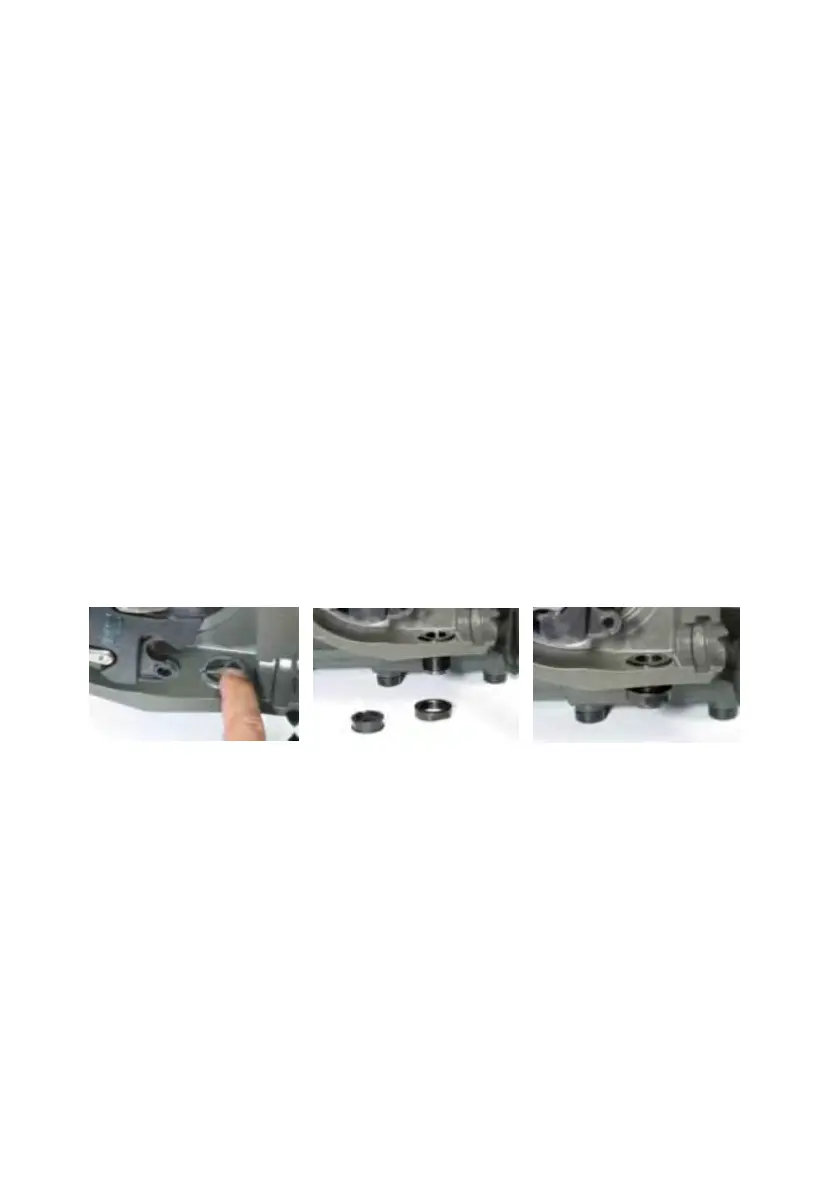
l Do ensure that the controlled waste blanking plug is in position if the controlled waste port is not in
use. See first image below.
l Do use controlled waste pipe work if pumping hazardous, aggressive or abrasive fluids or products
which will harden in contact with air. See second and third imagesabove.
l Do ensure that there is adequate clearance underneath the pumphead when connecting waste pipe
work to the controlled waste port using the coupling adaptor supplied. Waste pipe work should run
to a suitable container or drain.
l If unsure of an installation please contact your local Watson- Marlow representative for further
assistance.
l Tube selection: The chemical compatibility lists published in Watson- Marlow publications are
guides. If in doubt about the compatibility of a tube material and the duty fluid, request a Watson-
Marlow tube sample card for immersion trials.


 To Next Page
 Loading...