CP600 Pivot Operation Manual
POM-EN-December 2018
86
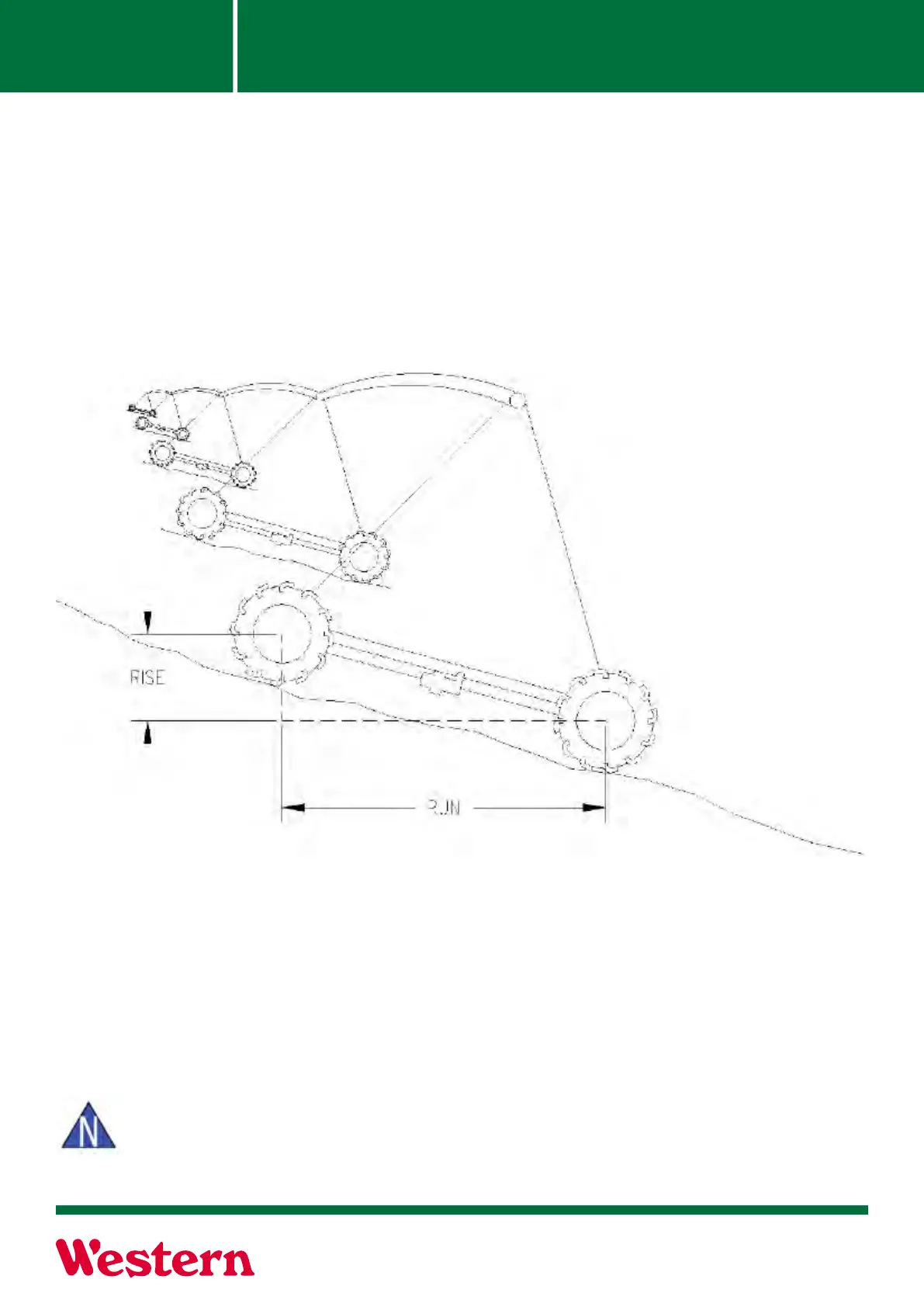
Figure 3-5. Transverse Slope
Another factor that should be considered with dips and ravines is the reduction of crop clearance that will
occur as the span runs over the crest of the ravine. Extreme cases of dips and ravines could cause either
the span under trussing or overhang to come in contact with the ground, as shown in Figure 1-4.b. This
situation could occur even if the slope in question does not exceed the slope limitations for the span, so
care must be taken to know where the towers will run in the eld. If this situation occurs, solutions include
smoothing down the slope with earth moving equipment, or reconguring the span lengths and tower
placements of the machine to cause the towers to run over the higher spots in the eld. If machine recon-
guration is chosen, be sure to consider the entire eld, as changing the machine conguration to alleviate
one problem may cause another problem somewhere else.
Lateral movement of a machine on a slope, as shown in Figure 1-7., is when more than one tower is on
the same type of slope (i.e., ascending or descending). Exceeding slope limitations here could move the
center of gravity of the span sideways enough to cause the span to roll, thus collapsing the machine. On
this type of slope, more weight gets redistributed to the downhill tire than the uphill tire, which could cause
excessive rutting in soft soils. This situation could further be complicated by erosion of the soil in the wheel
rut due to water being channeled down the rut from the machine.
Note: The transverse slope for the given span length is not to exceed 30%.
Must not be more than twice the transverse slope limit and must not exceed 30%.
Section 3-4
Getting Started
Slope Considerations



 To Next Page