25| P a g e
Trailering
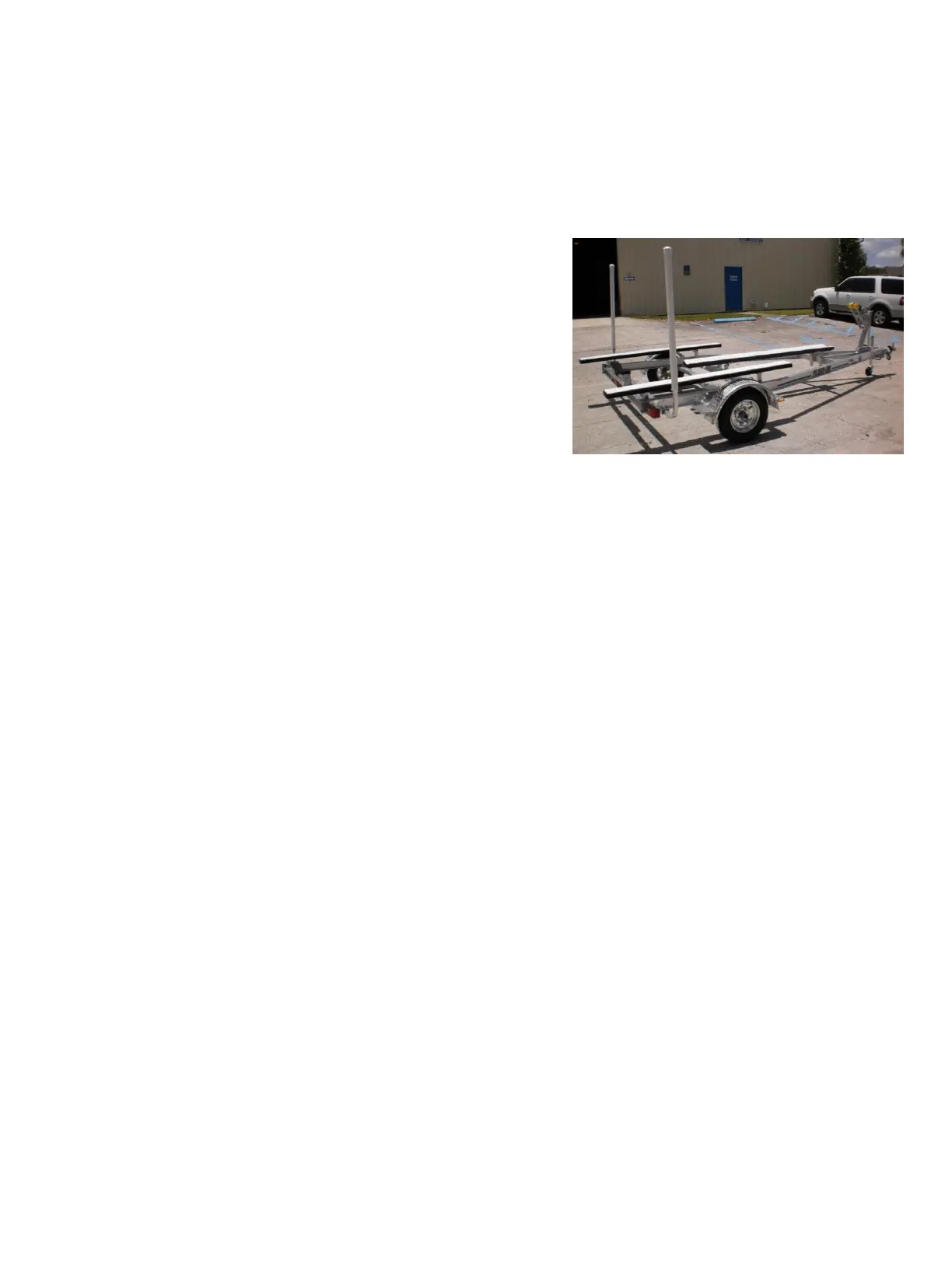
There are a number of optional dedicated trailers available that are built specifically to work with your Wing P4.2, P4.7,
P5.3 and P5.8, with properly spaced and supportive bunks, to make towing, launching and recovery of your CRRC very
straightforward and safe. Whether a specialized and dedicated trailer, or not, it is important that you learn the
fundamentals to trailering your CRRC. If you are towing with a flatbed-style trailer, it is important to deflate the keel
while the craft is loaded on the trailer.
Review the “dry weight” of your CRRC (which is the total boat weight
without fuel and gear). It is best to trailer your craft with the minimum
amount of equipment. Moderate and heavy loads while on a trailer
could cause damage to the keel, the fabric hull, and MBT’s especially
over long periods of time and distances. Outboards, fuel, repair kits,
safety equipment, and other items will easily add several hundred
pounds to the weight of the boat. Follow all manufacturers’ safety
procedures and recommendations when trailering your boat.
Securing Your CRRC for Trailering
Be sure the boat is secure by having the winch strap latched to the boat eye and winched tight. Also, secure the boat
with two straps from the transom lifting eyes (outboard of transom) down to the (holes, eyes or even the trailer frame
itself). The two bow towing rings are also good hard points to attach to the trailer using straps or line. The combination
of these creates a solid 5 point tie down system.
An alternative method is to, along with a bow winch, to use a full body strap across the top and near the rear of the boat
(approx. 3 ft/1m forward of transom). A second full body strap may also be used near the middle front of the boat (just
aft of the thrustboard) to augment the stern body strap. Important: It is important to secure full body straps in a manner
they do not rub or flop against the boat, especially during highway speeds. Tip: flat straps have a tendency to oscillate
and loosen in the wind, particularly at higher speeds. Twisting the straps 4-8 times where they are exposed to wind,
particularly over the center of the boat, helps to reduce this high frequency oscillation and reduce the abrasion on the
boat that can take place as a result.
Launching and Recovery
When launching, line up the boat with the ramp, remove all straps except the winch strap, and slowly back up to the
edge of the water. Once the vehicle is secure, loosen the winch strap and detach the latch from the boat’s bow
eye. Secure a tag line to the boat with several feet of slack and secure the other end to the trailer. Then slowly back
trailer into the water until the boat floats and the tag line is holding. At this point, retrieve the tag line from the trailer
and walk the boat safely to the dock. If it is a two man operation, once the boat is at the edge of the water, the second
man can enter the boat and operate as the boat floats off instead of using the tag line procedure.
When recovering the boat, line up the trailer with the ramp and slowly back up to the water. Prior to driving the boat
up, flip the lever on the engine Submerse the trailer until the fenders go under the water. Slowly drive the boat between
the trailer PVC guide rails (if applicable) let it float until rests on the bunks. It is important to have the main
buoyancy tubes firmly situated on the bunks. A second person outside the boat may need to spot for proper line-up,
and guide the boat with a bow and stern line. If it is close enough, pull the winch strap back and latch to the bow eye,
then winch up until secure. If it needs to be closer, you can simply back the trailer a little further in the water or slowly
power the boat on a little more. Marking the trailer with high-visibility tape along the main section of the trailer to
indicate forward-most bow position greatly helps with recovering the boat – particularly if the trailer is significantly
longer than the boat. If there is risk of hitting your engine on the trailer, prior to recovery, put your engine in the
shallow water tilt position. Follow the engine manufacturer’s guidelines and cautions when doing so.
Once the boat is positioned properly and secured to the winch, slowly pull the boat out of the water while watching to
see that the boat stays secure and settles down evenly on the trailer. When the boat is fully out and on land, secure the
craft with straps (as described earlier) and make sure the winch strap is securely tight.



 To Next Page