EasyManua.ls Logo

WLKATA Mirobot - User Manual

WLKATA Mirobot
80 pages
Print Icon
To Next Page IconTo Next Page
Loading...
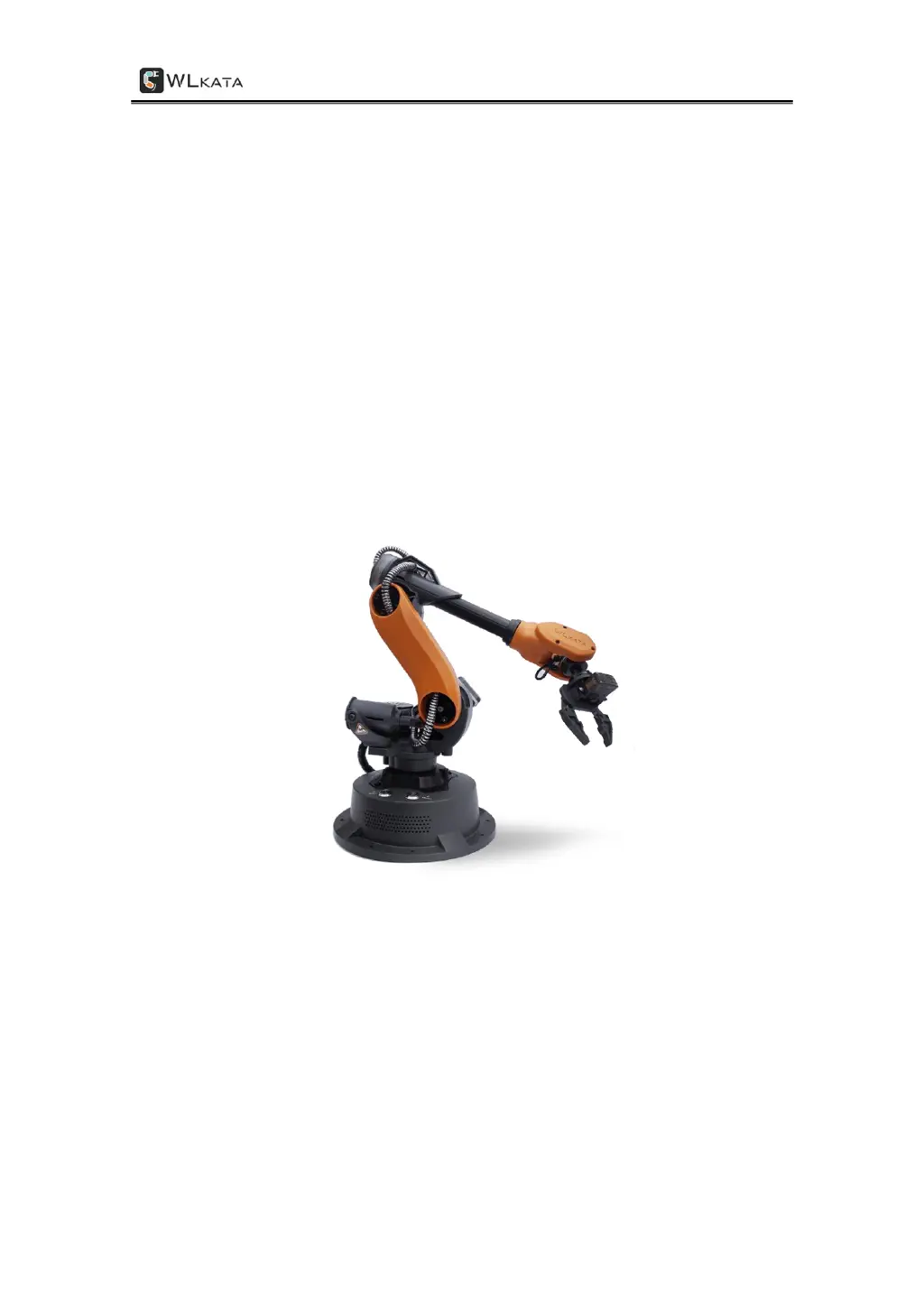
WLKATA Mirobot manipulator User Manual
WLKATA Mirobot
User Manual
Version: 1.3
Date: Sep 30th 2020
WLKATA Robotics
Beijing Tsinew Technologies Co., Ltd.
www.wlkata.com

Table of Contents

Questions and Answers

  • C
    Catherine ZimmermanJul 27, 2025
    What to do if the first axis sensor fails on WLKATA Mirobot?
    • L
      ljosephJul 28, 2025
      If the first axis sensor on your WLKATA Robotics system fails, it could be due to a loose sensor plug or a loose one-axis screw, preventing the sensor from detecting the magnet. Try tightening the screw a bit to resolve this. Alternatively, you can attempt the following steps: Disable software limits by entering $20=0 and $21=0. Unlock the motor with M50. Manually align the first axis to the scale line using J1. Perform a homing operation to check if the reset is successful. If the magnet position is exceeded, stop immediately. If issues persist, contact customer service. If successful, re-enable the software limits by entering $20=1 and $21=1 to resume normal operation.
  • C
    Corey ChristensenAug 12, 2025
    What to do if the first axis sensor fails in WLKATA Mirobot Robotics?
    • M
      Melissa FrostAug 12, 2025
      If the first axis sensor fails on your WLKATA Robotics system, the issue might stem from a loose sensor plug or a loose one-axis screw, which prevents the sensor from properly detecting the magnet. To address this: Firstly, slightly tighten the screw. Then, follow these steps in WLKATA Studio: * Enter $20=0 and $21=0 to remove software limits. * Enter M50 to unlock the motor. * Click J1 to rotate the first axis to align with the scale line. * Click Homing to check if the reset is successful. Stop immediately if the magnet position is exceeded. After completing these steps, enter $20=1 and $21=1. You should then be able to use the system normally.

Summary

Exemption from Declaration

Preface

Objective

Introduces functions, specifications, installation, and debugging for understanding and use.

Target Readers

Lists target audience: engineers and technicians for installation, support, and sales.

Revision History

Tracks modifications and version updates of the manual.

Symbolic Conventions

Introduction of WLKATA Mirobot

Structure of WLKATA Mirobot

Describes the main components: base, joints, arms, and end-effector connection plate.

Standard Set Contents

Lists the 10 items included in the standard package for users.

Add-ons and Accessories

Mentions additional available add-ons and accessories for the robot.

Safety Precautions

General Safety Guidelines

Provides essential safety rules, warnings, and handling guidelines for electrical equipment.

Specific Handling Precautions

Details precautions for lifting, finger safety, joint protection, and hot surfaces.

Quick Start Guide

Initial Setup and Connection

Guides on connecting the Mirobot, installing drivers, and the WLKATA Studio software.

Powering On;Off and Basic Operation

Steps for turning the Mirobot on/off and initial connection verification.

WLKATA Studio Software Overview

Covers software features like language, mode selection, and interface introduction.

Manipulator Operation Guide

Details prerequisites, connection, homing, and using various control modes and functions.

Using the Teach Pendant (Bluetooth Controller)

Teach Pendant Description and Parameters

Introduces the wireless pendant, its appearance, and specifications.

Teach Pendant Operation Guide

Covers pendant power, connection, and control modes like Angle, Coord, Record.

Using the Sliding Rail and Conveyor Belt

Sliding Rail Connection and Use

Guides on connecting and operating the sliding rail accessory with the robot.

Conveyor Belt Connection and Use

Instructions for connecting and operating the conveyor belt accessory.

Cautions and Disclaimers

Important warnings and legal disclaimers regarding product use and limitations.

Working Principle and Specification

Working Space and Coordinate System

Defines the robot's reachable workspace and its joint/Cartesian coordinate systems.

Sports Function Modes

Explains Joint motion and Cartesian motion modes for robot control.

Technical Specifications

Lists detailed technical parameters including axis motion and physical characteristics.

Interface Description

Manipulator Interface Board

Details the pin definitions for the manipulator's communication interface.

Extender Box Interface Board

Describes the pin definitions for the external expansion interface board (Extender Box).

Appendix I: Calibration Operation

Calibration Procedure Steps

Outlines the steps for calibrating the robot's joints using the WLKATA Studio software.

Appendix II: Firmware Upgrade Tutorial

Firmware Upgrade Process

Step-by-step guide for updating the robot's firmware via WLKATA Studio.

Appendix III: Troubleshooting Guide

Upgrading WLKATA Studio

Instructions for safely installing new versions of the WLKATA Studio software.

First Axis Sensor Failure

Addresses issues with the first axis sensor not detecting the magnet and provides solutions.

WLKATA Mirobot Specifications

General IconGeneral
Number of Axes6
Repeatability±0.2mm
TypeIndustrial Robot Arm
Control MethodPC, Mobile
Programming LanguagePython, C++, Blockly
Communication InterfaceWi-Fi, USB
MaterialsAluminum Alloy