4
Note: Industry Canada and the US/FCC use the same RF power density level for their
limits, but express them in different units. The US/FCC/OSHA/ANSI use milliwatts per
square centimeter (mW/cm2) and Industry Canada uses Watts per square meter
(W/m2).
eq. 1
The following calculations are based off of the Maximum Permissible Exposure
requirements as outlined by the FCC and IC. The MPE (Maximum Permissible Exposure)
distance is calculated based on the limits for a General Population/Uncontrolled
Exposure, 900 MHz frequency band. A conservative MPE limit of 0.6 mW/cm
2
or 6
W/m
2
was used for the calculations of the Table. The table provides safe distance for
several power levels and antennas besides the worst case for convenience.
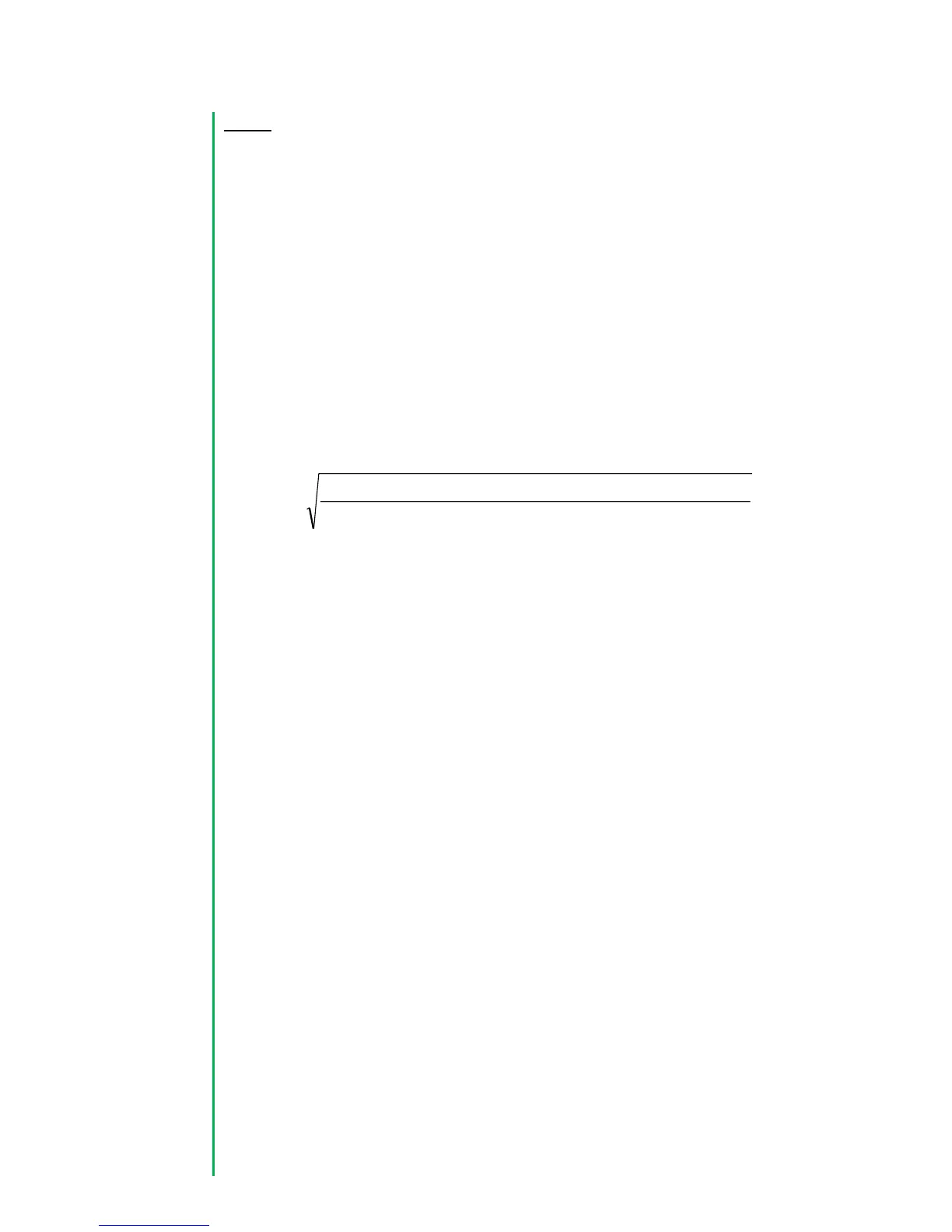
To calculate safe distance:
2
/(4
)(
cmmWmtExposureLi
nAntennaGaiDutyCyclemWowerConductedP
MPED
eq.2
Where:
MPED is Maximum Permissible Exposure Distance or safe distance.
All quantities are calculated in linear or numeric quantities.
The exposure limit, MPED, and conducted power units must be consistent, mW and cm
for this case.
Duty cycle is set using packet sizes for master and slave. The highest duty cycle, 91%,
that can be set is 1024 transmit and 64 receive using a modulation of 305 kbps 4FSK.
Packet settings are set in the radio Network Configuration Menu. If the radio is a master
then master packet size is set to 1024 and slave packet size is set to 64. All radios in the
link must have the same master and slave settings. At Power up and with no data
transmitting, the radios will transmit or beacon with a duty cycle of 6 to 10% depending
upon modulation setting.



 To Next Page