Need help?
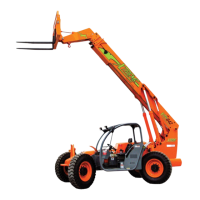
Do you have a question about the Xtreme XR1255 and is the answer not in the manual?
Location and importance of the model/serial number plate for reference.
Information on how to obtain replacement operation and safety manuals.
Defines directional terms (front, rear, left, right) from the operator's perspective.
Manufacturer reserves rights for technical changes; manual is a basic guide.
Explains DANGER, WARNING, and CAUTION signal words and hazard levels.
Purpose of safety symbols to alert operators to hazards.
Employer's duty to train workers on forklift hazards and safety.
Operator's role in safe operation and understanding warnings.
Requirements for forklift operators: physical, license, and training.
Warnings against unauthorized modifications affecting capacity or stability.
Procedures for safely mounting and dismounting the forklift.
Guidelines for safe operation in various work site conditions.
Essential safety steps and checks before operating the forklift.
Guidelines for safe operation, including electrical hazards and tip-over prevention.
Procedures for safe lifting, lowering, and traveling with loads.
Warnings and procedures for connecting and using attachments.
Steps to safely shut down the forklift.
Importance of following maintenance instructions for safety.
Hazards and precautions when handling lead-acid batteries.
Procedures and warnings for jump starting the forklift.
Procedure for releasing parking brakes for towing.
Procedure to re-engage the parking brakes.
Visual guide to label locations on the forklift.
Identification of label positions from the front of the forklift.
Identification of label positions from the rear of the forklift.
Identification of label positions within the operator's cab.
A table listing all labels with part numbers and descriptions.
Instructions on how to order replacement labels.
Lists the standard components and features of the XR1255 forklift.
Lists optional features and attachments available for the XR1255.
Detailed performance, power train, tires, hydraulics, and dimensions.
Lists various attachments compatible with the XR1255.
Lists additional accessories and optional configurations.
Description of the ignition switch positions and their functions.
Location and use of the 12-volt accessory outlet.
How to use the accelerator pedal to control engine speed.
How to use the service brake pedal to slow or stop the forklift.
How to use the steering wheel for directional control.
Location and function of the horn button.
Description of operator seat adjustments for comfort and positioning.
Importance and proper use of the seat belt for operator safety.
Location and purpose of the adjustable rear view mirrors.
General overview of various controls and indicators in the operator's cab.
Operation of the lever for changing travel direction (Forward, Neutral, Reverse).
Operation of the switch for selecting transmission gears.
How to engage and disengage the parking brake.
Location and purpose of load capacity charts for safe load handling.
Function and warning for the hydraulic oil temperature indicator.
Function and warning for the low brake pressure indicator.
Function and warning for the rear axle lock indicator.
Function of the hourmeter for tracking operating hours and maintenance.
Indication of system voltage and potential warnings.
Indicates the quantity of fuel in the tank.
Indicates engine oil pressure and potential warnings.
Indicates engine coolant temperature and normal operating range.
Function and requirement for rear axle centering for steering changes.
Controls for cab and boom lights.
Operation of turn signal and hazard light switches.
How to change steering modes and engage rear wheel steering.
Function of the declutch switch for disengaging transmission.
Operation of switches to lower/raise outriggers.
Operation of the boom control handle for boom and tilt functions.
Detailed breakdown of boom control handle operations.
Operation of the switch for controlling attachment tilt.
Operation of the handle for controlling frame sway.
Function and warnings for the frame sway override switch.
Operation of the lever for controlling auxiliary attachments.
Engaging/disengaging the optional rear wheel steering feature.
Purpose of the boom angle indicator for load chart reference.
Purpose of the frame level indicator for positioning.
How boom extend letters correspond to load capacity charts.
Steps to perform before starting the forklift.
Operational safety precautions for lead-acid batteries.
Operational procedures for jump starting the forklift.
A detailed checklist for performing the pre-operation inspection.
Procedures for performing functional tests on the forklift.
A checklist to verify the proper operation of forklift functions.
Steps and checks required before starting the forklift.
Procedures for starting the forklift engine.
Steps for starting the engine under normal conditions.
Steps for starting the engine in cold weather conditions.
Procedures for jump starting the forklift.
General information and procedures for moving the forklift.
Explanation of Crab, 2W, 4W, and 2WR steering modes.
Clearance needed when turning with attachments.
Steps to begin moving the forklift.
Procedures for changing gears while operating the forklift.
How to interpret warning lights and gauges on the dash panel.
Use and capacity limitations of the pintle hook for towing.
Steps for safely stopping the forklift.
Safe steps for changing the forklift's direction of travel.
Steps to safely shut down and park the forklift.
Safety precautions required during refueling.
Information on fork capacity ratings and usage guidelines.
How to operate the standard carriage and forks.
How to operate the fork positioning carriage.
Overview of the quick attach system for easy attachment changes.
Steps for securely connecting an attachment to the forklift.
Steps for safely removing an attachment from the forklift.
General procedures for handling loads safely.
Warnings and procedures for handling suspended loads.
Detailed steps for safely picking up a load.
Procedures for carrying a load while maintaining visibility and clearance.
Steps for safely placing a load, including boom extension.
Safety and design requirements for lifting personnel.
Procedures and requirements for preparing a work platform.
How to use frame sway to level the forklift.
How to use the hourmeter for maintenance scheduling.
Lists maintenance tasks required by operating hours.
Maintenance tasks required every 500 operating hours.
Maintenance tasks required every 1000 operating hours.
Maintenance tasks required every 2000 operating hours.
Maintenance tasks required every 4000 operating hours.
Procedure for emergency boom lowering.
How to use 'Do Not Operate' tags for safety.
Requirements for training new operators on the vehicle.
Steps for safely locking out and tagging the forklift.
Procedure for safely taking the forklift out of service.
Procedure for returning the forklift to service after repair.

 To Next Page

 General