CHAPTER 5
Monitoring
Blood β-Ketone
28
Monitoring Blood
β-Ketone
27
Monitoring Your
Blood β-Ketone
It is important to
check your ketones when:
• You have an illness.
• Your blood glucose is higher than 16.7 mmol/L
(300 mg/dL).
• You are experiencing unusual blood glucose results.
• You and your healthcare professional determine that it
is necessary.
What You Will Need
• Blood β-Ketone test strip with its instructions for use.
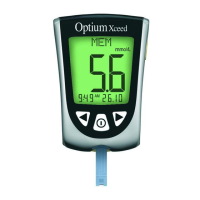
• Optium Xceed meter calibrated to match the LOT
number of the blood β-Ketone test strip you are using.
• Lancing device and a new, sterile lancet.
Important Information about Monitoring Your
Blood β-Ketone
• For more detailed information about your blood β-Ketone
test strip, please refer to its instructions for use
before monitoring.
• Do not use out-of-date test strips. Check the expiry
date printed on the test strip box and on each test strip
foil packet.
• Do not put urine on the
blood β-Ketone test strip.
• Use the test strip immediately
when you take it out of its foil
packet.
▼
Questions? Call
Customer Support:
UK: 0500 467 466
Ireland: 1800 776633
▼
Example:
Expiry date
March 31, 2010
• Do not use a wet, bent, scratched, or damaged
test strip.
•Do not use the test strip if its foil packet has a puncture or
tear in it.
• Use each test strip only once.
• Before you monitor, allow your meter and test strip to reach
the recommended operating range of the test strip. The test
strip operating range is in the “What else do I need to know?”
section of your blood β-Ketone test strip instructions for use.
• Read the lancing device instructions for use.







 To Next Page