01010101100110101010110011010101011001101010101100110101010110011010101011001101010101100110
1001101010101100110101010110011010101011001101010101100110101010110011010101011001101010101100110101010110110101010
11
10101010110011010101011011010101001101010100110101101101101010100101
1011010101100110011010101011010101111010111
11010101101101010100111110
1101110110110011
0111011110
111101
011
11
1
PC-3000 EXPRESS / UDMA / PORTABLE Seagate
ACE Lab F3 architecture
Technical support: ts@acelab.ru
Phone: +7 863 201 50 06
ts.acelaboratory.com 15
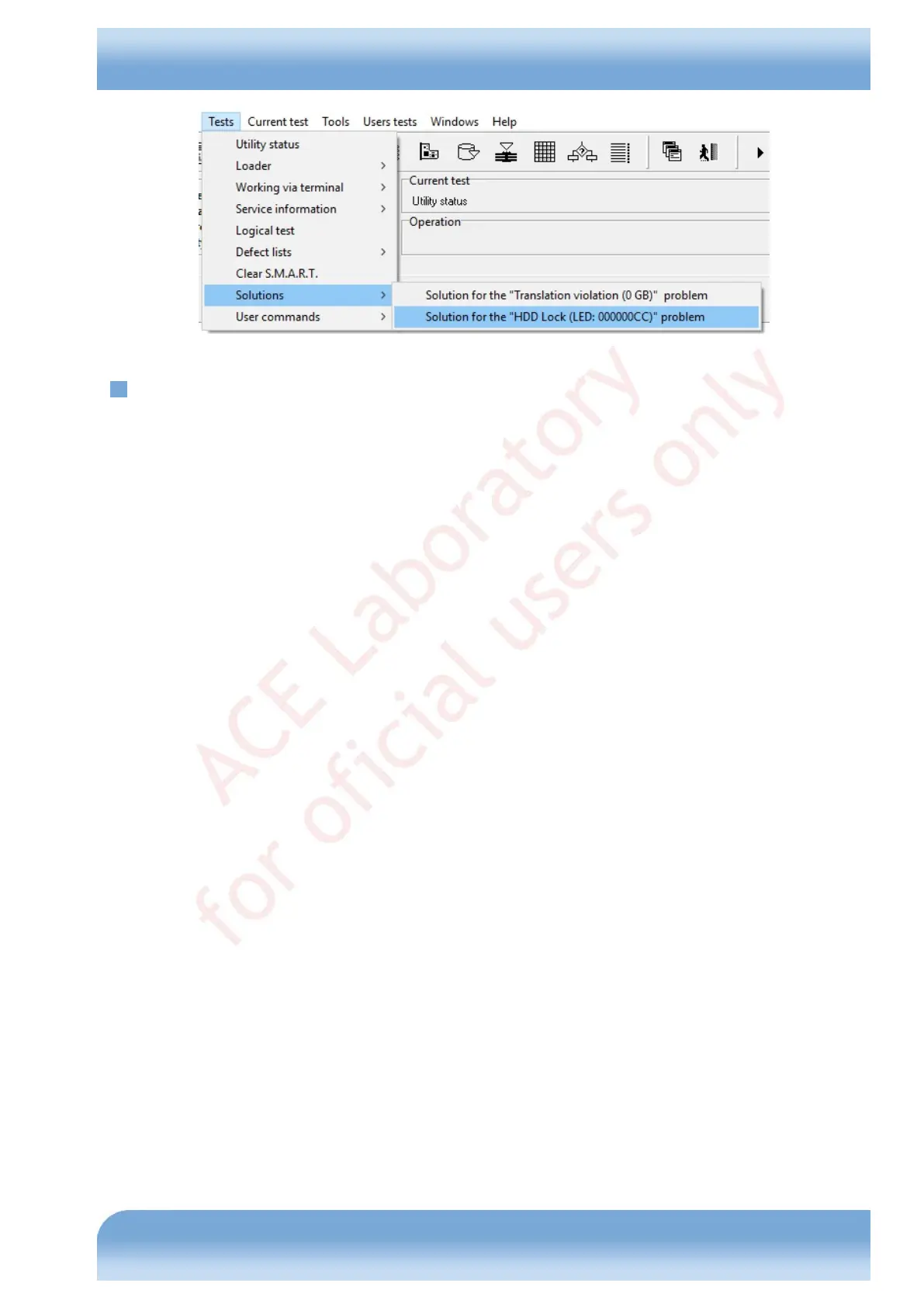
Fig. 5.5
5.5. Host system detects a HDD, drive beginning is visible but
starting with a certain LBA continuous space until the end is filled
with UNC errors
When such HDD arrives for diagnostics, the host system recognizes it correctly, but the drive allows reading access just
to a portion of its surface. Beginning with a certain LBA, and until the end of disk space it returns UNC errors while
reading.
This malfunction is caused by data corruption in the translator. To explain the nature of corruption, a few words about the
HDD factory testing procedure are necessary. During the first stage Self Scan process builds the main list of drive defects
(P-List). It is used to generate the initial translator. Then during the presale preparation additional surface testing is
performed to reveal the areas where a HDD demonstrates slower or unstable performance. However, these areas are
relocated using directly the translator instead of P-List. Besides, when defects are added to the translator, information about
them is appended to Non Resident G-List, which allows to supplement the translator in series losing no information about
additional defects hidden earlier. An attempt to recalculate the translator based on P-List only discards information about
those defects both in the translator and in Non Resident G-List. At the same time ECC for each sector is generated using its
LBA number under which it will be recorded. When the information about defects found during post-processing gets lost,
the numbering of sectors becomes shifted beginning with the first "lost" defect: LBA used to read a sector no longer
matches the actual address where the sector data have been recorded. As a result, UNC errors will be returned at an attempt
to read from the surface starting with a certain LBA until the end of disk space.
Corruption of translator data can have various causes. The main of them are as follows:
♦ Unlocking of LED 000000CC using the methods described in the Internet without prior backup of the
translator module.
♦ Logical corruption of the translator module caused by its overwriting by the drive during G-List update
affected by writing malfunctions (in that case the drive may freeze during firmware start or return zero
capacity).
♦ HDD errors occurring during translator recalculation. In particular, in some cases translator recalculation
may add erroneous data to Non Resident G-List; moreover, the flags field of such defect records may
contain code 20 preventing removal of such corrupted records by the recalculation procedure and thus
causing shifts in translation.
♦ Mistakes made during work with the translator, Non Resident G-List, and P-List.
While the first situation results from unsafe operations performed by the user or repair technicians, the second case may
occur "for no reason" when a user is working with the device.
For troubleshooting of this issue, three approaches exist (for details please refer to the corresponding chapters):
♦ Automatic solutions available from the menu 'Tests → Service information → Work with service area →
Translator → Recover translator and Single LBA position adjustment'.
♦ Manual translator restoration using the tools available in the utility.
♦ Creation of a DE task in translator restoration mode with the 'Read from active PC-3000 Utility' option
enabled for the reading command (the Seagate F3 utility must be running at the same time).


 To Next Page