01010101100110101010110011010101011001101010101100110101010110011010101011001101010101100110
10011010
1010110011010101011001101010101100110101010110011010101011001101010101100110101010110011010101011011010101011
10101010110011010101011011010101001101010100110101101101101010100101
1011010101100110011010101011010101111010111
11010101101101010100111110
0110110011
Seagate PC-3000 EXPRESS / UDMA / PORTABLE
F3 architecture ACE Lab
Technical support: ts@acelab.ru
Phone: +7 863 201 50 06
54 ts.acelaboratory.com
9. Appendix 1. Replacement of the controller board
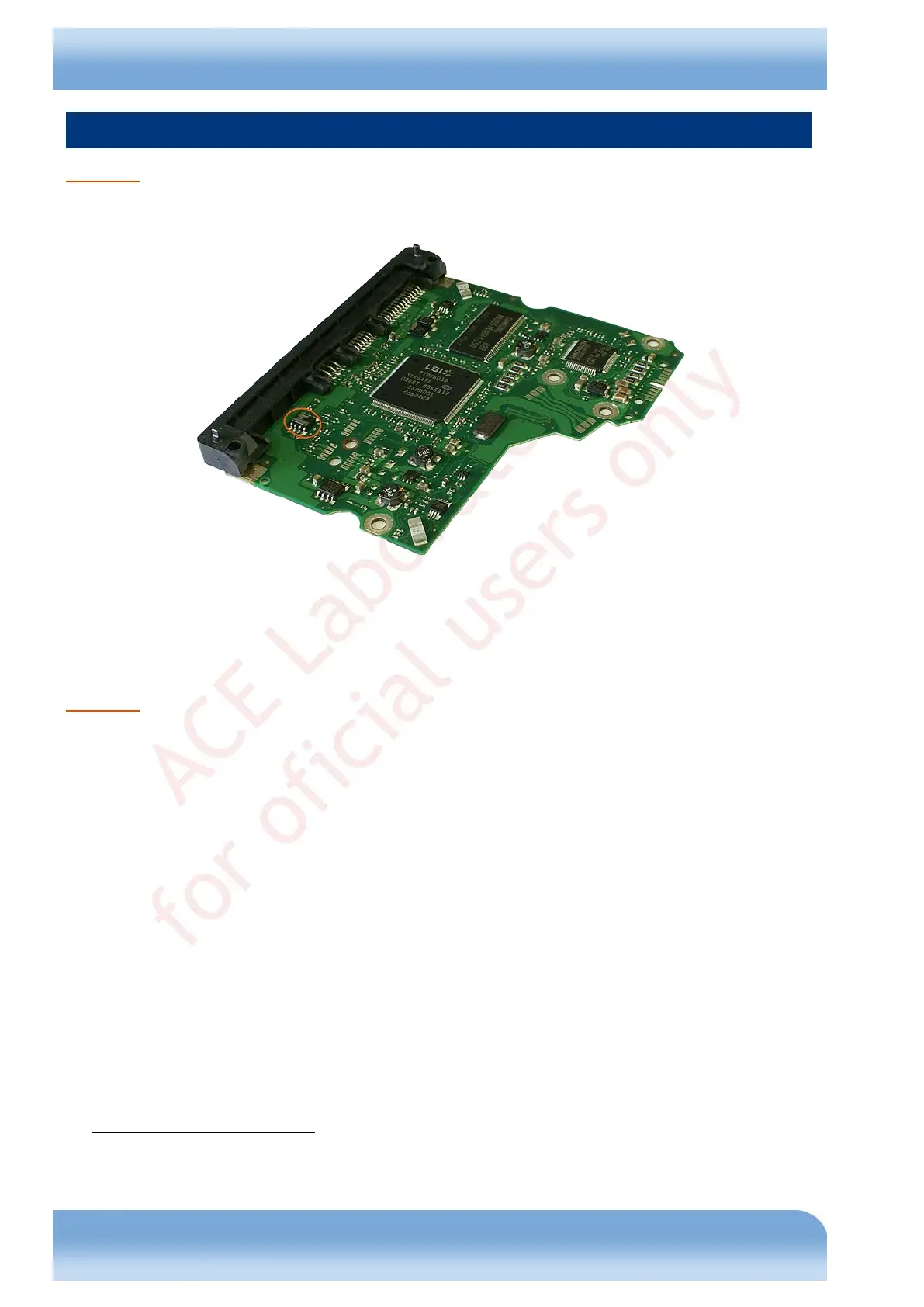
Attention! ROM of the drives (ROM label is 25FW406A) contains adaptive information. Therefore, during
replacement of the controller board you have to move the ROM data from the damaged board to the donor one
(resolder the ROM chip from the damaged board to the borrowed one). See
Fig. 9.1.
Fig. 9.1. ROM chip is indicated in the figure.
Please keep in mind that if you need to restore a drive using a non-native controller board, the drive at the start will be
unable to access the firmware data on disk surface. That behaviour can be erroneously recognized as a problem with the
heads or reading channel, so please check carefully to ensure that the controller board matches the HDA. To do that,
you can even use a board disconnected from HDA, which returns HDD ID information via the ATA interface anyway.
Having read HDD ID, you can compare the model and its serial number to the information printed on HDA label
1
.
Attention! Please keep in mind that if a non-native controller board is used, then any operation involving recording to
disk surface may cause irreversible corruption of service data resulting in inaccessibility of user data.
1
Unfortunately, as we have mentioned before, in some Barracuda ES.2 drives the FW portion in ROM contains the
same standard data for all HDD making identification a more complex task.


 To Next Page