2 AI-5620 User Guide
• DTMF digit level, twist, frequency error, duration
• CAS/DTAS level, frequency, duration
• Metering pulse level, frequency, duration
• V.23 and Bell 202 FSK based Caller ID
• Pulse dialing, line flash, polarity reversals
Signal Generation Capabilities
• DTMF tones with arbitrary frequency, level, and duration
• Programmable flash timing and pulse dialing
• V.23 and Bell 202 FSK modulated data
• One to four tones of arbitrary frequency, level, and duration
• Wave file playback
• Broadband noise generation
• Echo generation
Line Interface Capabilities
• Off hook programmable DC resistance from 50 to 1000
• Off hook fixed terminations of 600 and short circuit
• Resistive AC impedance programmable from 200 to 1000
• Complex AC terminations for TBR-21, German ZR
• Programmable ringing loads
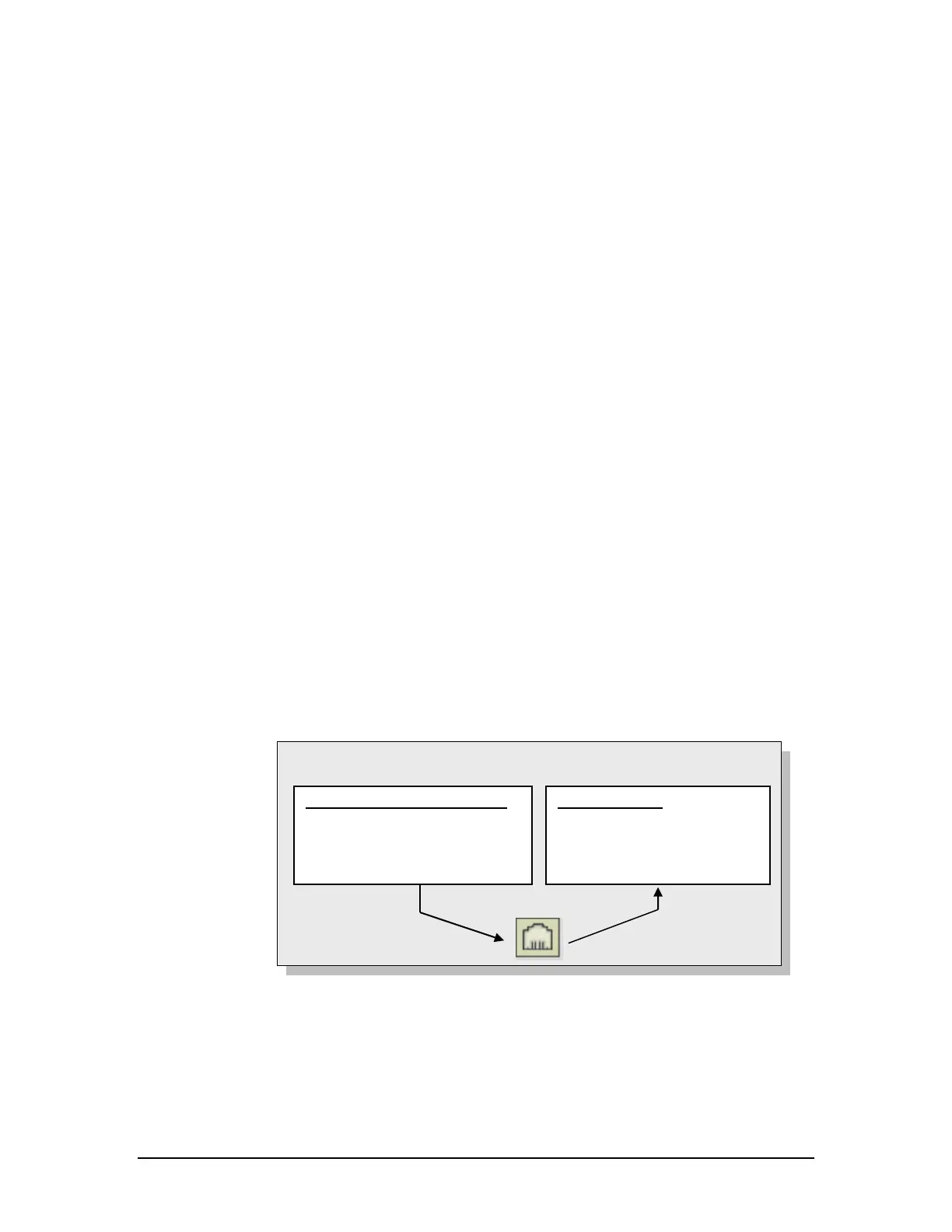
Logically the AI-5620 consists of two distinct functional blocks. The first provides the
ability to change physical line characteristics and generate a wide range of signals, while
the second provides all of the line monitoring and signal measurement capabilities.
The wide range of programmable line characteristics gives the AI-5620 the ability to
present conditions that fall both inside and outside the conformance range of various
standards. This helps to ensure that the equipment being tested can experience conditions
outside the normally expected range.
Full support for Telecordia, TIA, ETSI, and Japan NTT Caller ID allows the AI-5620 to
act like a TE for testing FSK and DTMF data transmission. Its response to off-hook



 To Next Page