INTERCONNECTIONS
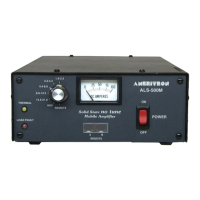
1. Connect the RF (antenna) output of the exciter to the RF IN (SO-239) of the ALS-600
with a good quality 50 ohm cable capable of handling 100 watts.
2. Connect the station antenna system to the RF OUT (SO-239) connector with good
quality 50 ohm coax that will safely carry 600 watts.
3. Use shielded audio-type cable with standard male phono (RCA) connectors to
connect the RELAY jack of the ALS-600 to the transceiver or transmitter normally
open amplifier relay terminal. This connection has 12 volts open circuit and supplies
less than 100 mA of current when pulled to ground. There is a back pulse canceling
diode in the amplifier for exciter protection.
Note: The Ameritron ARB-704 Amplifier-to-Transceiver Interface provides plug-
and-play control between almost any transceiver solid-state or relay keying outputs,
and any Ameritron amplifier using transceiver-specific plug-and-play cables.
Note: The Ameritron ARi-500 Automatic Band Switch provides a low level keying
interface between your transceiver and the ALS-600s. Refer to the ARI-500 manual
for more information.
4. Connect the ground stud (GND) on the amplifier to the station ground buss with as
short a lead as practical.
5. Connect the ALC jack to the exciter ALC terminals with a shielded audio-type cable
using standard phono connectors.
Note: The Ameritron ARB-704 Amplifier-to-Transceiver Interface provides the ALC
interface for transceivers where ALC is only available through their accessory
socket.
6. Connect the female power connector from the ALS-600PS/SPS supply to the multi-
pin male connector on the ALS-600 rear chassis.
7. The 12V connector can be used to supply 12-14 VDC at less than 200 ma for station
accessories.
Note: If using either the ALS-500RC Remote Control Head or the ARI-500 Automatic
Band Switch, refer to those manuals for interconnection information with the ALS-600.
19



 To Next Page