EasyManua.ls Logo

AnyTone AT-D578UV - User Manual

AnyTone AT-D578UV
4 pages
Print Icon
To Next Page IconTo Next Page
Loading...
1
2.
Charging the BT Push-to-Talk (PTT) button
1.
Package contents
Battery Power Indicators of BT PTT button
Built-in bluetooth module
(inside the radio)
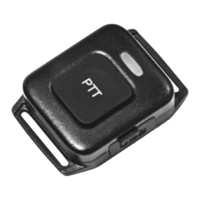
BT PTT button
Velcro
USB charging cable
(One out of two)
When the indicator on the PTT is blinking red, the battery voltage is low.
Connect the USB charging cord into the BT PTT's USB charging port. If the
PTT is not fully charged, the indicator will turn solid red. When the indicator
turns off, the unit is fully charged. A fully discharged battery will need
approximately 1.5 hours to complete a full charge.
For best performance, keep charging PTT when not in use.
Red blinking light Low battery voltage
Light off Fully charged. Over 24 hours’talk time
Red solid light Less than a full charge
Bluetooth(BT) UserGuide

Other manuals for AnyTone AT-D578UV

Question and Answer IconNeed help?

Do you have a question about the AnyTone AT-D578UV and is the answer not in the manual?

Summary

Package Contents

Built-in Bluetooth Module

Description of the built-in Bluetooth module located inside the radio.

BT PTT Button

The Bluetooth Push-to-Talk (PTT) button accessory.

Velcro Strap

A Velcro strap included in the package contents.

USB Charging Cable

The USB charging cable provided for the BT PTT button.

Charging the BT PTT Button

Battery Power Indicators

Details on the LED indicators for BT PTT button battery status.

Mounting the BT PTT

Velcro Mounting

Instructions on using the supplied Velcro for mounting the BT PTT button.

Bluetooth Menu Controls

BT On;Off Control

Enables or disables the Bluetooth function on the radio.

BT Pairing Controls

Options for seeking, viewing, and disconnecting Bluetooth devices.

BT Name and Paired Name Display

Shows the radio's Bluetooth name and the names of paired devices.

BT Hold Time Setting

Configures how long the Bluetooth connection stays active.

Internal Mic;Speaker Control

Options to enable/disable the radio's internal microphone and speaker.

External Mic;Speaker Gain

Adjusts the volume levels for external microphones and speakers.

BT Pin Code Entry

Allows input of a PIN code for Bluetooth pairing.

BT PTT Pairing and Information

Functions for pairing the BT PTT button and viewing its status.

Getting Started: Pairing and Operation

Pairing with BT PTT Button

Step-by-step guide to pair the radio with the BT PTT button.

Pairing with Car Audio or Earpiece

Guide to connect the radio to car audio systems or Bluetooth earpieces.

Transmit and Receive Operation

Explains how to transmit voice and receive audio via Bluetooth.

Summary

Package Contents

Built-in Bluetooth Module

Description of the built-in Bluetooth module located inside the radio.

BT PTT Button

The Bluetooth Push-to-Talk (PTT) button accessory.

Velcro Strap

A Velcro strap included in the package contents.

USB Charging Cable

The USB charging cable provided for the BT PTT button.

Charging the BT PTT Button

Battery Power Indicators

Details on the LED indicators for BT PTT button battery status.

Mounting the BT PTT

Velcro Mounting

Instructions on using the supplied Velcro for mounting the BT PTT button.

Bluetooth Menu Controls

BT On;Off Control

Enables or disables the Bluetooth function on the radio.

BT Pairing Controls

Options for seeking, viewing, and disconnecting Bluetooth devices.

BT Name and Paired Name Display

Shows the radio's Bluetooth name and the names of paired devices.

BT Hold Time Setting

Configures how long the Bluetooth connection stays active.

Internal Mic;Speaker Control

Options to enable/disable the radio's internal microphone and speaker.

External Mic;Speaker Gain

Adjusts the volume levels for external microphones and speakers.

BT Pin Code Entry

Allows input of a PIN code for Bluetooth pairing.

BT PTT Pairing and Information

Functions for pairing the BT PTT button and viewing its status.

Getting Started: Pairing and Operation

Pairing with BT PTT Button

Step-by-step guide to pair the radio with the BT PTT button.

Pairing with Car Audio or Earpiece

Guide to connect the radio to car audio systems or Bluetooth earpieces.

Transmit and Receive Operation

Explains how to transmit voice and receive audio via Bluetooth.

Overview

This document describes the AnyTone Bluetooth (BT) User Guide, focusing on the functionality, usage, and maintenance of a Bluetooth-enabled radio system, particularly its BT Push-to-Talk (PTT) button and integration with car audio systems or Bluetooth earpieces.

The core of the system is a radio with a built-in Bluetooth module, which allows for wireless communication and control. A key accessory is the BT PTT button, a separate, portable device designed to facilitate push-to-talk functionality remotely. This button is supplied with Velcro, enabling users to conveniently secure it to a car steering wheel or other accessible locations, enhancing ease of use during operation.

Function Description

The AnyTone Bluetooth system primarily enables wireless communication through a radio, offering hands-free operation and integration with external audio devices. The main functions revolve around pairing, transmitting, and receiving audio via Bluetooth.

The BT PTT button serves as a remote trigger for the radio's push-to-talk function. When paired with the radio, pressing and holding this button activates transmission, allowing the user to speak. This is particularly useful for mobile environments, such as in a car, where reaching for the radio's built-in PTT button might be inconvenient or unsafe.

The system also supports pairing with external Bluetooth audio devices, specifically car audio systems or Bluetooth earpieces. This allows for a more integrated communication experience. When paired with a car audio system, the radio's audio (both transmitted and received) can be routed through the car's speakers and microphone, transforming the vehicle into a communication hub. Similarly, pairing with a Bluetooth earpiece provides a private and hands-free communication solution, ideal for discreet or personal use.

The Bluetooth menu on the radio provides comprehensive control over these functions. Users can turn Bluetooth on or off, initiate a search for available Bluetooth devices to pair with, view a list of previously paired devices, and disconnect current connections. The menu also allows for naming the radio's Bluetooth identity and viewing the names of paired devices. A "BT Hold Time" setting enables users to specify how long the Bluetooth connection should remain active, ranging from a few seconds to an infinite duration.

Audio input and output settings are also manageable through the Bluetooth menu. Users can enable or disable the radio's internal microphone ("BT + int mic") and internal speaker ("BT + int spk") for Bluetooth operations. This flexibility allows users to choose whether to use the radio's built-in components or rely entirely on external Bluetooth devices for audio. Furthermore, "BT Mic Gain" and "BT Spk Gain" settings are available to adjust the external microphone and speaker levels, respectively, ensuring optimal audio quality for both transmission and reception.

For security during pairing, a "BT Pin Code" option is provided, allowing the entry of a PIN code if required by the Bluetooth device being paired. This is particularly relevant for certain car audio systems that necessitate a PIN for connection.

The BT PTT button itself has dedicated menu options under "BT PTT Pair." Here, users can initiate the pairing process for the BT PTT button, view its name ("PTT Name"), and monitor its battery level ("PTT Bat Volt").

Usage Features

The system is designed for straightforward setup and operation.

Mounting the BT PTT: The included Velcro allows for flexible placement of the BT PTT button. Users can attach it to a car steering wheel for easy access while driving, or to any other convenient surface, ensuring the button is always within reach without obstructing other controls.

Charging the BT PTT button: The BT PTT button is rechargeable via a USB charging cable. An indicator light provides visual feedback on its battery status. A blinking red light signifies a low battery, prompting the user to charge the device. A solid red light indicates that the unit is charging but not yet full. Once fully charged, the indicator light turns off. A full charge from a completely discharged state takes approximately 1.5 hours and provides over 24 hours of talk time. For optimal performance, it is recommended to charge the PTT button when not in use.

Pairing the radio with the BT PTT button:

  1. Activate PTT pairing mode: Press the BT PTT button until its blue light blinks, indicating it's in pairing mode.
  2. Activate radio pairing mode: Turn on the radio, navigate to the Bluetooth menu, ensure "BT On/Off" is set to "On," then scroll to "BT PTT Pair" and enter it. The radio will now be in pairing mode.
  3. Proximity pairing: Place the BT PTT button near the radio. The devices should pair automatically within a few seconds.
  4. Confirmation: Once paired, the LED on the BT PTT will turn off, and a blue "P" icon will appear on the radio's display, confirming a successful connection.

Pairing the radio with a Car Audio System or Bluetooth earpiece:

  1. Activate external device pairing mode: Turn on the car audio system or Bluetooth earpiece and set it to Bluetooth pairing mode.
  2. Activate radio seeking mode: On the radio, navigate to the "BT Pairing" menu, ensure "BT On/Off" is "On," then select "Seek PTT." The radio will begin searching for Bluetooth devices.
  3. Proximity and selection: Place the radio near the car audio system or Bluetooth earpiece. The radio will display available Bluetooth names; select the desired device (e.g., "ELEC…") to initiate pairing.
  4. PIN code entry (if required): If the car audio system requires a 6-digit PIN code, enter it via the radio's "BT Pin Code" menu.
  5. Confirmation: Once paired, a blue "BT" icon will appear on the radio's display.
    • Important Note: The radio can only connect to one Bluetooth module at a time, meaning it can be paired with either a car audio system or a Bluetooth earpiece, but not both simultaneously.

Transmit and Receive Operation:

Push-to-Talk functionality can be activated by:

  • Pressing and holding the PTT button on the radio itself.
  • Pressing and holding the paired BT PTT button.

Voice Pickup during Transmission:

  • If a car audio system is paired, the operator's voice is picked up by the car's microphone.
  • If a Bluetooth earpiece is paired, the voice is picked up by the earpiece's microphone.
  • If "BT + int mic" is turned on in the radio menu, the radio's internal microphone will pick up the voice.
    • Audio Adjustment: If the recipient's volume is too low, even with the radio's volume at maximum, the "BT Mic Gain" setting in the menu can be adjusted to a higher level to achieve a louder transmit volume.

Audio Handling during Reception:

  • Received audio can be heard through the paired car audio system or Bluetooth earpiece.
  • If "BT + int spk" is selected in the radio menu, the radio's internal speaker will also output the received audio.
  • Volume Control: Volume can be controlled via the car audio system or Bluetooth earpiece's volume settings, as well as by the volume knob on the radio.
    • Audio Adjustment: If the received audio level is too low, even with the radio's volume at maximum, the "BT Spk Gain" setting in the menu can be adjusted to a higher level to get a louder received volume.

Maintenance Features

The document highlights the importance of keeping the BT PTT button charged for best performance, recommending charging it when not in use.

It also includes an "Important Notice" regarding the Bluetooth system's compatibility and future improvements:

  • While Bluetooth version 4.2 is compatible with many newer car entertainment systems, full compatibility with all devices cannot be guaranteed.
  • AnyTone is committed to continuously improving the Bluetooth system to support more car models. These improvements may necessitate updates to the Bluetooth firmware in both the radio and the PTT module. This implies that users may need to perform firmware updates to ensure optimal performance and compatibility with new devices as they become available. This proactive approach to updates suggests a commitment to long-term usability and adaptability of the system.

AnyTone AT-D578UV Specifications

General IconGeneral
Frequency Range136-174 MHz, 400-480 MHz
Channels4000
Zones250
GPSYes
BluetoothYes
CTCSS/DCSYes
APRSYes
RoamingYes
VOXYes
Supply voltage13.8V DC ±15%
WaterproofNo
Power Output50W/25W/10W/5W (VHF), 45W/25W/10W/5W (UHF)
ModesDMR Tier I & II
DisplayColor TFT
Bandwidth12.5 kHz, 25 kHz

Related product manuals