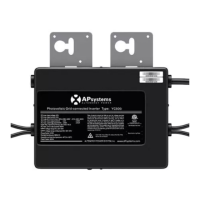
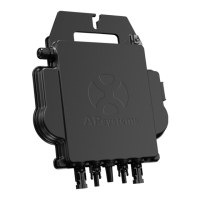
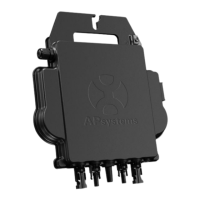
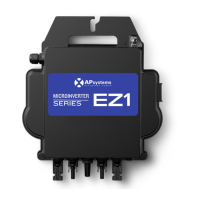
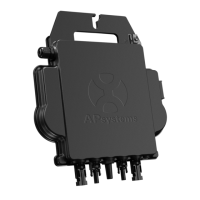
APsystems Microinverter System Introduction
This integrated system improves safety; maximizes solar energy harvest;
increases system reliability, and simplifies solar system design, installation,
maintenance, and management.
APsystems Microinverters maximize PV energy production
Each PV module has individual Maximum Peak Power Tracking (MPPT)
controls, which ensures that the maximum power is exported to the utility
grid regardless of the performance of the other PV modules in the array.
When PV modules in the array are affected by shade, dust, orientation,
or any situation in which one module underperforms compared with the
other units, the APsystems Microinverter ensures top performance from
the array by maximizing the performance of each module within the array.
More reliable than centralized or string inverters
The distributed APsystems Microinverter system ensures that no single
point of system failure exists across the PV system. APsystems Microinverters
are designed to operate at full power at ambient outdoor temperatures
of up to 149°F (65°C). The inverter housing is designed for outdoor
installation and complies with the NEMA 6 environmental enclosure
rating.
Simple to install
You can install individual PV modules in any combination of module
quantity, orientation, different type and power rate (check our online
module compatibility checker called Edecider or contact APsystems).
The Ground wire (PE) of the AC cable is connected to the chassis
inside of the Microinverter,potentially eliminating the installation
of grounding wire (check local regulation).
Smart system performance monitoring and analysis
The APsystems Energy Communication Unit (ECU) is installed by simply
plugging it into any wall outlet and providing an Ethernet or Wi-Fi connection
to a broadband router or modem. After installing and setting the ECU (see ECU manual),
the full network of APsystems Microinverters automatically reports to the
APsystems Energy Monitor and analysis (EMA) web server. The EMA software
displays performance trends, informs you of abnormal events, and controls system
shutdown when it is needed. (See ECU manual for instructions.)



 To Next Page