Ascon Tecnologic - K31D - OPERATING INSTRUCTIONS - PAG. 1
K31D
ELECTRONIC TEMPERATURE
CONTROLLER WITH
DIFFERENTIAL CONTROL MODE
OPERATING INSTRUCTIONS
Vr. 05 (Eng) - 19/04 - cod.: ISTR-MK31DENG05
Ascon Tecnologic S.r.l.
Viale Indipendenza 56, 27029 Vigevano (PV) - ITALY
Tel.: +39 0381 69871 - Fax: +39 0381 698730
Sito: http:\\www.ascontecnologic.com
e-mail: info@ascontecnologic.com
PREFACE
m
This manual contains the information necessary
for the product to be installed correctly and also
instructions for its maintenance and use; we there-
fore recommend that the most attention is paid to
the following instructions and to save it.
This document is the exclusive property of Ascon Tecnologic
S.r.l. which forbids any reproduction and disclosure, even in
part, of the document, unless expressly authorized.
Ascon Tecnologic S.r.l. reserves the right to make any formal
or functional changes at any moment and without any notice.
Ascon Tecnologic S.r.l. and its legal representatives do not
assume any responsibility for any damage to people, things
or animals deriving from violation, wrong or improper use or
in any case not in compliance with the instrument’s features.
m
Whenever a failure or a malfunction of the device
may cause dangerous situations for persons, thing
or animals, please remember that the plant has
to be equipped with additional devices which will
guarantee safety.
1. INSTRUMENT DESCRIPTION
1.1 General description
The K31D model is a digital temperature controller with a
single loop microprocessor, with ON/OFF control, Neutral
Zone ON/OFF, single or double action PID (direct and
inverse) fitted with 2 PTC, NTC or Pt1000 temperature input
probes by means of which it is possible to obtain differential
temperature control. It can therefore be used in applications
that require a control for the temperature difference between
2 different environments such as liquid coolers (chillers),
natural air-conditioning systems through the air recirculation,
heating by solar panels or in many other applications where
2 temperature readings are needed.
The controller is also
Index
1. Instrument description ............................................... 1
1.1 General description ........................................................... 1
1.2 Front Panel Description ..................................................... 2
2. Programming ............................................................... 2
2.1 Set Point Fast Programming ............................................. 2
2.2 Control Status and Parameter Selection ........................... 2
2.3 Parameters programming levels ....................................... 3
2.4 Control Satus .................................................................... 3
2.5 Active Set Point Selection ................................................. 4
3. Usage warning ............................................................. 4
3.1 Admitted use ..................................................................... 4
4. Installation warnings ................................................... 4
4.1 Mechanical mounting ........................................................ 4
4.2 Dimensions (mm) .............................................................. 4
4.2.1 Mechanical dimensions ........................................................ 4
4.2.2 Panel cut-out ......................................................................... 4
4.2.3 Brackets ................................................................................ 4
4.3 Electrical connections ....................................................... 4
4.3.1 Electrical wiring diagram ....................................................... 5
5. Functions ..................................................................... 5
5.1 Measurement and display ................................................. 5
5.2 Output Configuration ......................................................... 6
5.3 Absolute or Differential Temperature Controller ................6
5.4 ON/OFF Control (1.rEG) .................................................... 6
5.5 Neutral Zone ON/OFF Control (1.rEG - 2.rEG) .................. 7
5.6 Single Action PID Control (1.rEG) ..................................... 7
5.7 Double Action PID Control (1.rEG - 2.rEG) ........................7
5.8 Auto-tuning and Self-tuning Functions .............................. 8
5.8.1 How to activate Auto-tuning function .................................... 8
5.8.2 How to activate Self-tuning function ..................................... 9
5.9 Dynamic Set Point change and automatic switching
between two Set Points (ramps an dwell time) ................. 9
5.10 Soft-start function .............................................................. 9
5.11 Alarms Output Functions (AL1, AL2, AL3) ...................... 10
5.12 Loop Break Alarm Function ............................................ 11
5.13 Functioning of Key .................................................... 11
5.14 Digital Input ..................................................................... 12
5.15 RS485 Serial Interface .................................................... 12
6. Accessories ............................................................... 13
6.1 Parameters configuration by “A01” .................................. 13
7. Programmable parameters ....................................... 14
8. Problems, Maintenance and Warranty ..................... 18
8.1 Probe errors .................................................................... 18
8.2 Other errors ..................................................................... 18
8.3 Cleaning .......................................................................... 18
8.4 Warranty and Repairs ..................................................... 18
8.5 Disposal .......................................................................... 18
9. Technical data ............................................................ 18
9.1 Electrical characteristics ................................................. 18
9.2 Mechanical characteristics .............................................. 18
9.3 Functional Features ........................................................ 19
10. How to order .............................................................. 19

 Need help?
 General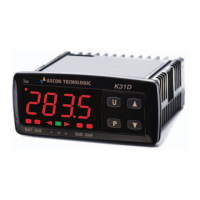

 To Next Page