Need help?
Do you have a question about the Atel Apex WB550 and is the answer not in the manual?
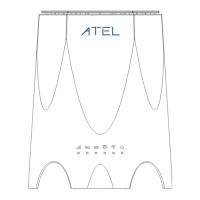
Explains the status indicators on the front panel of the router.
Describes the physical ports like RJ45, SIM, and DC power.
Details how to access the router's web-based management interface using a browser.
Provides an overview of the main interface after successful login, showing key menus.
Displays Wide Area Network (WAN) connection details like IP address and DNS.
Shows the status and configuration of the router's Wireless Local Area Network (WLAN).
Provides detailed information about the cellular network connection and status.
Displays cellular network status information including band, PCI, and RSRP.
Shows the current software and module versions installed on the router.
Lists connected wired and wireless devices with their IP and MAC addresses.
Provides traffic statistics, including download, upload, and session data.
Contains fundamental configuration options for the router.
Allows modification of the router's WebGUI login credentials and factory reset.
Configures the Local Area Network (LAN) IP address, subnet mask, and DHCP server settings.
Enables manual firmware upgrades for the router from a connected PC.
Configures the router to automatically reboot at a scheduled time and date.
Manages combined 2.4GHz/5GHz WiFi settings, SSID, and password.
Configures settings for a separate guest WiFi network.
Enables the Wi-Fi Protected Setup feature for easy device connection.
Displays and manages connected wireless devices, allowing blocking or restoring.
Configures Virtual Private Network (VPN) settings for secure connections.
Provides access to various security and firewall features.
Controls network access based on MAC addresses of connected devices.
Filters network traffic based on IP addresses and port numbers.
Configures rules to forward incoming network traffic to specific internal devices.
Sets up virtual servers to make internal services accessible from the internet.
Allows VPN traffic to pass through the router.
Configures a DMZ to enhance network security by isolating specific devices.
Manages internet access for specific devices based on time and website rules.
Provides tools like Ping and Traceroute for network diagnostics.
Configures Dynamic DNS service to map a domain name to a changing IP address.
Allows backing up and restoring router configuration settings.
Manages remote access and ping responses for the router.
Configures Network Time Protocol settings for accurate time synchronization.
Configures different Wide Area Network (WAN) connection modes like Cellular, ETH, Load Balancing, and Failover.
Selects preferred 4G and 5G network bands for connection.
Configures Access Point Name (APN) settings for cellular network connection.
Manages automatic reboots or reattachments to the network if connectivity issues arise.
Allows locking specific PCI values to optimize cellular device performance.
Manages SMS messages, including sending, receiving, and drafting.
Details how to manage the device via the ATEL Remote Management Platform.
Troubleshoots why the router's power LED might not be illuminated.
Guides on how to resolve issues accessing the router's web interface.
Helps diagnose and fix problems preventing the device from connecting to the network.
Offers tips on improving data throughput by adjusting device location and settings.
Contains FCC compliance information and operational rules.
General safety instructions for device usage.
Notes on potential interference with other electronic devices.
Warnings about using the device near medical equipment.
Specific guidance for users with pacemakers to avoid interference.
Potential interference with hearing devices.
Guidelines for using the device while driving or on an aircraft.
Precautions for using the device in blasting areas.
Information on the product's warranty policy and legal disclaimers.
Lists the version history and changes made to the user manual.
 General
| Brand | Atel |
|---|---|
| Model | Apex WB550 |
| Category | Network Router |
| Language | English |

 To Next Page