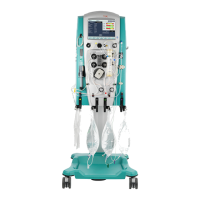
The DoseEdge PrepStation Cart is a pharmacy workflow management system designed to streamline and enhance the preparation of medications. It integrates various components to provide a comprehensive solution for pharmacists and technicians, focusing on accuracy, efficiency, and safety in the medication compounding process.
Function Description:
The DoseEdge PrepStation Cart serves as a mobile workstation for preparing medications, particularly in a pharmacy setting. Its primary function is to guide users through the compounding process, ensuring adherence to protocols and minimizing errors. This is achieved through a combination of interactive software displayed on a touchscreen monitor, integrated peripherals for scanning and weighing, and a structured workflow. The system is designed to manage and document each step of medication preparation, from initial order verification to final labeling and dispensing.
Key functional aspects include:
- Workflow Management: The system provides a step-by-step guide for medication preparation, displaying instructions, ingredient information, and verification prompts on the touchscreen. This ensures consistency and compliance with established pharmacy procedures.
- Barcode Scanning: An integrated barcode scanner allows for the verification of ingredients, patient information, and final products, significantly reducing the risk of medication errors due to misidentification.
- Precision Weighing (Optional): For preparations requiring precise measurements, an optional scale can be integrated, providing real-time weight verification and documentation within the workflow.
- Label Printing: The cart includes a label printer (either Zebra or Epson) to generate accurate and compliant labels for prepared medications, including patient-specific information, drug details, and administration instructions.
- Documentation and Reporting: All steps performed on the PrepStation Cart are documented electronically, creating an audit trail for each medication preparation. This supports regulatory compliance and provides data for quality assurance and process improvement.
- Visual Verification (Optional): An optional camera system can be integrated to capture images of the preparation process, offering an additional layer of visual verification and documentation.
- Ergonomic Design: The cart is designed to be mobile and adjustable, allowing users to position the workstation optimally for comfort and workflow efficiency.
Important Technical Specifications:
While specific detailed technical specifications like processor speed, RAM, or exact screen resolution are not explicitly provided in the given manual excerpts, the components and their integration imply certain technical requirements and capabilities:
- Touchscreen Monitor: The central interface for user interaction, displaying the DoseEdge software. It is mounted on a brace on the cart and connected via power and potentially USB cables. The monitor's tilt functionality suggests a robust mounting mechanism.
- Uninterruptible Power Supply (UPS): Essential for maintaining continuous operation during power fluctuations or outages, protecting the system and ensuring data integrity. It is housed in the rear compartment of the cart's base.
- Label Printer: Supports either Zebra or Epson models, indicating compatibility with industry-standard label printing technologies. These printers connect to the touchscreen via USB or parallel cables and receive power through the cart's internal power management.
- Barcode Scanner: A standard peripheral for quick and accurate data entry and verification, connecting to the touchscreen.
- Scale (Optional): An optional component for precise weighing, connecting via USB to the touchscreen and requiring its own power supply.
- Camera System (Optional): Includes a camera stand and lens, connecting to the touchscreen for visual documentation.
- Connectivity: The system requires an Ethernet connection from a wall outlet to the touchscreen for network access, enabling data transfer, software updates, and integration with other pharmacy systems.
- Power Management: The cart is designed with internal compartments for power supply units and cable routing to manage power for all integrated components, connecting them to the UPS.
Usage Features:
The DoseEdge PrepStation Cart is designed for ease of use and integration into existing pharmacy workflows.
- Mobile Workstation: The cart's wheeled base allows for easy relocation within the pharmacy, adapting to changing workflow needs or space constraints.
- Intuitive Interface: The touchscreen monitor provides a user-friendly interface for interacting with the DoseEdge software, guiding users through each task.
- Cable Management: The design incorporates internal cable guides and compartments to keep cables organized, untangled, and protected, reducing clutter and potential hazards. This is crucial for a mobile workstation.
- Component Integration: All peripherals (scanner, printer, scale, camera) are designed to seamlessly integrate with the touchscreen and the DoseEdge software, creating a unified system.
- Ergonomic Adjustments: The ability to tilt the touchscreen and position peripherals like the scanner and foot pedal allows users to customize the workstation for comfort and efficiency.
- Optional Foot Pedal: Provides hands-free operation for certain functions, further enhancing workflow efficiency and reducing manual interaction with the touchscreen.
Maintenance Features:
While the manual excerpts primarily focus on setup, certain design elements imply considerations for maintenance:
- Modular Design: The components (touchscreen, printer, scanner, etc.) appear to be separate units that are attached to the cart, suggesting that individual components can be replaced or serviced more easily if needed, rather than requiring replacement of the entire cart.
- Accessible Power Compartment: The power box at the base of the cart, housing the UPS and power supply units, is designed with a removable cover, allowing for access to power connections and the UPS for maintenance or replacement.
- Organized Cabling: The internal cable routing system not only improves aesthetics and safety but also simplifies troubleshooting and maintenance by making it easier to identify and access specific cables.
- Durable Construction: The robust mounting mechanisms for the touchscreen and the overall cart structure suggest a design intended for frequent use in a demanding pharmacy environment.
- Software Updates: As a software-driven system, regular software updates would be a key maintenance aspect, likely delivered via the Ethernet connection, to ensure optimal performance, security, and feature enhancements.
- Cleaning: The surfaces and components are likely designed to be easily cleaned and disinfected, which is critical in a healthcare environment to maintain hygiene standards.

 Need help?
 General

 To Next Page