GB Sound module MSM-1
18.01.2024 BEIER-Electronic 30
Controlling sounds and switching light outputs via the radio
Depending on the model type, various additional sounds are
triggered on the sound module via the proportional inputs Prop
#2 – Prop #6. Outputs can also be switched for different lights.
See model descriptions starting on page 9.
Toggle switches/buttons with 3 positions are preferably used on
the RC radio. Furthermore, proportional controls such as sticks,
rotary controls or sliders can also be used. However, switches
with only 2 positions are not suitable and cannot be used to
control all functions.
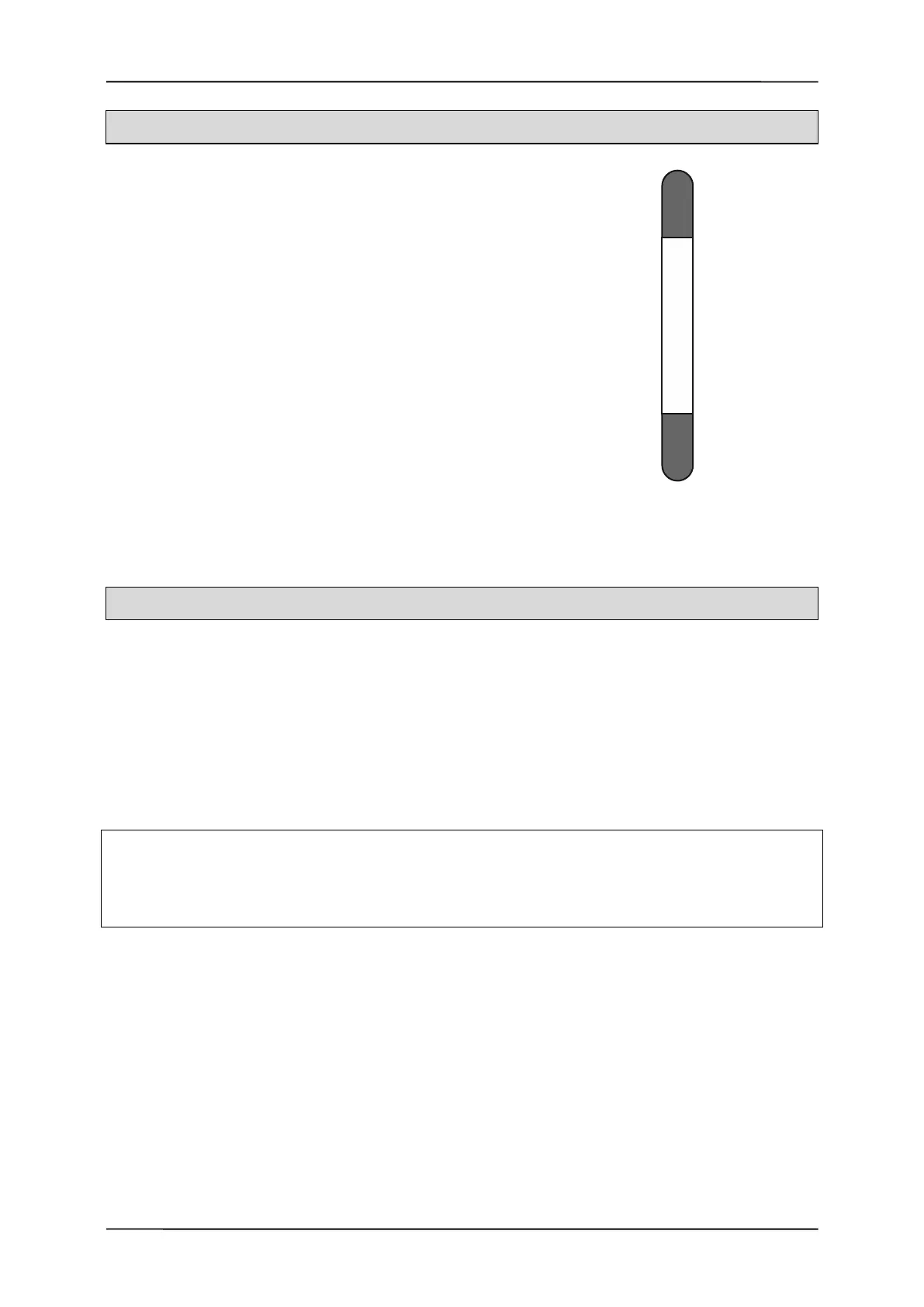
The functions are triggered when the encoder is brought to areas
A or D for a short time (less than 2 seconds) or a long time
(longer than 2 seconds). Up to 4 different functions are possible
for each proportional input. Depending on the radio, it is possible that the positions of
A and D are swapped.
Speaker
A loudspeaker that has an impedance of at least 4 Ω and a power of at least 8 W can
be connected to the MSM-1 sound module. We recommend using a full-range
speaker with 4 Ω or 8 Ω. Speakers with a higher impedance also work, but the
volume decreases with higher impedance.
The maximum power and thus the volume of the sound module depends, in addition
to the impedance, also somewhat on the level of the supply voltage.
In order to achieve optimal volume and sound quality, the loudspeaker should be
installed in a suitable resonance box (speaker box). In any case, it should be avoided
that air passes unhindered from the front of the membrane to the back (acoustic
short circuit).
Every amplifier output stage generates a certain amount of heat due to power loss,
which must be dissipated into the ambient air. In general, care should always be
taken to ensure that heat dissipation (air circulation) is as good as possible in the
area of the sound module. Particularly at higher voltages (e.g. over 9.6 V), active
cooling of the sound module with a small fan may be necessary.
If the output power of the sound module is not sufficient despite the high output, an
additional amplifier can be connected to the input of the amplifier using a level
adapter with galvanic isolation (often used at car radios) and a small capacitor (10
nF).
N
A
D
2,0 ms (+100 %)
1,8 ms (+80 %)
1,5 ms (0 %)
1,2 ms (-80 %)
1,0 ms (-100 %)


 To Next Page