Installation, Operation, and Maintenance Manual
CA Series Heat Pumps - 8733851021 (2025/04) US
30 |
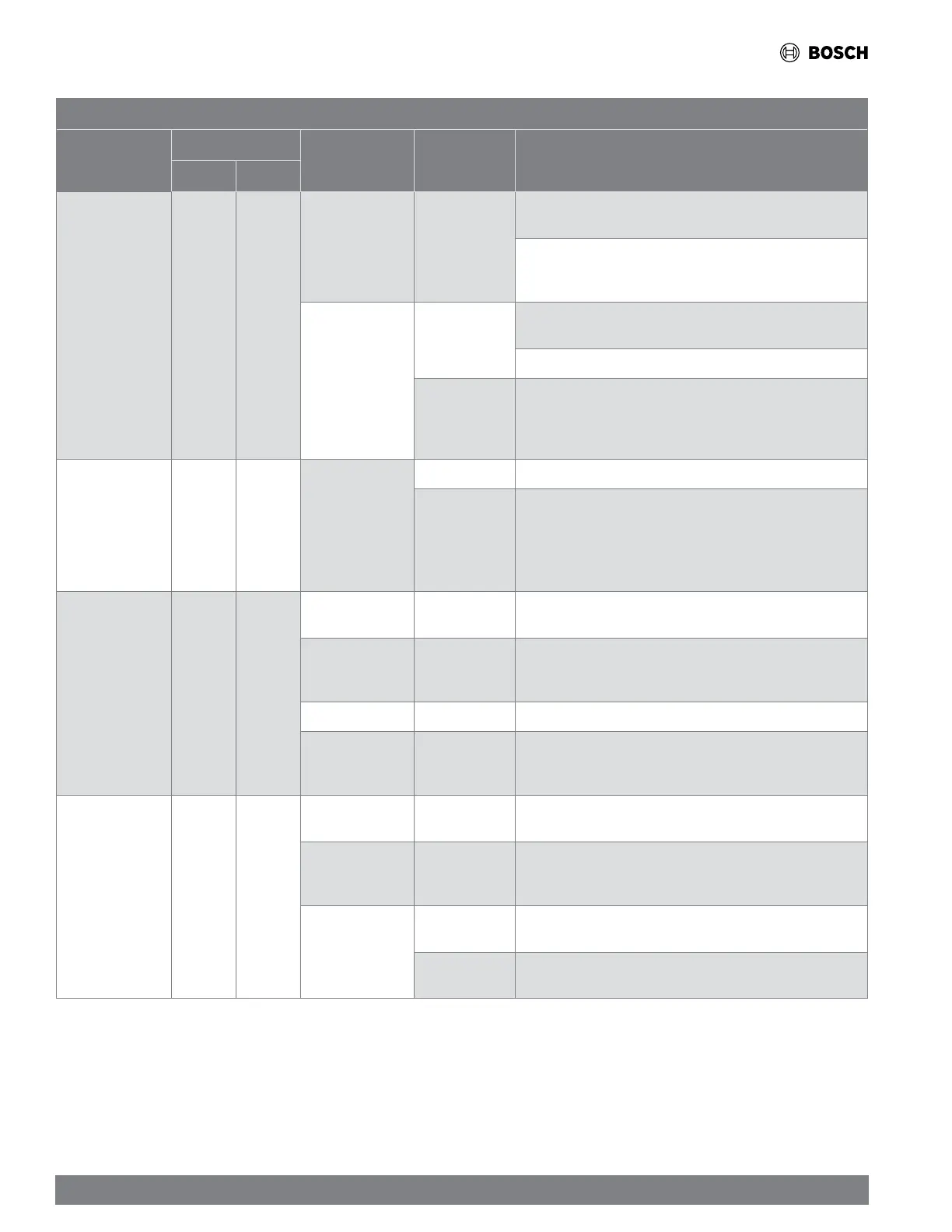
Unit Troubleshooting
Problem
Mode
Check Possible Cause Action
Cooling Heating
Unit not shifting into
cooling and heating
X X
Reversing valve sole-
noid energized
Faulty solenoid
Check that the reversing valve solenoid is receiving 24 VAC.
If it is receiving 24 VAC, check the resistance of the solenoid—an open circuit
may indicate a burned out solenoid.
Reversing valve sole-
noid NOT energized
Miswired/faulty
thermostat
Check that the reversing valve thermostat wire is connected to the “O”
terminal of the thermostat.
Check for a contact closure between “O” and “R.”
Loose wire on “O”
terminal
Check that the wires from the thermostat to the unit are securely connected
and that the wires from the electrical box to the reversing valve are con-
nected.
Excessively cold sup-
ply air temperature in
cooling or excessively
hot supply air tem-
perature in heating
X X Reduced air ow
Dirty Filter Replace lter.
Fan speed too low Consult blower performance table and increase fan speed if possible.
Excessively warm
supply air tempera-
ture in cooling and/or
excessively cool air in
heating
X X
Air ow too high
Fan speed setting
too high
Consult blower performance table and reduce fan speed if possible.
High or low water
temperature
Inlet water tempera-
ture out of range
Check unit capacity vs. water temperature.
Air leakage Leaky duct work Inspect the duct work.
Loss of refrigeration
capacity
Low refrigerant Check refrigerant pressures with a gauge set.
High humidity X
Air ow is too high
Fan speed setting is
too high
Consult the blower performance table and reduce fan speed if possible.
Lost of refrigeration
capacity
Low refrigerant Check refrigerant pressures with gauge set.
Short cycling
Unit oversized Check unit performance against building load calculations.
Poor thermostat
location
Make sure that the thermostat is not located near a supply air duct.



 To Next Page