2-3
LIFTING:
1. Always refer to Crane Capacity Chart in operator's compartment before handling load. Do
not exceed load ratings. Under some conditions the standard capacity ratings cannot be
recommended and must be adjusted downward to compensate for special hazards, such
as weak supporting ground, wind, hazardous surroundings, operator inexperience, etc.
The weight of the load should always be known.
2. Rated Capacity Limiter components must be inspected for damage at the beginning of
each shift. The Rated Capacity Limiter must be tested with a known load at least once a
month as described in the RCL Operations Manual.
3. Be careful to prevent load swinging. A swinging load can cause instability or loss of
control of the load. Be aware that the Anti-Two-Block System and the Rated Capacity
Limiter can cause sudden stopping of boom movement, which can cause the load to
swing. Swing the boom slowly whenever these systems might stop the boom.
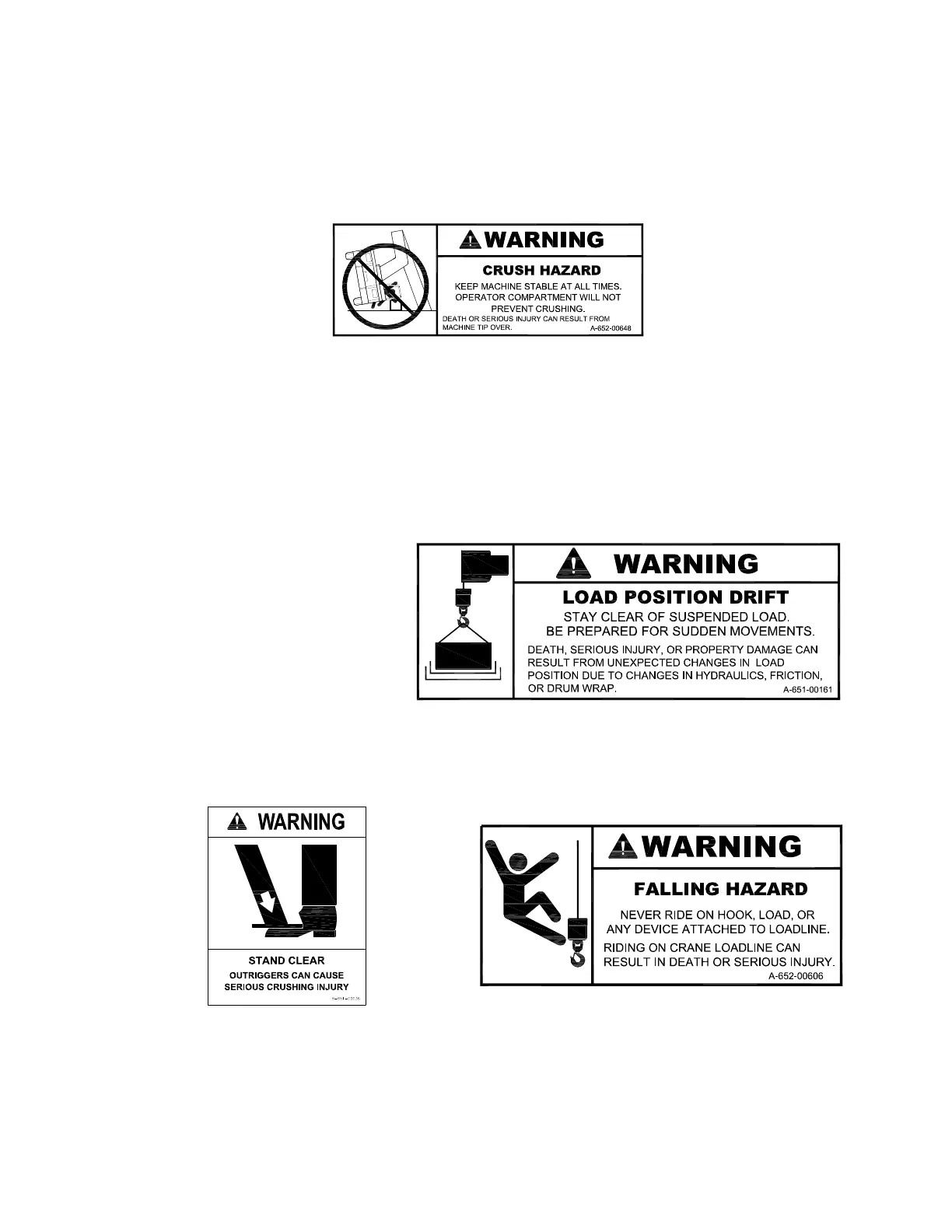
4. Do not allow anyone to put
any part of his body under
a load. The load may
lower or fall if there are
damaged parts in the
crane. Also, the load may
drop a short distance due
to thermal contraction of
the hydraulic oil in the
cylinders.
5. Do not use crane to drag loads sideways. Do not use crane to raise grounded or fixed
loads by using BOOM RAISE function.
6. 7.
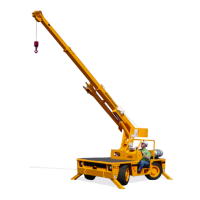
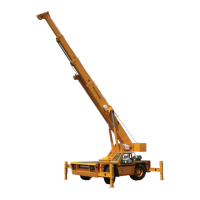
8. Level the crane before lifting. A small incline will significantly reduce the capacity. Use
appropriate cribbing under the outriggers for leveling. All tires must clear the ground to use
the ON OUTRIGGERS ratings.



 To Next Page