2-4
9. Always use outriggers if possible. If you must lift on rubber, keep the load as close to the
ground as possible to prevent tipping. Move the load very slowly and use tag lines to
prevent load swinging.
10. Crane may tip at less than rated loads if the surface is uncompacted or wet soil, or soft
soil with frozen crust, thin or cracked pavement, or surface near a hole or ledge. Always
use adequate outrigger floats and/or cribbing. See page 2-23.
11. The operator shall not leave the controls while the load is suspended.
12. Always use adequate parts of load hoist line for lifting heavy loads.
13. Always be sure the rope is properly seated and wound evenly on hoist drum.
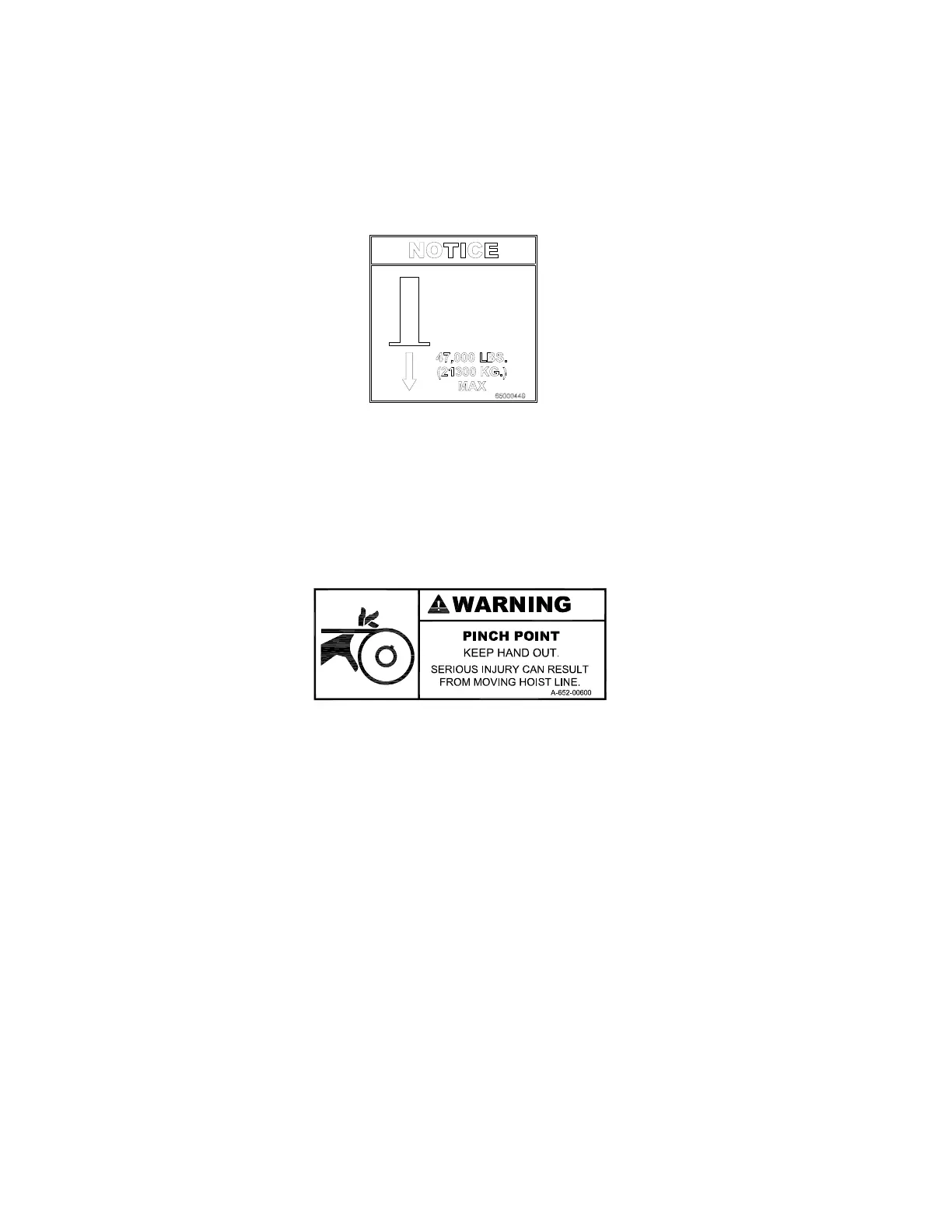
14. Keep hands away from load hoist rope when hoist is being operated.
15. Be sure at least four wraps of rope are left on the hoist drum to ensure against rope
pulling out of its anchor.
16. Never wrap the hoist rope around a load. Always use approved rigging.
17. Avoid pinch points such as between a rotating turret and the cab, in access holes of a
telescoping boom, or between the two-block mechanisms.



 To Next Page