Operation & Installation Manual RFS1 V2
MA365 Rev 3
11 of 46
Important: These Smoke/Heat Alarms are designed for use in a residential type
environment.
2.4.3 Checking Audibility of Smoke / Heat Alarms
With the Alarm sounding in its intended location, check that you are able to hear it in
each bedroom with the door closed above the sound of your radio. The radio should
be set to a reasonably loud conversation level. If you can’t hear it over your radio,
the chances are it would not wake you.
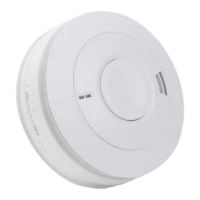
The Smoke / Heat Alarms are interconnectable meaning that when one Alarm within
a zone senses smoke or heat, all connected Alarms will go into alarm.
Note: Options within the Smoke Alarm and Residential Fire Panel enable
customising of the installation. However, the sound levels are fixed and cannot be
adjusted.
2.5 Recommended Locations
For the best location and maximum protection, refer to EIB650iWX and EIB603CX
manuals.
2.5.1 Locations to Avoid
Don’t place Smoke Alarms in any of the following areas:
• Bathrooms, kitchens, shower rooms, garages or other rooms where the
Smoke Alarms may be triggered by steam, condensation, normal smoke or
fumes. Keep at least 6 metres away from sources of smoke.
Don’t place Heat Alarms in any of the following areas:
• Bathrooms, shower rooms or other room where the unit may be affected
by steam or condensation.
Don’t place Smoke or Heat Alarms in any of the following areas:
• Places where the normal temperature can exceed 45
0
C or be below 5
0
C e.g.
attics, furnace rooms etc. directly above ovens or kettles, as the heat/steam
could cause nuisance alarms.
• Near a decorative object, door, light fitting, window molding etc., that
may prevent smoke or heat from reaching the Alarm. Heat from light fittings
may prevent or delay the smoke reaching the detection chamber.
• Surfaces that are normally warmer or colder than the rest of the room (for
example attic hatches, un-insulated exterior walls etc). Temperature
differences might stop smoke or heat from reaching the unit.
• Next to or directly above heaters or air conditioning vents, windows, wall
vents etc. that can change the direction of airflow or blow smoke away from
the detection chamber.
• In very high or awkward areas (e.g. over stairwells) where it may be difficult
to reach the alarm (for testing, maintenance, etc).
• Locate away from very dusty or dirty areas as dust build-up in the chamber
can impair performance. It can also block the insect screen mesh and
prevent smoke from entering the smoke detector chamber.
• Locate the unit at least 1 metre from dimmer controlled lights and wiring
– some dimmers can cause interference.
• Locate unit at least 1.5m and route wiring at least 1m away from fluorescent
light fittings as electrical “noise” and/or flickering may affect the unit.



 To Next Page