particular
interest
where
wide-band
weighted
measurements
made
with
the
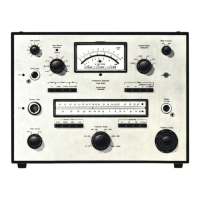
251
2
show
that
the
prescribed
limits
have
been
exceeded,
but
where
it
is
possible
that
third-oc-
tave
analysis
will
reveal
levels
be-
low
these
limits
.
Filter
Set
Type
1 61 8
has
its
lowest
frequency
third-
octave
filter
centred
at
2 Hz
and
covers
the
whole
of
the
hand-arm
vi-
bration
measuring
range.
Battery
op-
erated
Tunable
Filter
Type 1
621,
which
has
a
23%
(~ 1 / 3 octave)
bandwidth,
covers
down
to
0,2
Hz
and
therefore
covers
the
whole-
body
(excluding
motion-sickness)
and
hand-arm
measuring
ranges
.
Where
it
is
required
to
perform
measurements
with
the
user's
own
special
weighting
filters
these
can
also
be
connected
as
external
filters
instead
of
the
251
2's
built-in
stand-
ard
filters.
The
unweighted
or
weighted
AC
vibration
signal
can
be
accessed
at
the
output
socket
for
external
filters
for
output
to
a
statistical
analyzer,
tape
recorder
or
for
one-third
octave
frequency
analysis,
to
the
Digital
Frequency
Analyzer
Type 21 31 .
Measurement
Modes
Following
the
input
circuitry
and
frequency
weighting
stages
of
the
instrument
are
the
signal
detector
and
calcuration
stages
which
com-
pute
the
signal
level-time
relation-
ship.
The
instrument
simultane-
ously
measures
the
signal
in
the
fol-
lowing
three
modes
.
Equivalent Exposure Measure-
ment.
In
this
mode
the
instrument
computes
the
accumulated
vibration
dose
expressed
as a
percentage
of
the
vibration
dose
allowed
for
the
measured
time.
The
computation
is
made
in
accordance
with
the
calcu-
lation
method
prescribed
by
the
whole-body
vibration
standard
ISO
2631.
The
calculation
procedure
for
hand-arm
and
motion
sickness
equivalent
exposures
is
carried
out
in
a
similar
way.
The
filtered
vibra-
tion
signal
is
first
rectified
by
a
lo-
garithmic
root-mean-square
(RMS)
detector
which
is
interrogated
every
two
seconds
(ti
= 2). Each
two-sec-
90dB
100dB
110dB
20
15
10
5
ai
:s
0
C
0
-~
-~
a.
-5
E
<(
a,
U::
-10
C)
C
·
;;
.c
-~
~
-15
-20
(
'<
/
Motion
Sickness
( Reduced
Comfort)
I
'
\
,...---....,
r\ I
//
/
'~
{
/
I
/
Motion
Sickne~
\Y
V
(Severe
Discomfort)
1
!,
I
A\
I I
';
\\
\\
r
l\
I
I
\
I
I
\
vHand
-
Arm
·
~
I\
I
'
\
\
)<
\
\
\
Whole
Body\
\
\
'
~
Loog;1"d;MI la,I \
\
'
\ \ \
Whole
Body
~
'
\
Lateral /
\
\
(a
x and
ay)
\
'
\
\
-25
-30
\
\
\
\
\
\ \
l
-35
O,Q2
0,
05
0, 1 Hz 0,2
0,3
0,5 1 Hz 2 4
810
16
50
80100
200
500
1
kHz
2
Frequency
791073
/2
Fig.4. Response
of
frequency-weighting filters included in Type
2512.
Hand-Arm
Vibrat
ion Exposure
(ms
-
2
rms) ( Reference Frequency 160 Hz)
Uninter-
Regularly Interrupted
Expo
su
re
ti
me
during
rupted
Duration
of
regular t i
me
interval
WITHOUT
vibr
ation
d
ai
ly
shift
or
not
(minutes per working hour)
(8h )
regularly
interrupted Up
to
10 > 10
to
20
> 20
to
30 > 30
to
40
>
40
Up
to
30 min.
40 40
-
- - -
> 30 mi
n.
to
lh
32 32 -
-
-
-
>
lh
to
2h
24
2~
24
32
40
40
>
2h
to
4h
16
16
16
24
32
40
> 4h to 8h 8
(xl)
8
(xl}
8
{xl)
16 {x2) 24 (x3)
32 {x4)
Whole Body
Expo
sure
Exposure
Fatigue Decreased Reduced
Comfort
Vibration
Ti
me
Limit
Proficiency Boundary Boundary
1
to
80
Hz
(ms
-
2
)
rms
(ms-
2
) rms
(ms
-
2
) rms
24h 0,28 0,14
0,044
16h
0,42 0,
21
0,067
Longitudinal axis
{a
2
)
8h
0,63 0,31
0,098
{ Reference Frequency
4h 1,1
0,53
0,17
4
to
8 Hz)
2,5h
1,4
0.71
0,23
Transverse
axes
{a
x and av)
lh
2,4
1,2
0,37
{ Reference Frequency 2,8 Hz)
25min
3,6 1,8
0,57
16min 4,2
2,1
0,67
lm
in
5,6 2,8
0,90
Whole Body
Vibration
Exposure Time
Reduced
Comfort
Boundary
Severe
Disc•.Boundary
{ms
-
2
)
0 1
to
0,63 Hz
{Mot
.Sickness)
{ms
-
2
) rms Ref. fr. 0,36 Hz
rms { Ref.
fr. 0, 1
to
0,3 Hz)
Vertical
Motion
8h
-
0,25
in longitudinal
2h
- 0,5
(a,)
a
xi
s
30 min
-
1,0
1
to
4 min 0,86
-
791091
/2
Fig.
5.
Absolute
RMS
acceleration amplitudes corresponding
to
the O
dB
reference level
on
the
frequency weighting curves in Fig.4. (In accordance
with
the relevant standards and rec-
ommendations and valid for one-third octave bandwidth measurements)
120
dB
130
dB
140
(dB
re.
10-6
ms-
2
)150
dB
160
dB
170
I ' I ' I
1
,
1
I I \ I ' I
',
1
I I
I
I ' 1 I ' I
I
I
1
,'
I I
0,0316
0,05
ms-
2
0,1
0,15
0,2
0,3
0,5
ms-2
I I' I '1 I I
1'
I I
I
,,I
I'
I
1
,
1
I I
1
1
I'
I,,,
1
1
'I
,,I'
I I I
1
,
1
i'
I
1
1
I I I
1
,
1
I I I
I'
I
3 4 5 ms-
2
10
15
20
30
40
50
ms-
2
100
150
200
250316
1,0 1,5
2
Fig.6. Scale for conversion
of
acceleration level (dB re. 1
o-6
ms-2)
to absolute acceleration units
ms-2.
(Note: 1 g =
9,81
ms-2)
791071
4


 To Next Page
 Loading...