9.3. Additional maintenance
operations
9.3.1. Checking of the tightness of the
membrane cap
Once the membrane cap has been changed and the electrolyte has
been changed, make sure the membrane cap is tight.
1. Thoroughly dry the outside of the membrane cap.
2. Prepare the membrane cap and fill it with electrolyte. See chap. 7.3.
3. If necessary, clean and dry the outside of the membrane cap again.
4. Slowly and carefully screw the shaft on the membrane cap. See
chap. 7.3.
5. If several drops of electrolyte come out the membrane, the mem-
brane is damaged. Change the membrane cap with a new one.
9.3.2. Changing the electrolyte
Change the electrolyte:
• every 3...12 months, as often as required by the process;
• if the slope calibration is not possible due to unstable or
too low values displayed.
→ Uncover the vent by lifting the hose ring to let air go into the vent.
→ Unscrew the membrane cap.
→ Pour the old electrolyte out of the membrane cap.
→ For a sensor with an internal holder, the electrolyte of the internal
holder must be changed too:
1. Use tweezers to remove the internal holder from the membrane cap.
2. Rinse the internal holder and dry it on a clean absorbent paper
towel.
→ Clean the working electrode with a clean and dry paper towel.
→ Clean the tip of the dry working electrode:
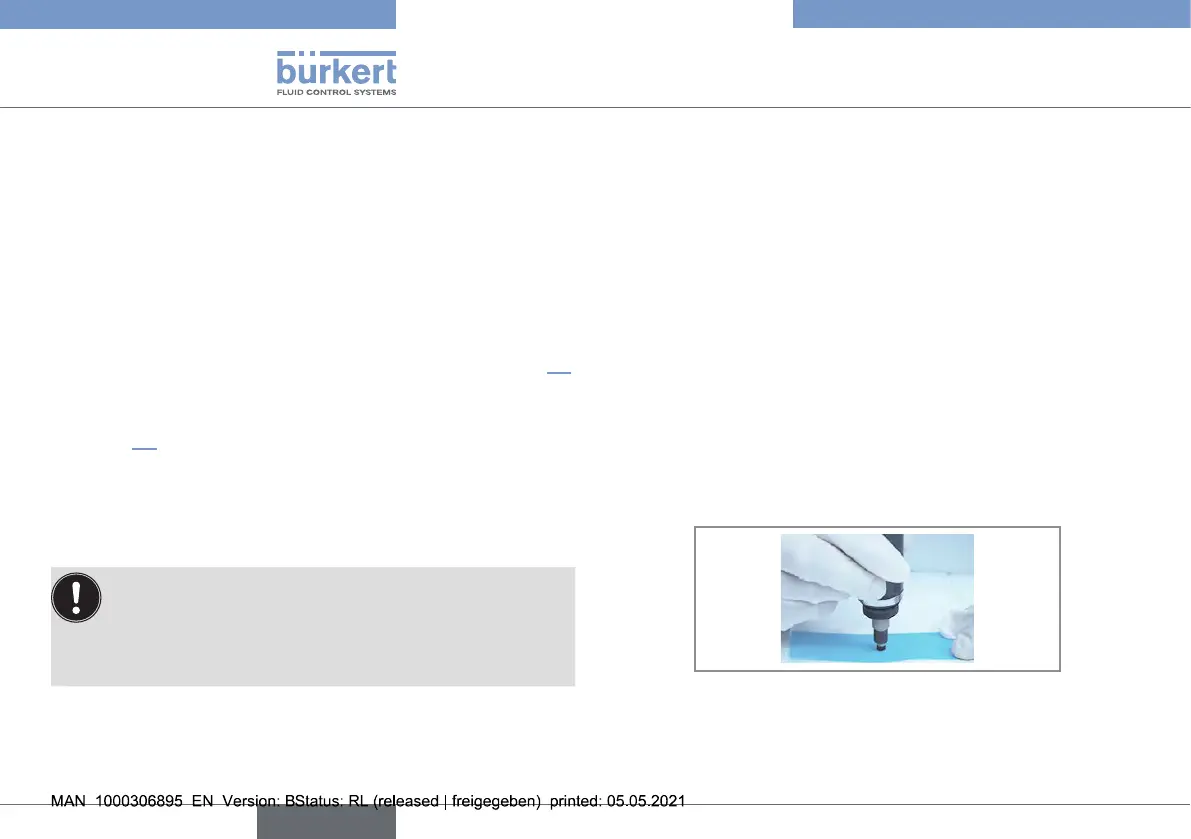
1. Place the supplied abrasive paper on a paper towel. The rough
side must be upwards.
2. Hold the shaft upright with one hand above the abrasive paper.
3. Hold the abrasive paper at one corner and rub the tip of the
working electrode two or three times on the abrasive paper
doing a movement from left to right like shown on the picture:
24
Maintenance and troubleshooting
Type 8232
english


 To Next Page