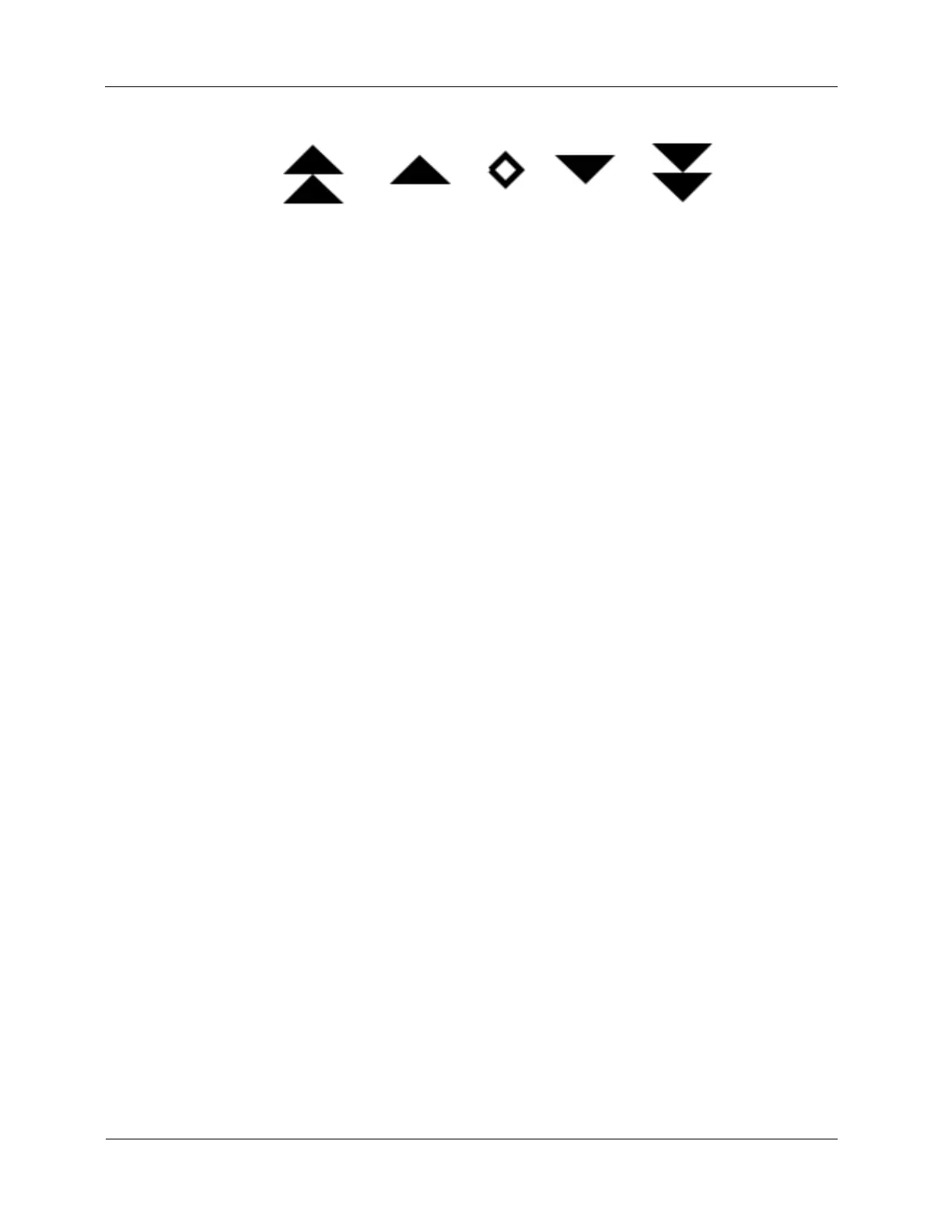
This is an innovative feature of C-Pilot EVO, particularly useful when there is a significant
drift of the thermals due to the wind. It indicates whether your current thermal is useful or not.
A double upward-pointing triangle means that the arrival altitude at the next waypoint is
increasing with a rate at least equal to the average climb. In this case it may be useful to stay
in that thermal, even if the variometer shows a not so good value: the wind is drifting you
toward the waypoint. A single upward-pointing triangle tells that the arrival altitude at the next
waypoint is increasing with a rate at least equal to half of the average climb. A diamond
indicates that the arrival altitude is not changing significantly: most probably, the height gain
is being compensated by the wind drift. One or two downward-pointing triangles indicate that
the arrival altitude is diminishing: if you are turning in a thermal, your height gain is not
enough to compensate for the wind drift.
Arrival altitude at next (max glide ratio): it is the arrival altitude above mean sea level at
the optimised point of the cylinder, flying at maximum efficiency. The symbols indicate, as for
the previous item, if the thermal is advantageous or not.
Arrival height above next (max glide ratio): it is the arrival height with respect to the
waypoint at the optimised point of the cylinder, flying at maximum efficiency. The symbols
indicate, as for the previous item, if the thermal is advantageous or not.
Arrival height above next (speed to fly): arrival height (with respect to the waypoint
altitude) at the optimised point of the next cylinder, flying at speed to fly. The symbols
indicate, as for the previous item, if the thermal is advantageous or not.
Arrival altitude at next (speed to fly): it is the arrival altitude above mean sea level at the
optimised point of the cylinder, flying at speed to fly. The symbols indicate, as for the
previous item, if the thermal is advantageous or not.
Next waypoint altitude: altitude above mean sea level of the next waypoint. The value is
calculated from the waypoint name, if coded in the standard format (letter, two-digit
sequential number of the waypoint, and three-digit altitude), or from the data entered in the
waypoint page.
Next waypoint name: shows the name of the next waypoint in the task
Next waypoint description: shows the description of the next waypoint in the task.
Distance to next cylinder: indicates the distance from the optimised point of the next
turnpoint.
Distance to next waypoint: this is the distance from the centre of the next turnpoint.
Glide ratio to next waypoint: shows the glide ratio that you need to arrive to the cylinder of
the next waypoint, at the optimised point.
Turn to next: shows how many degrees and in which direction (shown by the triangular
arrow) you have to turn to go toward the optimised point of the next waypoint.


 To Next Page