
 Need help?
Do you have a question about the Crestron HD-MD4X2-4K-E and is the answer not in the manual?
Steps to access the switcher's web interface using its IP address.
Details on how to log in to the switcher's web interface with credentials.
Guidelines for output status, name, and HDCP configuration via the OLED display.
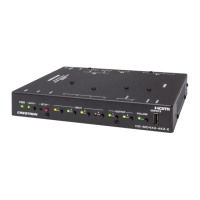
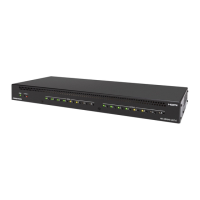
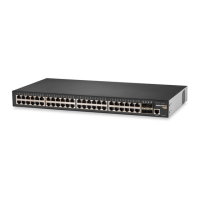
The Crestron HD-MD6X2-4K-E, HD-MD4X2-4K-E, and HD-MD4X1-4K-E are advanced 4K HDMI switchers designed to manage and distribute high-resolution video signals. These devices support signals up to 4K/60, ensuring crisp and clear video quality for various applications. Beyond simple switching, they integrate sophisticated features like DigitalMedia EDID management, native Crestron control via Ethernet, a built-in web server, and a front panel OLED display, offering comprehensive control and monitoring capabilities.
At their core, these devices function as HDMI switchers, allowing multiple HDMI input sources to be routed to one or more HDMI outputs. The specific models offer different input/output configurations:
A key feature is their support for 4K/60 HDMI signals, ensuring compatibility with modern high-resolution displays and sources. The integrated DigitalMedia EDID management system is crucial for ensuring reliable communication between sources and displays. EDID (Extended Display Identification Data) issues can often lead to display problems, and the switchers' advanced management capabilities help to resolve these by allowing users to select and send desired EDID files to inputs, either globally or individually. This includes a selection of built-in EDID files (e.g., various laptop resolutions, consumer 4K HBR 3D, 1080P HBR) and the ability to load custom EDID files.
HDCP (High-bandwidth Digital Content Protection) support is also a critical component, enabling the secure transmission of copyrighted content. Users can enable or disable HDCP support for each input individually, or set outputs to "Auto" (encrypt if input requires) or "Always Enabled" (always encrypt regardless of input).
The switchers offer multiple interfaces for configuration and control, providing flexibility for different user preferences and installation environments.
The built-in web server provides a comprehensive graphical user interface for managing all aspects of the switcher. Accessing it involves noting the device's IP address from the front panel OLED display, opening a web browser, and navigating to that IP address. A login page secures access, with default credentials (username: admin, password: admin) that are recommended to be changed for security.
Once logged in, the web interface presents a navigation bar with several key sections:
The web interface is designed for ease of use, with clear options and dynamic updates (e.g., output resolution and frame rate are displayed and updated in real-time). An inactivity timeout feature automatically logs users out after 10 minutes, returning to the login page for security.
For on-site configuration and quick adjustments, the switchers feature a front panel OLED (Organic Light-Emitting Diode) display and a navigation pad. The OLED display provides a menu tree that mirrors many of the web interface's functionalities, allowing users to:
Through the OLED display, users can configure input settings (Global EDID, individual input EDID, HDCP), output settings (routing, HDCP), network settings (view status, DHCP, IP setup), and device settings (view details, front panel control, firmware update, restore defaults). The display provides clear prompts and messages during configuration processes.
Physical push buttons on the front panel offer a tactile and immediate way to control routing.
The front panel can be enabled or disabled via both the web interface and the OLED display. When disabled, the navigation pad, routing push buttons, OLED display, and all LEDs turn off, making the device appear unpowered while still functioning internally. This can be useful for maintaining a discreet appearance in certain installations.
The switchers are designed with maintenance in mind, offering features to ensure long-term reliability and ease of updates.
Firmware updates are crucial for enhancing performance, adding new features, and addressing potential issues. The switchers support firmware upgrades through the web interface or via a USB service port.
In cases where configuration issues arise or a fresh start is desired, the switchers allow users to restore default settings. This can be done through the Device > Restore section of the OLED display menu. A confirmation prompt ensures that this action is intentional, and upon confirmation, the device restores its factory settings.
For security, the web interface allows users to change the default username and password (admin/admin). This is done in the Device > Username and Password section, where users can enter a new username and password, confirm it, and save the changes. The system notes that usernames and passwords are case-sensitive.
Both the web interface and the OLED display provide real-time status information. The web interface's Status page offers a comprehensive overview of general device and network information. The OLED display's "Status" menu item within the "Network" submenu provides network-related details like DHCP status, IP address, subnet mask, gateway, and MAC address. Input LEDs and output LEDs on the front panel also provide immediate visual feedback on signal detection and routing status, aiding in troubleshooting and monitoring.
These features collectively ensure that the Crestron 4K HDMI switchers are not only powerful in their core function but also user-friendly, secure, and maintainable throughout their operational lifespan.
 General
| Switcher Type | HDMI |
|---|---|
| Model | HD-MD4X2-4K-E |
| Input Ports | 4 |
| Output Ports | 2 |
| HDCP Support | HDCP 2.2 |
| EDID Management | Yes |
| HDMI Version | 2.0 |
| Maximum Resolution | 4K@60Hz |
| Audio Format Support | Dolby Digital, DTS |
| Control | RS-232, Ethernet |






 To Next Page
