Celeris User Manual
14770-A || ECN # 844 || ECN Date: 28 July 2017 Page 10 of 23
Simultaneous ERG and VEP Protocol
The simultaneous ERG and VEP protocol supplied by Diagnosys uses input channel 1 for the corneal/ERG
recording and input channel 2 as the VEP/cortical recording.
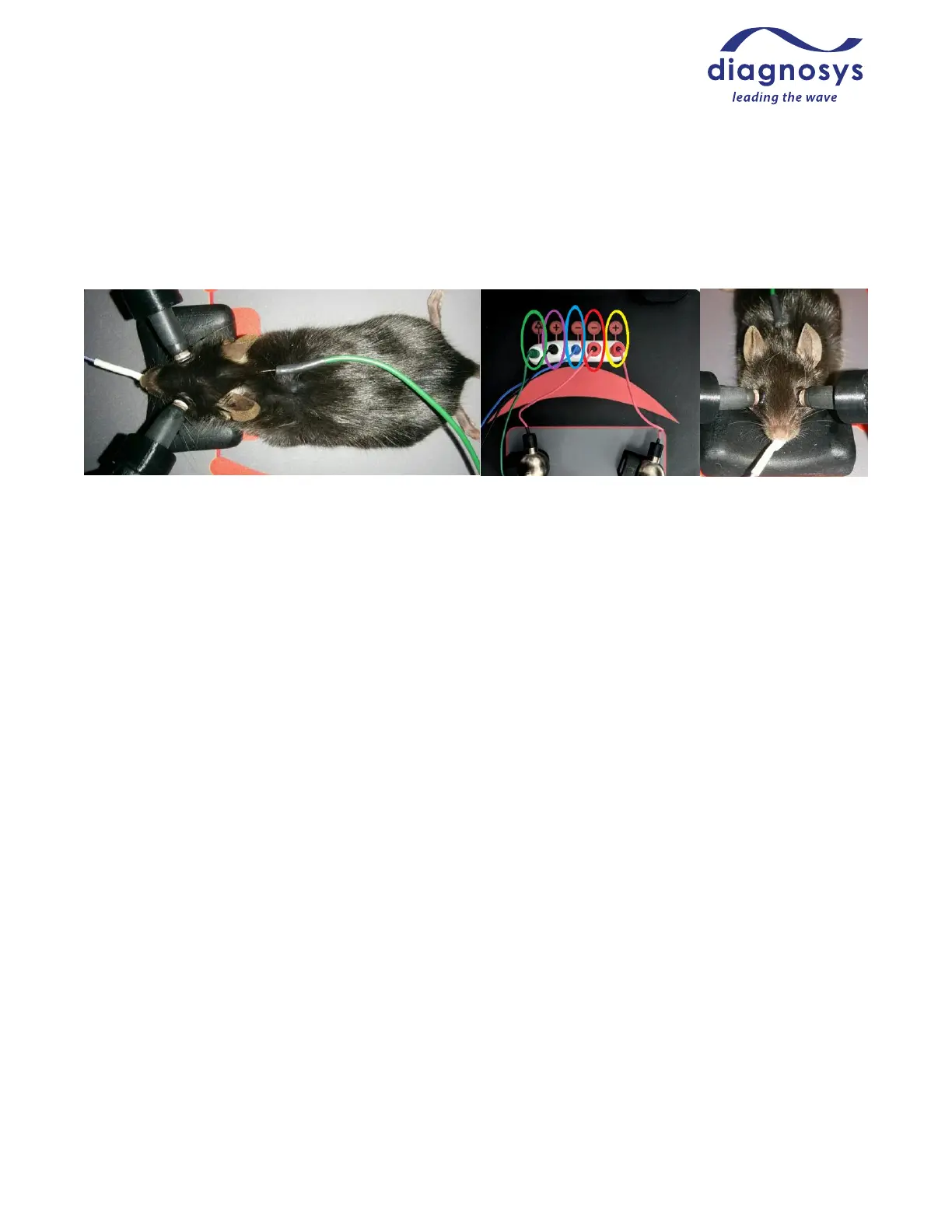
Figure 11 – Setup for combined ERG/VEP. GND in tail (not pictured) Figure 12 - Layout for ERG/VEP protocol Figure 13 - alternate
view of Flash VEP setup
The animal’s right eye stimulator/electrode is plugged into Channel 1+ (indicated in yellow in Figure 10 above).
The animal’s left eye stimulator/electrode plugs into Channel 1- (red). A VEP reference needle electrode should
be placed in the snout or cheek (as seen Figure 11 above). The plug for the VEP reference should go into channel
2- (indicated in blue in Figure 10 above). The active VEP electrode should be at the midline at the back of the
head, and is plugged into 2+ (indicated in purple). The final ground electrode is placed in the tail or hindquarters
near the tail, and is plugged into the input circled in green in Figure 10. (See Figures 9 - 11).
Setup Tips and Tricks
Ground electrode
• The ground electrode is a non-recording electrode that is used to prevent electromagnetic noise (for
example, from power cables) from interfering with the signal. Common placement sites include the tail,
or the hindquarters near the tail. While there is no electrophysiological advantage to either site,
Diagnosys recommends placing the electrode on the hindquarters near the tail, as the skin of the tail is
typically tougher and will blunt an electrode more quickly.
• The Celeris has been hardened against electromagnetic interference, and you may find that adding a
ground electrode is not necessary to protecting against mains interference, particularly in
TOUCH/TOUCH protocols. TOUCH/TOUCH protocols by default assume no ground electrode is placed.
• In addition to preventing electromagnetic noise from interfering with the signal, the ground electrode
permits the impedance of each active electrode to be assessed independently. Without a ground, only
the average of the impedances of the two electrodes can be determined and therefore both eyes will
always show the same value.



 To Next Page