37
5. Accumulating heat
At this stage, even though the appliance has been burning for some time,
we’re still building up heat inside the burner. It can take around an hour or
more for heat to spread evenly throughout the appliance.
Adjusting fuel settings too high before sufficient heat has accumulated in
the burner will result in incomplete combustion and soot. The burner must
always be hot enough to vaporize the fuel entering it.
If you notice soot, orange flames or a lot of liquid fuel at the bottom of the
burner, these are signs your appliance is receiving more fuel than it’s able
to vaporize at this stage. Keep building heat slowly on a lower fuel setting if
you notice any of these sings.
The fan can remain off as long as the flames are burning clean (blue-yellow)
If you notice the flames becoming rich (orange-red) adjust fuel down and
turn the fan on, set to a speed that improves the flame color without
causing the flames to drop down into the burner. The flames should remain
above the burner ring.
6. Allowing combustion to stabilize
Once the burner is hot enough to vaporize larger amounts of fuel, fuel to
the burner can be increased. It’s best to adjust fuel by no more than 1
setting higher on the valve knob at a time and allowing the appliance to
adapt to the larger fuel volume. Wait at least 15 minutes between
increases. If the flames turn orange-red, it means we’ve gone too far, and
should reduce fuel again until more heat has built up.
If you increase fuel settings and find the quality of the flame is only slightly
degraded, the fan can always be used to balance the flames. Clean, blue-
yellow flames rely on a balanced mix of fuel and air, so both fuel and air
adjustments can be used to achieve this. Higher fuel settings will call for
higher fan speed settings.
7. Equalization
Once temperature has equalized, meaning it has spread evenly
throughout the appliance, so long as the burner has remained clean and
has not fouled up with carbon, you will be able to select any fuel setting.
The burner is now hot enough to be able to vaporize any amount of fuel
the valve is rated to provide.
The fan will typically not be needed to maintain the fuel-air balance at this
stage, but can be used if you are running settings 4-5, it’s unusually windy
or if a chimney is less than 6 feet in height.
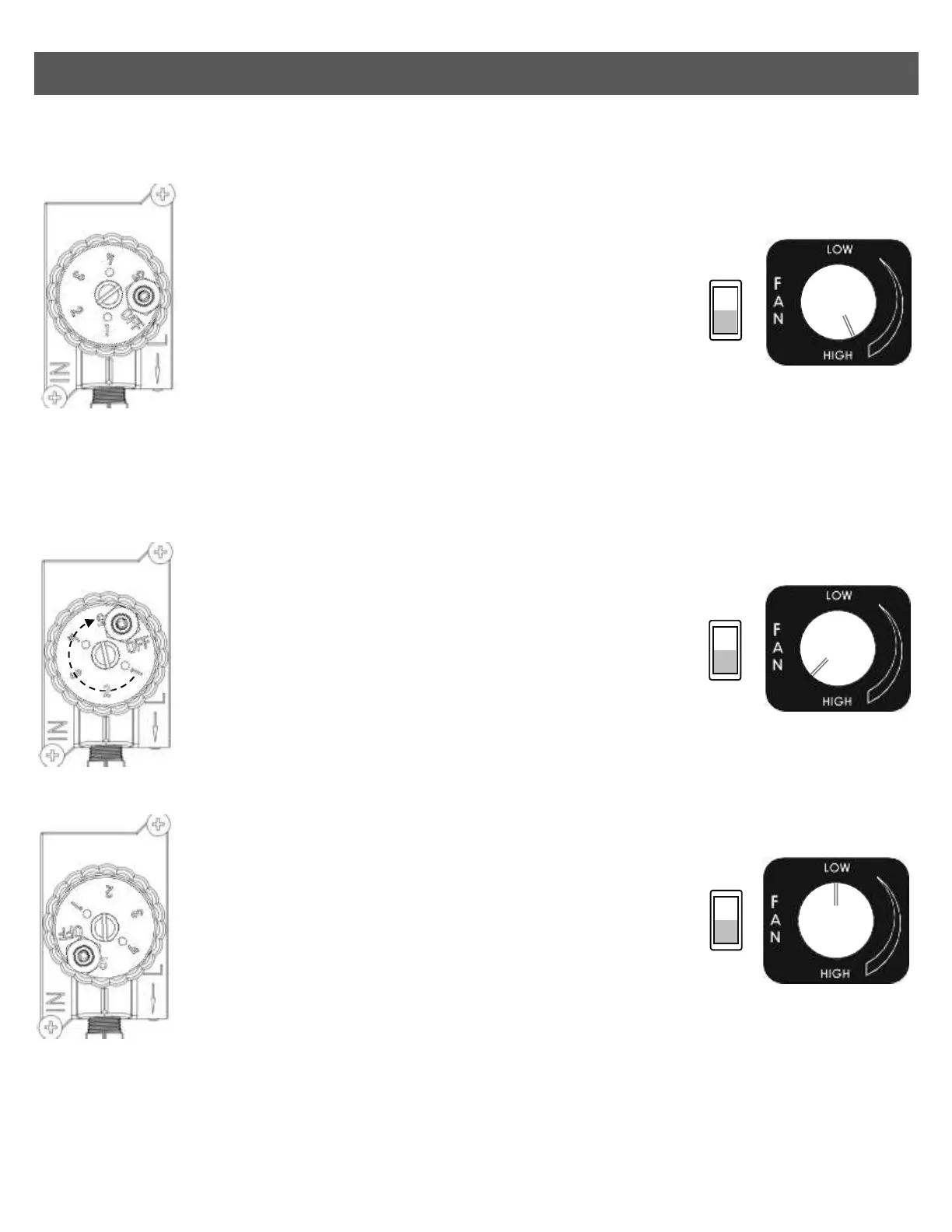
1
ON
2
ON
5
OFF
8. Shutting down the appliance
Turning off the appliance is accomplished by cutting off fuel – set the valve to ‘OFF’ and turn of fuel flow from the fuel
source.
Leaving the fan running while the appliance is being turned off will help to reduce carbon deposited in the burner by the
flames as they become extinguished.
LIGHTING-UP PROCEDURE cont’d
FUEL SETTINGS ------------------------------------------ FAN SETTINGS
FIG 68
FIG 69
FIG 70
FIG 71
FIG 72
FIG 73



 To Next Page