40
BAROMETRIC DAMPER SETTINGS
TESTING THE DRAFT
The burner will require less air when operating at lower fuel settings. Having too much
air on low fuel settings may cause the flames to drop down into the burner pot.
Reductions in air can be managed by turning off the fan or adjusting the barometric
damper.
In order to perfectly balance combustion, fuel may need to be added if the amount
being burned is too little to generate draft. Draft is generated by accumulated heat
within the chimney, and is also responsible for the intake of fresh air to the burner.
Too little fuel being burned can result in too little heat, and insufficient air being drawn
in to balance combustion overall.
It is preferable to generate more heat than desired and allow it to dissipate than to
attempt to run the burner too lean with flames inside the burner pot. Flames burning
within the burner pot cannot be balanced.
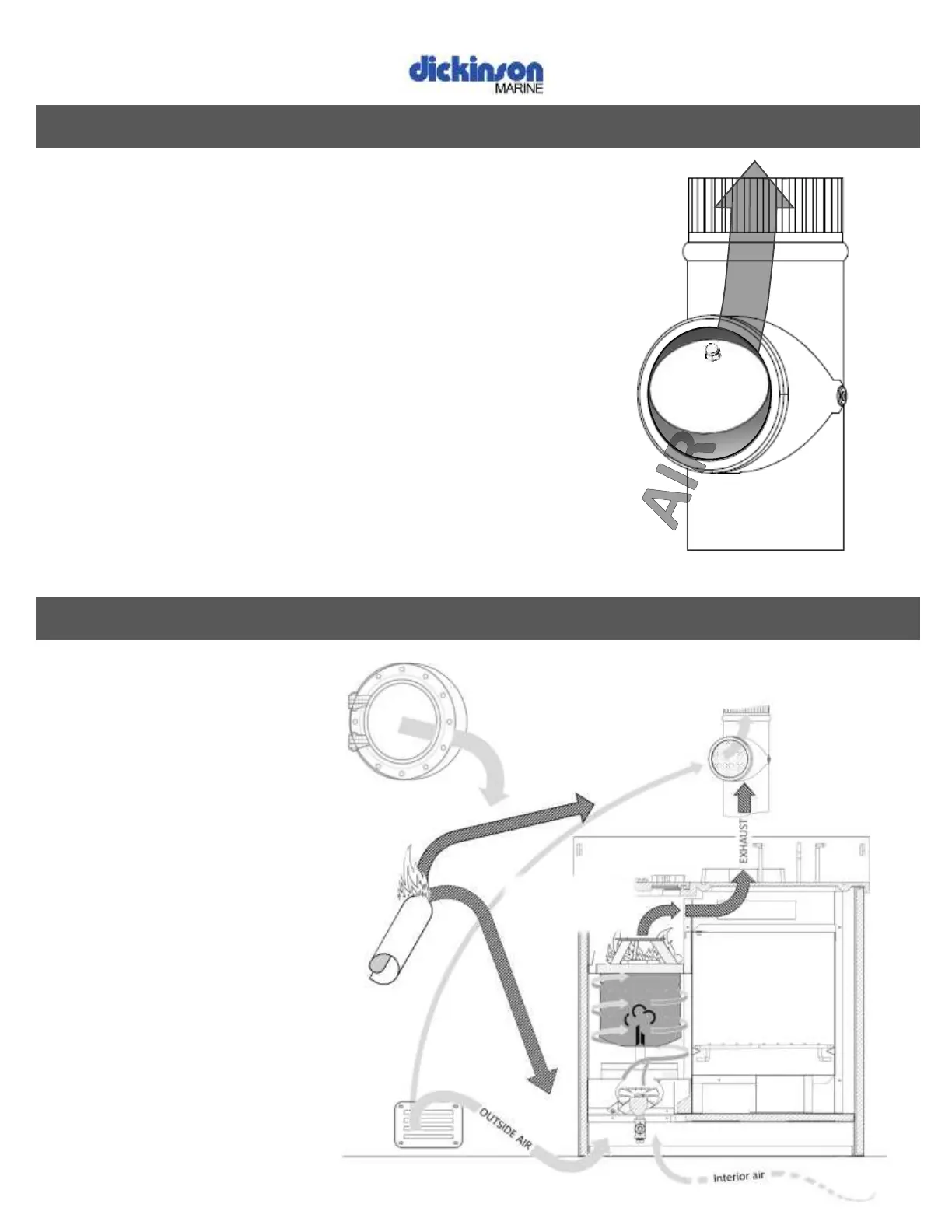
The more open the barometric damper flap
sits, the less air will be fed to the burner.
Natural Draft Within
the Cabin
Test the draft within the cabin
by rolling some paper into a
wick. Light one end of this wick
and hold it close to windows
and vents. The direction its
smoke is drawn will reveal the
natural draft occurring within
the cabin.
Installing or opening opposing
vents will allow air to enter
with the least amount of
resistance and will be less
likely to unbalance the draft
within the chimney.
Smoke from wick
will indicate where
air is being drawn
wick
FIG 79
FIG 80



 To Next Page