/ weather
Fuel setting
on valve
Fan setting
Cold start #2 - #3 Off
Low heat #1 - #2 Off
Low heat
(cold/windy day)
#2 - #3 Low
Medium heat #3 - #4 medium
Medium heat
(cold/windy day)
#4 - #5 high
Hot #5 high
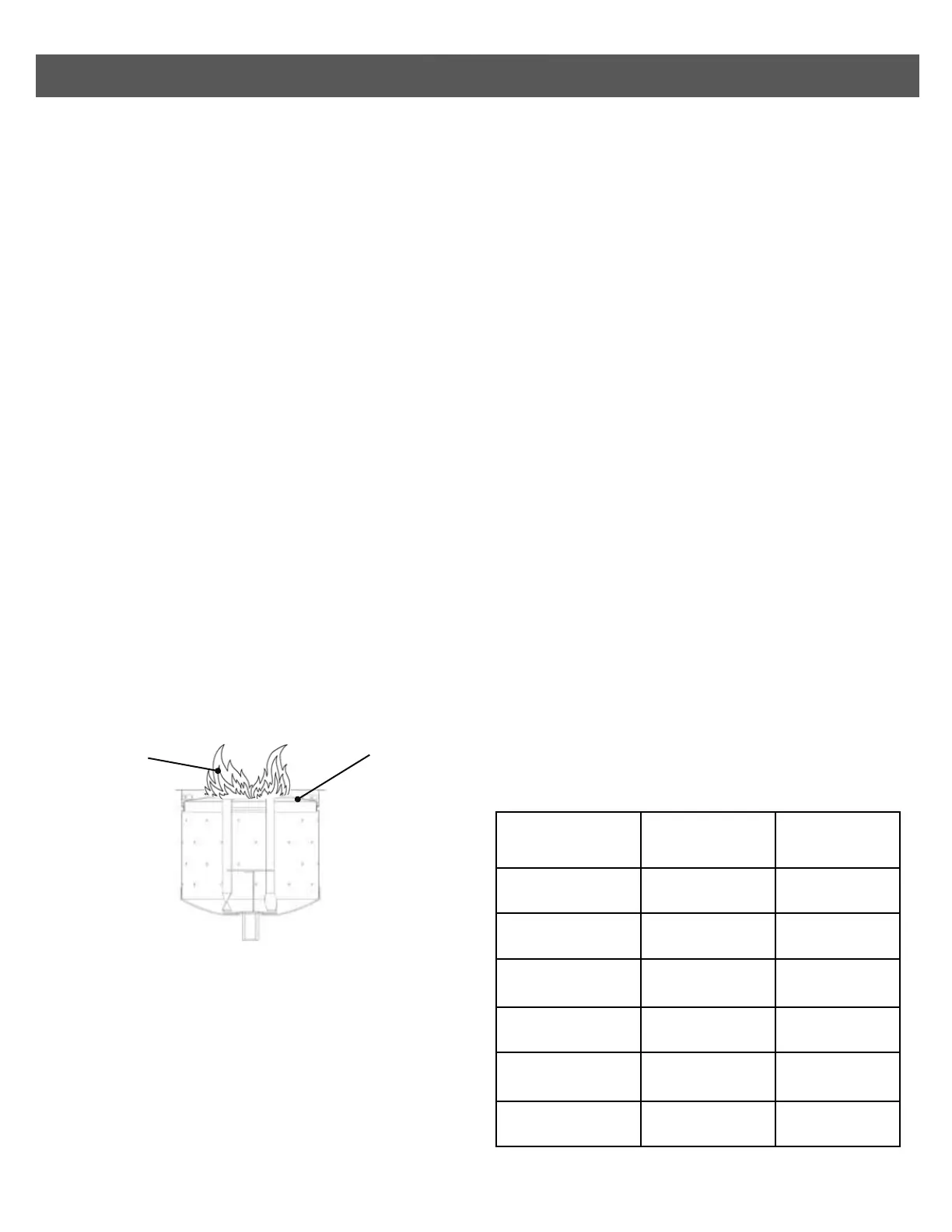
Flames sitting
above ring
Burner ring
FIG 78
Always clean new and old metering valves alike before first
use (see page 43 for instructions) Clean the valve at the
beginning of each season, anytime the stove has sat unused
for extended periods, at any signs of inconsistent fuel flow or
if fuel is observed exiting the overflow.
The first time the oil-metering valve is turned on it will take
5-10 minutes for the fuel lines to fill and oil to appear in the
bottom of the burner.
When placing the burner components inside the burner,
push & twist the superheater into the bottom of the burner
as if you were trying to leave a mark – this is to ensure good
metal to metal contact. This is needed for efficient heat
transfer.
Do not use gasoline or other highly incendiary fuels to ignite
the burner. Once lit, do not leave the appliance unattended
for any length of time.
Once fuel has been ignited, replace the lid or shut the burn
chamber door to allow appliance combustion to normalize.
Always operate the appliance with it’s burner lid or door
properly closed to encourage the natural draft.
Wait 20 minutes for the appliance and its chimney to heat
up in between valve setting adjustments. There may be a
slight darkening in flame appearance as the added fuel adds
its heat to the chimney and the draft action catches up.
Allow 20 minutes for combustion to stabilize. Only increase
fuel by a maximum of one number increment at a time.
The flames must always burn above the top burner ring
regardless of the valve setting selected. The flames should
never burn sooty and never burn below the burner ring.
Operating the fan can deliver too much air and cause
combustion to become too lean (with too much air in the
fuel to air mixture) If you find that the flames disappear into
the burner pot with an increase of fan speed, reduce the fan
speed setting.
Some fans have low amperage motors and need to have their
speed controls turned up to a high setting to initiate spinning
of the fan blades. Once the fan blades on a low amperage fan
have begun to spin, any speed setting can be selected.
Increasing fuel in small increments will make it easier for the
draft to catch up with fuel increases. If the flames turn orange
or begin to show blackening at their tips, increase fan air in
small increments until the flame color returns to bright yellow.
Running the fan at too high a speed can cause the fuel to burn
off too quickly unbalancing the fuel and air and leading to
carbon and soot. Clean flames depend on a balanced fuel & air
mix. Adjusting fuel may require and adjustment of air to
maintain this balance.
frequent observation of the flames through the viewing
window is required. The lid of a stove and on the Lofoten
model heater should remain closed except for lighting. The
door on all other heater models must remain closed after
lighting. Opening access to the burner will alter the
combustion balance until access is closed again.
After the appliance has reached operating temperatures and
the ambient temperature in the cabin warms up, the body of
the metering valve and the fuel inside it will begin to warm up
too and fuel will become thinner. Thinner fuel will flow more
quickly and cause the appliance to receive more fuel than
previously – even if the fuel setting has not been changed. At
this equalizing point the fuel setting may have to be reduced to
maintain the same combustion balance.
Varying weather conditions may call for adjustments to the
way combustion is kept in balance. Some common variations
are listed below.



 To Next Page