10
RL-61, 61L EN.033 24.01Seibu Giken DST
EN
3 PRODUCT DESCRIPTION
3.1 PRODUCT OVERVIEW
1
2
9
8
7
4
3
6
5
10
11
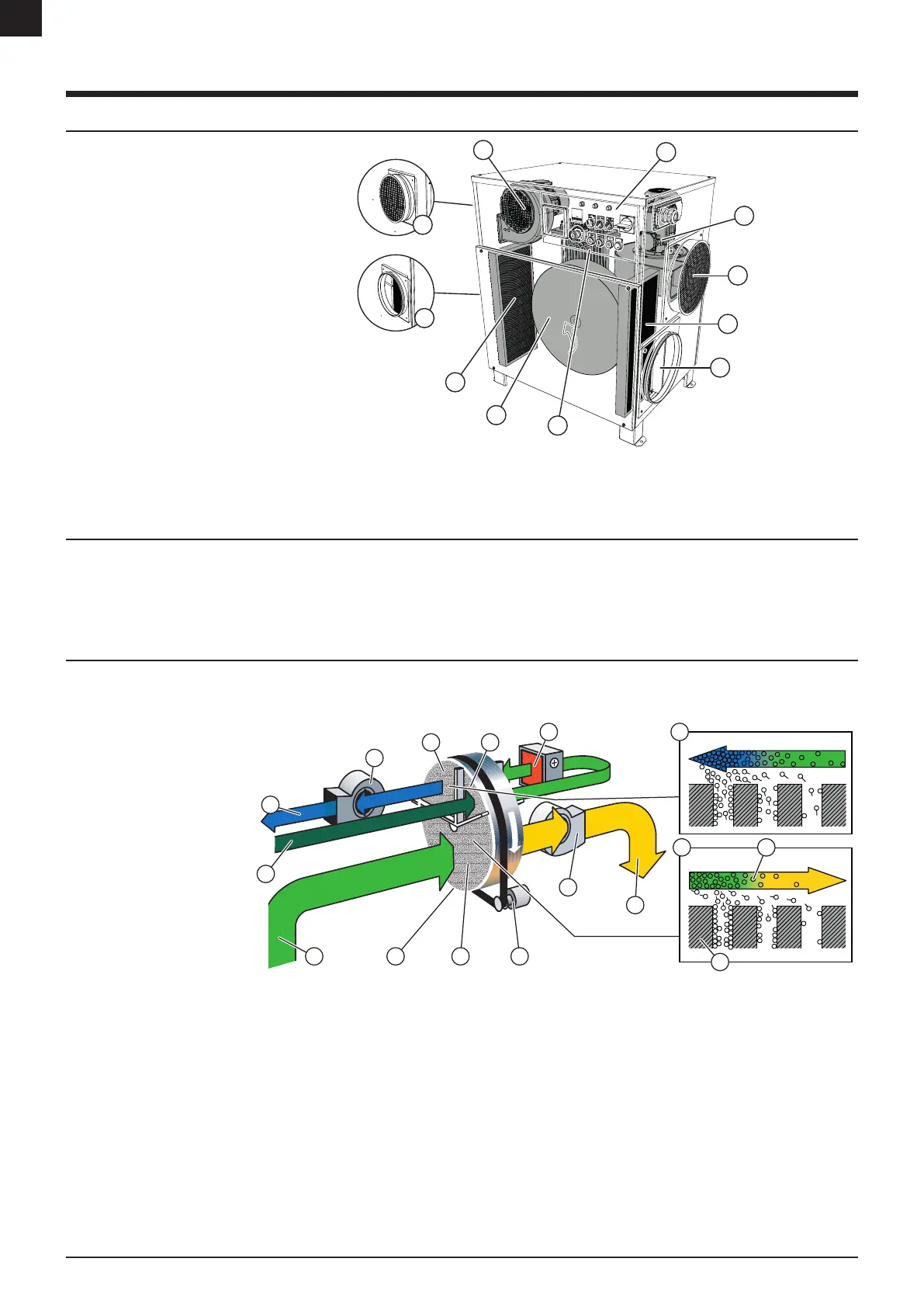
1. Regeneration fan
2. Control panel
3. Process fan
4. Dry air out
5. Process lter
6. Process air in
7. Regeneration heater
8. Rotor
9. Regeneration lter
10. Regeneration air in
11. Wet air out
FIGURE 4: Product overview
Variation of installation and components may vary.
3.2 APPLICATIONS
DST desiccant-type dehumidifiers are normally used where dry air is essential to the various manufacturing processes used in chemical, pharmaceutical, food or
confectionery industries, or where a dry environment is required for the storing and handling of moisture-sensitive products and raw materials.
The well proven air drying technology using the adsorption principle provides great exibility in solving humidity problems. It oers the user independent humidity control,
down to dew points far lower than the eective operating range of refrigeration dehumidiers.
3.3 PRINCIPLE OF OPERATION
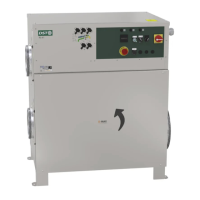
This is a continuous process with two air streams of dierent ow rates, normally having a ow ratio of approximately 3:1. The greater ow, process air, is dried as it passes
through the dehumidier, while the smaller ow, regeneration air, is used to heat the rotor material to drive the adsorbed moisture vapour from the desiccant. The moisture
which is removed from the process air is transferred over to the other sector as the rotor slowly turns.
1. Wet air outlet
2. Regeneration air fan
3. Regeneration sector
4. Purge sector
5. Regeneration heater
6. Dry air outlet
7. Process air fan
8. Rotor motor
9. Process sector
10. Rotor
11. Process air inlet
12. Regeneration air in
13. Desorption process
14. Adsorption process
15. Water molecule
16. Silica gel
3 4
5
7
2
1
11
12
9
10
8
6
13
14
16
15
RECUSORB Light is a continuous dehumidier with internal energy recovery and able to reach very low dew points. During regeneration, sensible heat is adsorbed by
the rotor material. The rotor rotates and enters a small purge sector where part of the incoming regeneration air is pre-heated. As a result, the regeneration air is pre-heated
before the air enters the regeneration heater, thus reducing the amount of energy to heat the air in the regeneration heater. Purge sector will also deadsorb some of the water
molecules before the rotor enters the process sector.
Now that the excess heat in the rotor material is reduced by the purge sector. This will reactivate the rotor materials to prepare it for adsorption. When the rotor nally enters
the process sector, the adsorbing starts immediately until the rotor passes over to the regeneration sector. In this sector the hot air will heat the rotor materials and deadsorbs
the water molecules in to the air and exits through the wet air outlet.
FIGURE 5: Principle of operation & rotor


 To Next Page