23
RL-61, 61L EN.033 24.01 Seibu Giken DST
EN
10 MAINTENANCE
10.1 REGULAR SERVICE INTERVAL
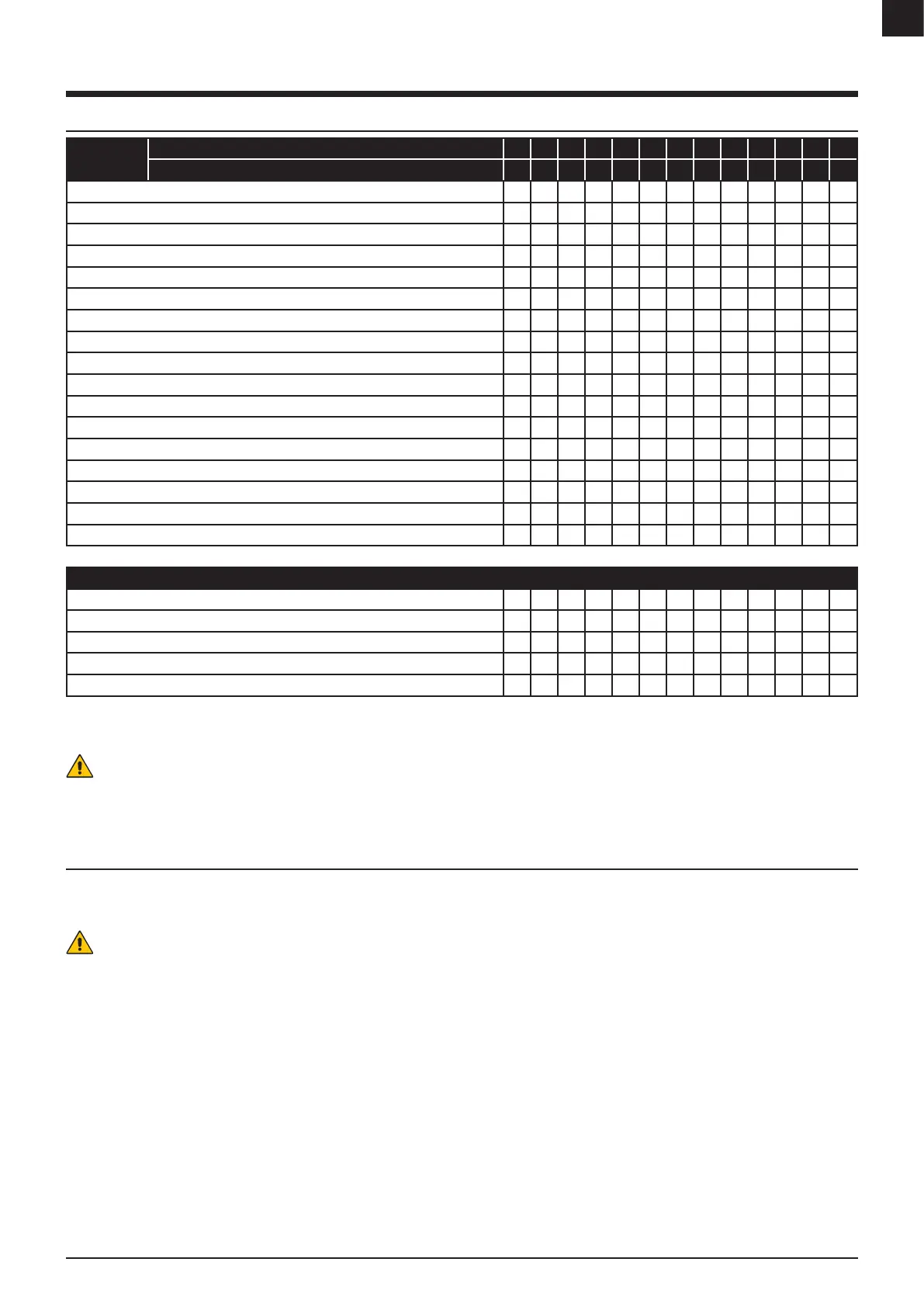
Service time
Run time in hours (x1000) 0 4' 8' 12' 16' 20' 24' 28' 32' 36' 40' 44' 48'
Calender time in months 0 6 12 18 24 30 36 42 48 54 60 66 72
Inspect lter - replace if necessary X X X X X X X X X X X X X
Clean and inspect the unit X X X X X X
Inspect fan - replace if necessary X X X X X X
Inspect features and functionality X X X X X X X
Inspect electric, feature, cables and eletrical components - replace if worn or damaged X X X X X X
Inspect access panels, locks and panel seals - replace if necessary X X X
Inspect duct and duct connections X X X X
Inspect heater and cooler X X X X X X
Inspect humidistat/humidity sensor - replace if necessary X X X X X X
Inspect rotor motor - replace if necessary X X X X X X
Inspect radial & peripheral seals - replace if worn or damaged X X X X X X
Check operation of geared drive motor, drive pully, belt/chain, rotor - adjust as neccessary X X X X X X
Inspect rotor for contamination or damage - clean/repair (contact DST) X X X X X X X
Inspect condenser* X X X X X X
Inspect evaporator* X X X X X X
Inspect compressor* X X X X X X
Inspect cooling system* X X X X X X X
Safety feature check (if tted)
Function test on thermostats X X X X X
Function test on the freeze alarm X X X X X X X
Function test on rotation guard alarm, check and adjust sensor clearance X X X X
Function test on damper, actuator and valves X X X X X X X
Function test on post-cooling function X X X X X X X
FIGURE 23: Service chart
This is a general service chart and the time interval vary depending on the operating condition. Some options listed here may not be installed or available for this specic unit.
Danger!
All personnel involved with installation, operation and maintenance of this unit should familiarise themselves with the safety section of this manual.
* Applicable for Frigosorb and Econosorb.
10.2 WASHING THE ROTOR
The D-MAX rotor has a distinct advantage over other types of desiccant rotors in that dust and grease can be washed out of the material without the need for reimpregnation
after treatment. In all normal applications however it must be emphasised that washing of the rotor should be considered as a last resort having alleviated all other possible
defects rst.
Caution!
Please contact a DST-representative before attempting to wash the rotor!


 To Next Page