EasyManua.ls Logo

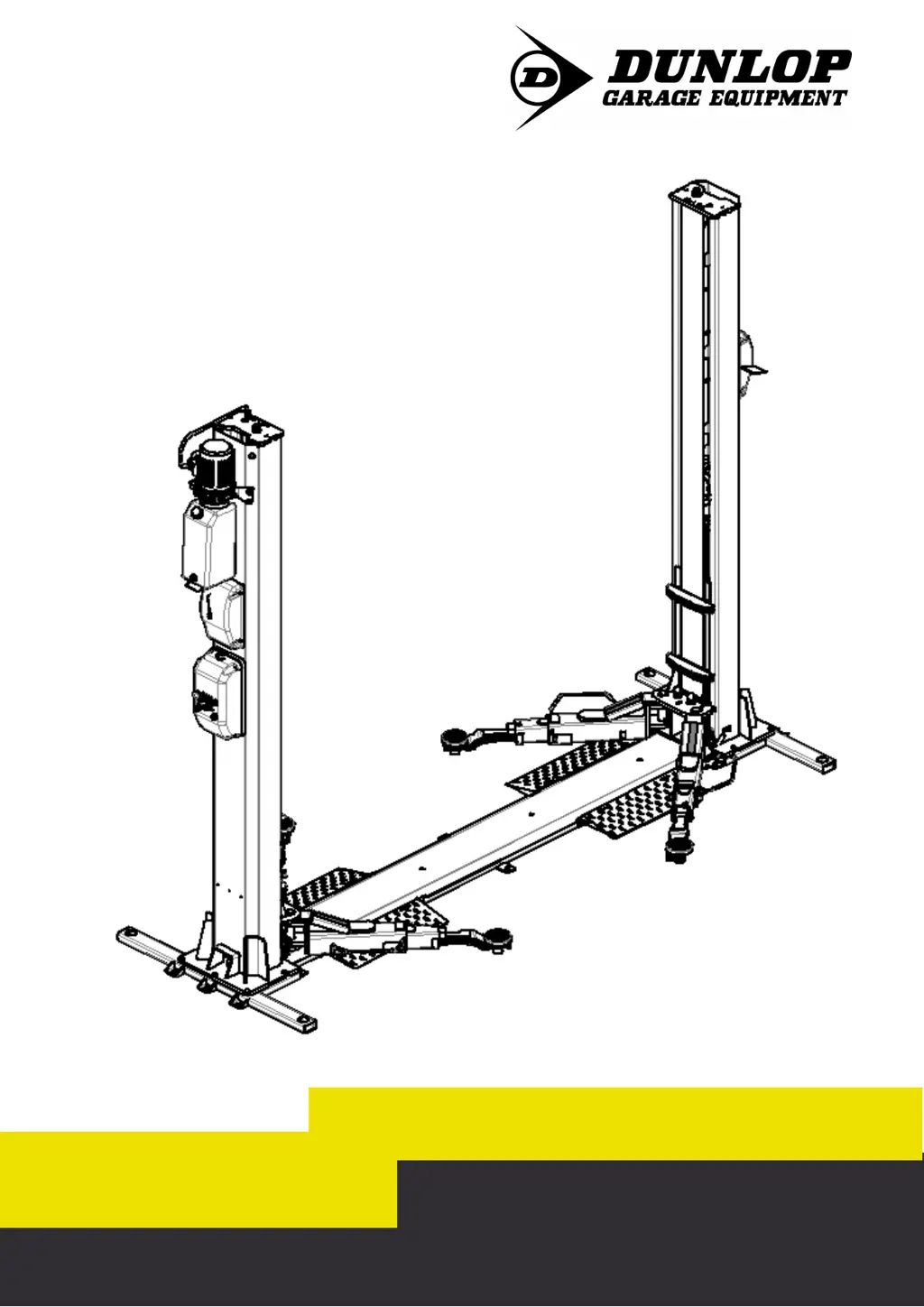
Dunlop DL240B+ - User Manual

Dunlop DL240B+
40 pages
Print Icon
To Next Page IconTo Next Page
Loading...
Date:
ReRead the operating
instructions before
working with the
unit
ALWAYS KEEP
operating instructions
ready to hand on the
unit
23/06/2023
DL240B+
Installation, Operating
and Service Manual

Questions and Answers

  • C
    Curtis HillAug 13, 2025
    What to do if my Dunlop Lifting Systems lift is connected to the mains but doesn't work?
    • C
      Cheryl LaneAug 13, 2025
      If your Dunlop Lifting Systems lift is connected to the mains but isn't working, and the power indicator is off, there are several potential causes: * The transformer primary mains switch may be in the OFF position. If so, switch it to the ON position. * The emergency switch QM on the switchboard crankcase may be OFF. Switch it to the ON position. * The switch (QM) inside the electrical panel may be OFF. Try rearming the switch. * The power indicating lamp may be off, preventing control, or a three-phase equipment motor might have abnormal noise, indicating a lack of phase power. Check the voltage under the fuse base; if abnormal, replace the fuse.
  • J
    Janet ReyesAug 17, 2025
    Why does my Dunlop Lifting Systems lift automatically descend when I release the button?
    • D
      dstokesAug 17, 2025
      If your Dunlop Lifting Systems lift descends automatically when you release the button, the explosion-proof valve clearance might be too small or closed. Remove the explosion-proof valve and adjust the clearance to approximately 1mm.
  • C
    cooksandraAug 21, 2025
    What to do if my Dunlop Lifting Systems lift cannot completely lower down?
    • R
      Roy CarrAug 21, 2025
      If your Dunlop Lifting Systems lift cannot completely lower, consider these possible causes: * A 10A fuse may be burned. Replace it with a new fuse. * The electromagnetic valve might not be opening completely. Adjust the installation position of the electromagnetic valve. * The stroke switch at the end of the chain protection device may not be working. Check the wiring of the stroke switch and wiring terminal to ensure they are correctly connected.
  • J
    Joshua DavidsonAug 25, 2025
    Why is there oil leakage from the connections of my Dunlop Lifting Systems?
    • J
      Joy PeckAug 26, 2025
      If you notice oil leaking from the connections of your Dunlop Lifting Systems, it's likely due to loose fittings. Try tightening the fittings. If the leak persists, consider replacing the fittings.
  • C
    Catherine HernandezAug 28, 2025
    Why is my Dunlop Lifting Systems lift noisy during ascent or descent?
    • P
      pruizAug 28, 2025
      If you're experiencing noise during the ascent or descent of your Dunlop Lifting Systems lift, it could be due to mechanical parts like the chain, pulleys, or sliding pad lacking lubrication. Ensure these parts are properly lubricated.
  • S
    Stephen TuckerSep 1, 2025
    What to do if my Dunlop Lifting Systems lifter struggles to go up and down?
    • J
      jacksonmichaelSep 1, 2025
      If your Dunlop Lifting Systems lifter struggles to move up and down, the down valve (YV1) may be open or damaged. Disconnect and clean the down valve. If it's damaged, replace it.
  • A
    Andrea JohnsonSep 4, 2025
    What to do if my Dunlop Lifting Systems lift does not complete the lifting stroke?
    • T
      Tara WilliamsSep 5, 2025
      If your Dunlop Lifting Systems lift does not complete the lifting stroke, it could be due to several reasons: * The load may be exceeding the maximum flow rate. Check the maximum capacity of the lift. * The supply voltage may be too low. Check the supply voltage. * The oil level may be low. Fill the oil to the correct level.
  • B
    Brandon MccarthySep 8, 2025
    How to fix poor synchronization of the carriage in Dunlop Lifting Systems?
    • J
      jbrownSep 8, 2025
      If you're experiencing poor synchronization of the carriage in your Dunlop Lifting Systems, the leveling cables may have different adjustments. Adjust the nut on the ropes to correct the leveling.

Summary

GENERAL INFORMATION

PEOPLE SAFETY

Guidelines for protecting individuals during operation and maintenance of the lift.

LIFT SAFETY

Crucial instructions for maintaining the operational integrity and safety of the lifting equipment itself.

LIFTED VEHICLES SAFETY

Procedures and precautions to ensure the safety of vehicles being lifted, preventing damage or accidents.

MANUAL KEEPING

Recommendations for proper storage and accessibility of the user manual for ongoing reference.

OPERATOR SAFETY CAUTIONS

Specific warnings and precautions for operators to ensure safe use of the lift and prevent accidents.

TECHNICAL DATA

LIFT DESCRIPTION

Detailed overview of the lift's components and their identification numbers for easy reference.

LAYOUT AND DIMENSIONS

Diagrams illustrating the physical dimensions and layout of the lift system for installation planning.

LOAD DISTRIBUTION GUIDELINES

Critical information on how to distribute vehicle weight correctly for safe lifting operations.

PICTOGRAMS AND MARKINGS

Explanation of various symbols and decals used on the lift to convey safety and operational information.

HAZARDOUS AREAS

Identification of zones around the lift that pose potential risks during operation and require specific caution.

FOREWORD

EC CERTIFICATION DETAILS

Information regarding the lift's compliance with European directives and safety standards.

LIFT TESTING PROCEDURES

Details on the static and dynamic tests performed on the lift as per industry standards.

GENERAL SAFETY AND ACCIDENT-PREVENTION RULES

ALLOWED OPERATIONS

Defines the permissible uses and operational parameters for the vehicle lift.

REQUIRED OPERATIONS

Outlines mandatory procedures and checks that must be performed for safe operation.

FORBIDDEN OPERATIONS

Lists actions and uses that are strictly prohibited to prevent hazards and maintain safety.

SET-UP AND CLOTHING REQUIREMENTS

Guidelines for preparing the workspace and appropriate attire for safe operation.

ENVIRONMENT AND POLLUTION CONTROL

Procedures for handling and disposing of materials to prevent environmental pollution.

LIFT SCRAPPING PROCEDURES

Instructions for environmentally responsible disposal of the lift at the end of its service life.

DANGER LEVELS EXPLANATION

Explanation of hazard warning symbols and their corresponding risk levels for user awareness.

PICTOGRAMS AND SAFETY SIGNALS

Details on lift identification plates and the meaning of associated safety signals.

INTENDED USE DEFINITION

Specifies the designed purpose and scope of use for the vehicle lift.

TRANSPORT AND INSTALLATION

UNPACKING PROCEDURE

Step-by-step guide for safely removing the lift from its packaging and initial inspection.

INSTALLATION AREA REQUIREMENTS

Requirements for selecting a suitable location and space for lift installation.

ANCHOR BOLT INSTALLATION

Detailed procedure for anchoring the lift pillars to the floor, including concrete and bolt specifications.

ELECTRICAL MAINS CONNECTION

Instructions for safely wiring the lift to the electrical power supply.

CONTROL PANEL ELECTRICAL HOOK UP

Guide for making electrical connections to the lift's control panel components.

UPPER LIMIT DEVICE CONNECTION

Instructions for connecting the upper limit switch for safe operation control.

PILLAR ELECTRICAL HOOK UP

Procedures for connecting electrical cables between the lift's main pillars.

HYDRAULIC SYSTEM CONNECTION

Steps for completing the hydraulic system connections for proper lift function.

SYNCHRONISM CABLE CONNECTION

Guide for installing and tensioning synchronism cables for balanced lifting.

INSTRUCTIONS FOR USE

START UP PROCEDURE

Procedures for initial activation and readiness checks before operating the lift.

UTILIZATION GUIDELINES

Comprehensive guide on vehicle positioning, lifting, and lowering operations.

EMERGENCY HANDLING PROCEDURES

Steps to follow in case of malfunctions, power failures, or other emergency situations.

MAINTENANCE

LUBRICATION AND COMPONENT CHECKS

Schedule and procedures for regular lubrication and inspection of lift components.

CLEANING PROCEDURES

Guidelines for cleaning the lift's exterior and internal components to ensure optimal performance.

STORAGE

ENVIRONMENTAL DISPOSAL INFORMATION

Information regarding the environmentally responsible disposal of the lift and its components.

FIREFIGHTING EQUIPMENT RECOMMENDATIONS

Recommendations for appropriate fire extinguishers for use with the lift.

TROUBLESHOOTING

SCHEMES

COLUMN WIRING DIAGRAM

Electrical schematic illustrating the wiring connections within the lift columns.

ELECTRICAL CABINET DIAGRAM (400 V)

Wiring diagram for the electrical cabinet specific to the 400V power supply.

ELECTRICAL CABINET DIAGRAM (220 V)

Wiring diagram for the electrical cabinet specific to the 220V power supply.

ELECTRICAL DIAGRAM 380 V - 3 PHASE

Electrical schematic detailing the 3-phase, 380V power supply connections.

SCHEME LEGEND AND SYMBOLS

Key to symbols and abbreviations used in the electrical and hydraulic diagrams.

HYDRAULIC CONNECTION DIAGRAM

Diagram showing the layout and connections of the hydraulic system piping.

HYDRAULIC SYSTEM DIAGRAM

Simplified schematic illustrating the flow and components of the hydraulic system.

PROCEDURE FOR THE ADJUSTMENT AND TESTING OF THE LIFT

TROLLEY ALIGNMENT ADJUSTMENT

Steps for aligning the trolleys and ensuring correct synchronization of the lift carriages.

LOADING BRIDGE FUNCTION TESTING

Procedures for verifying the proper operation of safety devices and bridge functions.

Dunlop DL240B+ Specifications

General IconGeneral
BrandDunlop
ModelDL240B+
CategoryLifting Systems
LanguageEnglish