14
Blood sampling and analysis
Produce a drop of blood with a sterile single
use lancet approved for capillary blood
sampling. Follow the instructions for use of
the lancet. The site where blood is drawn
must be clean and free of sweat. Lactate
accumulates on the skin from perspiration
and leads to falsely elevated results. Hands
(or earlobes) must be disinfected and washed
with fresh, hygenically-safe water. Dry hands
thoroughly prior to testing. Avoid pressing on
the puncture site too extensively as there is a
risk that sweat and/or tissue uid can merge
with the blood droplet and falsify the test
result. The drop of blood must not run.
Bring the ngertip with the droplet of blood
close to the tip of the sensor that has been
inserted in the device so that the blood can
be absorbed (3).
Oncethemeasurementchamberofthe
sensor is completely lled, an acoustic
conrmation signal sounds and the test
procedure will be activated. “LAC” and a
Caution: The safety lancet is intended for
single use and must be disposed together with
the used sensor (household waste).
Attention: There is a risk of erroneous
(segmented or insufecient) lling of the
measurment chamber of the sensor. This may
occur if the subject or user is moving when a
sample is taken. To avoid this, ensure that the tip
of the sensor remains in contact with the drop of
blood whilst the measuring chamber is lling.
circular symbol with a progress bar appear
on the display as well as the assigned memory
space number (4).
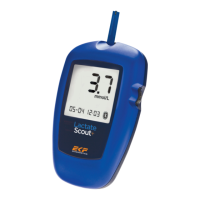
After ten seconds, a second acoustic signal
sounds and the test result is displayed in
the measurement unit “mmol/L” (5).
This is stored automatically along with
the date and time of the test.
Taking a measurement


 To Next Page