The transmitter measures net oxygen concentration in the presence of all the products of
combustion, including water vapor. Therefore, it may be considered an analysis on a wet
basis. In comparison with older methods, such as the portable apparatus, which provides
an analysis on a dry gas basis, the wet analysis will, in general, indicate a lower percentage
of oxygen.
The combustibles sensor is a catalytic sensor consisting of two resistance devices (RTD).
One RTD is the reference element covered with an inert coating. The other RTD element is
active, coated with a catalyst. As the sample gases flow by the sensor, the combustible
gases oxidize on the surface of the active element. The temperature difference produces a
resistance relationship between the two elements that is directly proportional to the
concentration of combustibles in the sample gases.
The catalyst is specifically designed to detect carbon monoxide (CO), but the sensor
responds to other combustible gases. The sensor is calibrated using CO; thus the output
should be expressed in terms of CO. However, as the sensor detects other combustible
gases, the output cannot just be labeled CO. The response of the sensor to other
combustible gases gives an output that is equivalent to the sensor detecting CO.
The term COe is used in this manual to describe the sensor output. This term indicates that
the sensor is calibrated in terms of CO and that the sensor output is equivalent to CO but
not specific to CO.
Dilution air is provided by the COe sensors to ensure that there is adequate oxygen to fully
oxidize any combustible gases regardless of the concentration of oxygen in the process.
1.2.3
System configurations
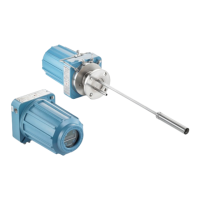
Transmitters are available in four lengths, giving you flexibility to use a penetration
appropriate to the size of the stack or duct. The length options are 18 in. (457 mm), 3 ft
(0.91 m), 6 ft (1.83 m), or 9 ft (2.7 m). Probes are available in three material options: 316L
stainless steel, Inconel 600, and ceramic to accommodate higher temperatures.
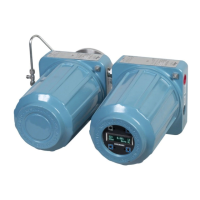
The electronics are contained in a separate housing from the sensors. When the
transmitter is configured with the integral electronics option, the electronics and sensor
housings are mounted as a unit at the stack mounting flange. When the transmitter is
configured with the remote electronics option, the electronics are contained in a separate
housing from the sensors. The electronics housing may be mounted up to 150 feet from
the sensor housing.
The electronics control both sensor temperatures and provide output signals in one of two
ways:
1. Individual 4-20 mA isolated outputs that are proporational to the measured oxygen
and combustibles concentrations. The oxygen output also contains HART
communication.
2. Single Foundation Feldbus output.
The power supply can accept voltages of 100 to 240 Vac and 50 to 60 Hz. The electronics
accepts millivolt signals generated by the snesors and produces the outputs to be used by
remotely connected devices. Refer to Chapter 3 for specific instructions upon intial power
up.
Description and specifications
4 OCX 8800


 To Next Page
 Loading...