ESS XT-3 OWNER’S MANUAL
The Air & Liquid Delivery System
Air compressor
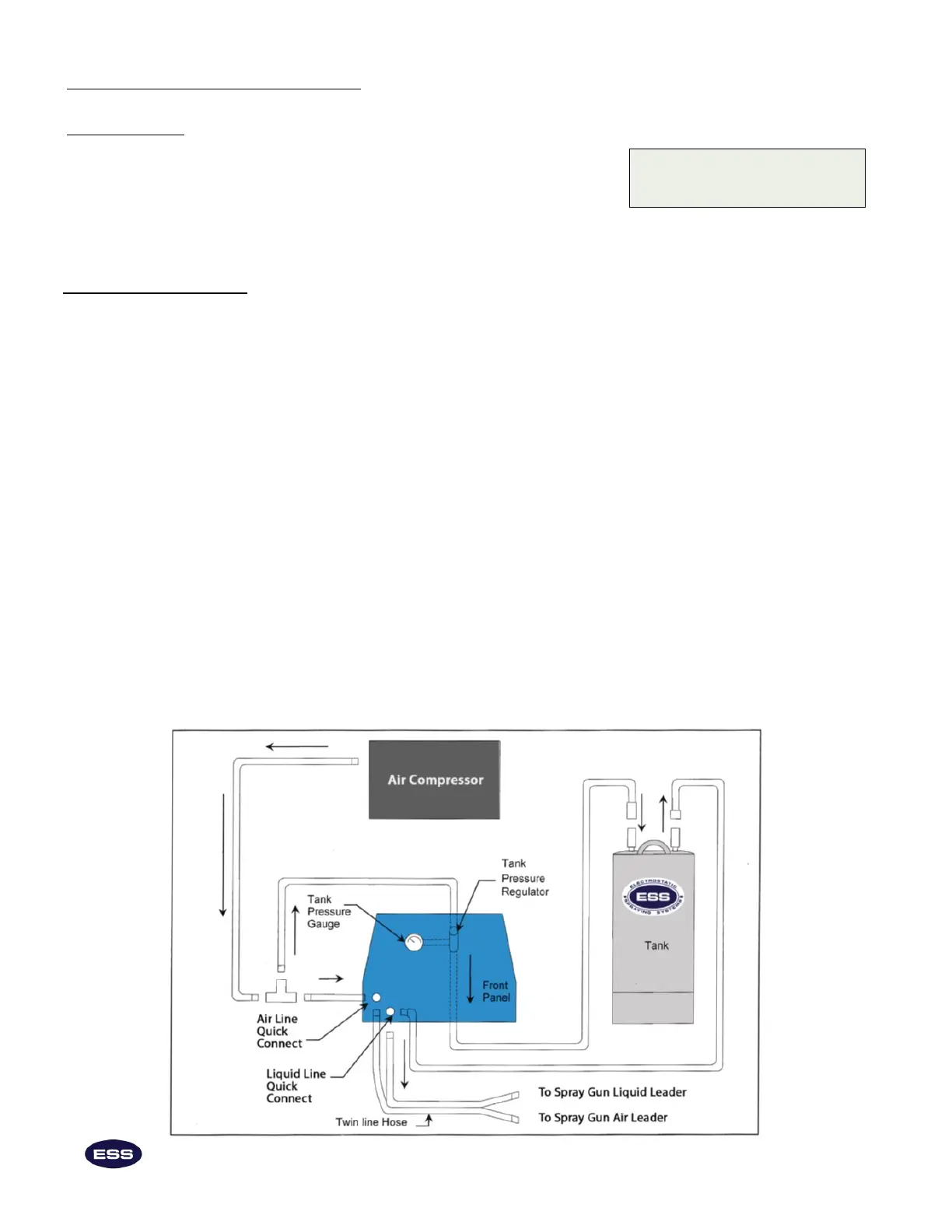
The air compressor produces compressed air which atomizes and propels
the liquid. It plugs into a 110 volt electrical source. Use the XT-3™ with a
three-pronged extension cord of no more than 50 feet and rated for no less
than 15 amp service. The On/O switch is on the side of the air compressor.
The XT-3 is also available with a
220-volt compressor.
14
Tank pressure regulator
As of January 1, 2010, the XT model no longer has a regulator and gauge. If you
have a model aer that date, you can no longer regulate the tank pressure.
Once you turn the sprayer on, the tank will ll with pressure and the sprayer will
funcon as it did before. If you have a model before, see the paragraph below.
There is a pressure regulator to control air pressure to the tank. It corresponds with the pressure gauge on the
le side of the front panel. This regulator is operated by pulling out the dial and turning it clockwise to
increase pressure or counter-clockwise to decrease pressure in the tank. This regulator controls the air
pressure going to the tank not to the spraygun. Generally tank pressure should be 15 psi. There are two
purposes for the tank pressurizaon: rst, to push the liquid soluon from the tank to the spraygun, and
second, to agitate the liquid in the tank, so that the chemical stays in soluon. Once the desired pressure is
achieved, push in the dial to lock it in place. Some chemicals have a tendency to foam. If you see any foam
coming out the pressure release tank value, either reduce the tank air pressure or add an “anfoaming” agent to
the soluon. In some occasions, it may be necessary to lower tank pressure to avoid foaming, to even as low as
5 psi. When adjusng tank pressure, one should dial pressure up to desired seng, rather than down. Two air
lines run from the tank pressure regulator. One line runs to the tank pressure gauge on the front panel. The
other runs to the inlet quick connect on the tank.


 To Next Page