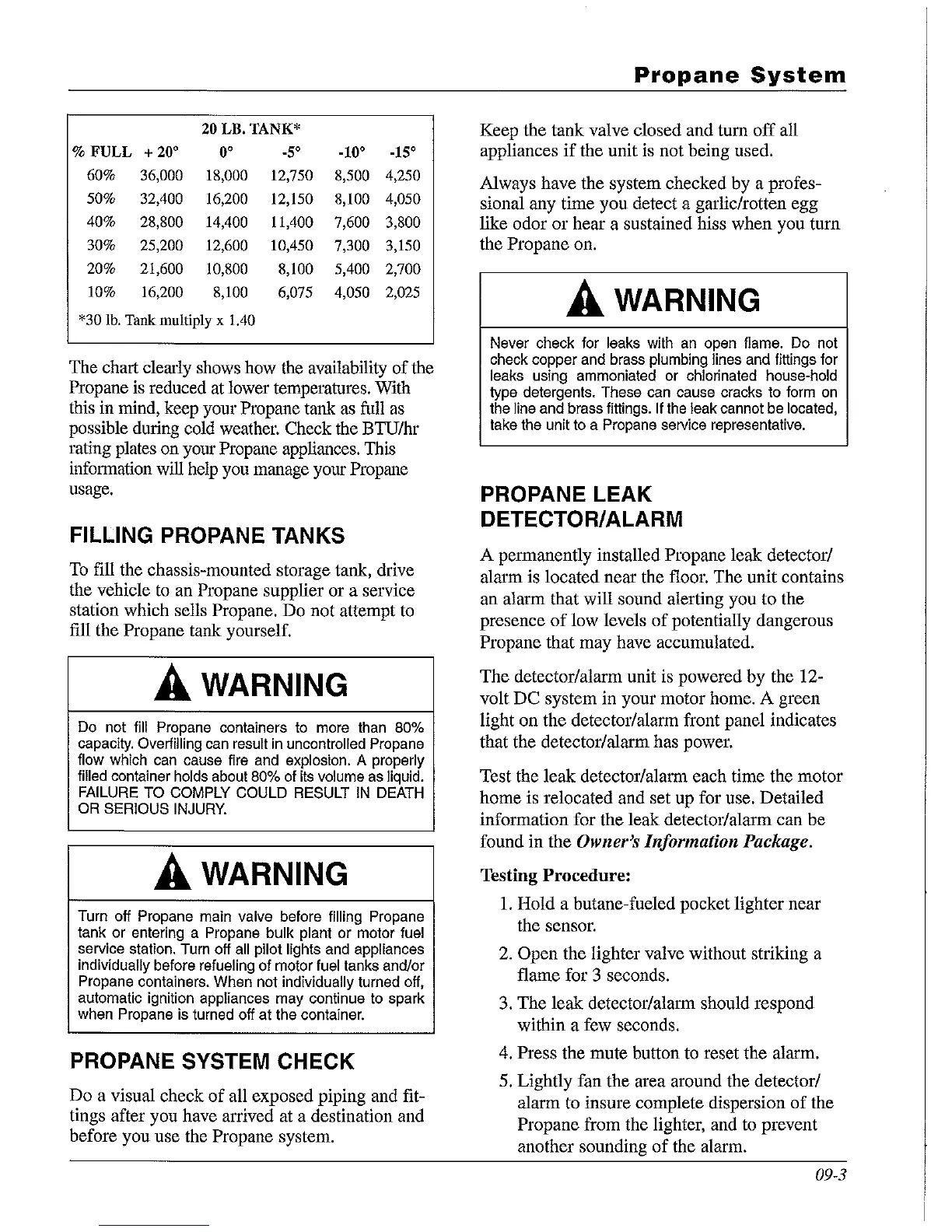
20 LB.
TANK'
%
FULL
+20'
0'
_5'
_10' _IS'
60% 36,000 18,000
12,750 8,500 4,250
50% 32,400
16,200
12,150 8,100 4,050
40% 28,800 14,400 11,400
7,600
3,800
30%
25,200 12,600
10,450 7,300 3,150
20% 21,600
10,800
8,100 5,400 2,700
10% 16,200 8,100 6,075 4,050 2,025
*30 lb. Tank multiply x 1.40
The chart clearly shows how the availability
of
the
Propane is rednced at lower temperatures. With
this in mind, keep your
Propane tank
as
full
as
possible during cold weather. Check the BTU/hr
rating plates on your
Propane appliances. This
information will help you manage your
Propane
usage.
FILLING PROPANE TANKS
To
fill the chassis-mounted storage tank, drive
the vehicle to an
Propane supplier or a service
station which sells
Propane. Do not attempt to
fill the
Propane tank yourself.
A.
WARNING
Do
not fill Propane containers to more than 80%
capacity. Overfilling can result in uncontrolled Propane
flow which can cause fire and explosion. A properly
filled container holds about
80% of its volume as liquid.
FAILURE
TO COMPLY COULD RESULT
IN
DEATH
OR SERIOUS
INJURY.
A.
WARNING
Turn off Propane main valve before filling Propane
tank or entering a Propane bulk plant or motor fuel
service station. Turn off all pilot lights and appliances
individually before
refueling of motor fuel tanks and/or
Propane containers. When not individually turned off,
automatic ignition appliances may continue to spark
when
Propane is turned off at the container.
PROPANE SYSTEM CHECK
Do a visual check
of
all exposed piping and fit-
tings after you have arrived at a destination and
before you use the
Propane system.
Propane
System
Keep the tank valve closed and turn off all
appliances
if
the unit is not being used.
Always have the system checked by a profes-
sional any time you detect a garlic/rotten egg
like odor
or
hear a sustained hiss when you turn
the
Propane on.
A.
WARNING
Never check for leaks with
an
open flame. Do not
check copper and brass plumbing
lines and fittings for
leaks using ammoniated or
chlorinated house-hold
type detergents. These can cause cracks to form
on
the line and brass fittings. If the leak cannot be located,
take the unit to a
Propane service representative.
PROPANE LEAK
DETECTOR/ALARM
A permanently installed Propane leak detector/
alarm is located near the floor. The unit contains
an alarm that will sound alerting you to the
presence
of
low levels
of
potentially dangerous
Propane that may have accumulated.
The detector/alarm unit is powered by the
12-
volt
DC
system in your motor home. A green
light on the detector/almm front panel indicates
that the detector/alarm has power.
Test the leak detector/alarm each time the motor
home is relocated and set up for use. Detailed
information for the leak
detect011almm can be
found in the
Owner's Information Package.
Testing
Procedure:
1.
Hold a butane-fueled pocket lighter near
the sensor.
2.
Open the lighter valve without striking a
flame for 3 seconds.
3. The leak detector/alarm should respond
within a few seconds.
4.
Press the mute button to reset the alarm.
5. Lightly fan the area around the detector/
alarm to insure complete dispersion
of
the
Propane from the lighter, and to prevent
another sounding
of
the alarm.
09-3




 To Next Page